

- Energy, investment, Rohingya issue to top Bangladesh-Indonesia talks |
- Japan Remains Bangladesh’s Trusted Development Partner: Envoy |
- Dhaka ranks world’s second most polluted city this morning |
We want cooperation, not dependency: Humaiun
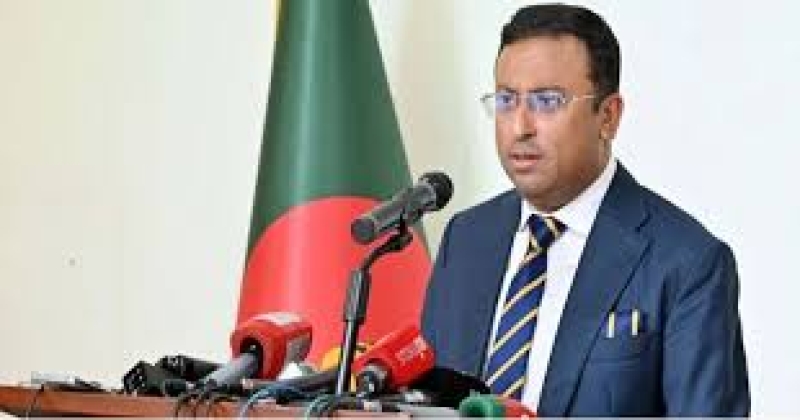
State Minister for Foreign Affairs Humaiun Kobir has said Bangladesh’s foreign policy must be guided by national interest, combining strong international partnerships with strategic autonomy while avoiding dependency.
“We want strong partnership, but we also want strategic autonomy. We want cooperation, but we do not want dependency,” he said while addressing the concluding day of the Bay of Bengal Conversation at Hotel Sonargaon here today.
“Bangladesh’s foreign policy must serve Bangladesh’s national interests,” he added.
Kobir said serving the national interest means protecting the country, safeguarding its security, expanding economic opportunities and creating the external conditions necessary for national development.
Bangladesh’s approach, he said, is to engage with all countries on the basis of mutual respect, mutual benefit and national interest.
The state minister said the world is changing rapidly as power shifts, technology transforms statecraft and economic competition becomes increasingly strategic.
For Bangladesh, he said, these changes create both challenges and opportunities, requiring foreign policy to do more than merely respond to developments.
“Our foreign policy must therefore do more than respond to change. It must help Bangladesh shape the future,” he said.
Referring to intensifying strategic competition among major powers, Kobir said Bangladesh does not view international relations as a choice between competing camps.
“Our policy is not to choose sides. Our policy is to choose what is best for the national interest of Bangladesh,” he said.
“Where interests converge, we will cooperate. Where opportunities exist, we will engage. Where differences arise, we will manage them through dialogue and diplomacy,” he added.
Kobir described the approach as “strategic maturity in an age of competition.”
He said Bangladesh maintains important relationship with major powers and regional partners with each relationship having its own characteristics and importance.
Turning to the Indo-Pacific, Kobir said the Bay of Bengal is increasingly at the centre of geopolitical and economic transformation and Bangladesh must turn its geographical position into a strategic opportunity.
“The Bay of Bengal connects South Asia and Southeast Asia. It connects major markets, vital sea routes and growing economies,” he said.
“We want the Bay to remain a space of peace, stability and cooperation. We do not want it to become a theatre of confrontation by any means,” he added.
Identifying economic security as a major challenge, Kobir said foreign policy and economic policy can no longer be separated as markets, supply chains, energy, technology and investment increasingly shape international relations.
“Our diplomacy must therefore become more economically focused. Our missions abroad must open markets, attract investment, promote Bangladeshi products and create opportunities for our people,” he said.
Economic diplomacy must become a core instrument of Bangladesh’s integrated foreign policy, he said, adding that foreign, economic and security policies should be formulated through a coordinated approach.
On regional cooperation, Kobir said South Asia remains one of the least integrated regions in the world and called for stronger connectivity, greater trade, energy cooperation and increased people-to-people contacts.
He said countries of the region should be ambitious enough to explore deeper economic integration, including the possibility of a single-market framework.
The state minister also highlighted growing non-traditional security challenges, including cyber security, food, energy, water, climate and maritime security.
“These challenges cross borders. They require cooperation across borders,” he said.
Kobir said Bangladesh needs a stronger security infrastructure and architecture to enhance resilience, policy coherence and delivery in areas of security cooperation.
On climate change, he said Bangladesh faces serious risks despite contributing very little to global emissions and therefore requires greater climate justice, adaptation finance, technology transfer and international cooperation.
The government has placed climate leadership among its priorities since assuming office, he said.
Turning to the Rohingya crisis, Kobir termed it a top national security as well as foreign policy priority for Bangladesh.
Bangladesh continues to host more than one million forcibly displaced Rohingyas, he said, adding that humanitarian assistance cannot remain the permanent answer to the protracted crisis.
“The Rohingya crisis is a protracted one that can no longer be left alone to carry on for any longer. It needs to be resolved,” he said.
Kobir said Bangladesh would use its presidency of the 81st session of the United Nations General Assembly to again raise the profile of the Rohingya issue on international multilateral platforms.
The government would also intensify bilateral engagement with development partners in the region and beyond while seeking greater financial and political support for resolving the crisis, he said.
“The ultimate objective must be the safe, voluntary, dignified and sustainable return of the Rohingya people,” he added.
Kobir also identified declining trust among states as a major challenge to contemporary diplomacy.
Without trust, partnerships weaken, institutions lose credibility and diplomacy becomes increasingly difficult, he said.
Bangladesh therefore believes in dialogue, international law and peaceful settlement of disputes and supports a rules-based international order that respects the sovereignty and dignity of every state, he added.
The state minister said Bangladesh must also prepare its diplomatic institutions for emerging challenges as artificial intelligence transforms diplomacy, digital technologies reshape economies, climate change alters security calculations and new technologies change the nature of warfare.
He stressed stronger strategic analysis, greater technological expertise, deeper economic knowledge and development of a new generation of diplomats capable of understanding geopolitics, economics, technology, climate and security in an integrated manner.
“Bangladesh should not simply navigate the changing international order. Bangladesh should help shape it and influence it,” Kobir said.
He said Bangladesh should emerge as a bridge between regions, a partner for peace, a hub for connectivity, a destination for investment and a responsible voice for the Global South.
Concluding his address, Kobir outlined four principles for the country’s foreign policy - national interest, strategic autonomy, expanded partnerships and peace, reports BSS.
“The future will not wait for us. We must shape it, and we must ensure that Bangladesh has a meaningful voice in that future,” he said.