

- Greenhouse Gas Levels Reach Record High in 2025: WMO |
- Dengue deaths hit 400 as 11 more die in 24 hours |
- Bangladesh’s Dengue Death Toll Hits 400 After 11 More Deaths |
- Support to coastal security, early completion of MRT lines, Airport Terminal III, business promotion assured |
- Tarique Seeks Japanese Support for Energy, Tech and Infrastructure |
Trump’s Nuclear Test Plan Risks Global Arms Race, Experts Warn
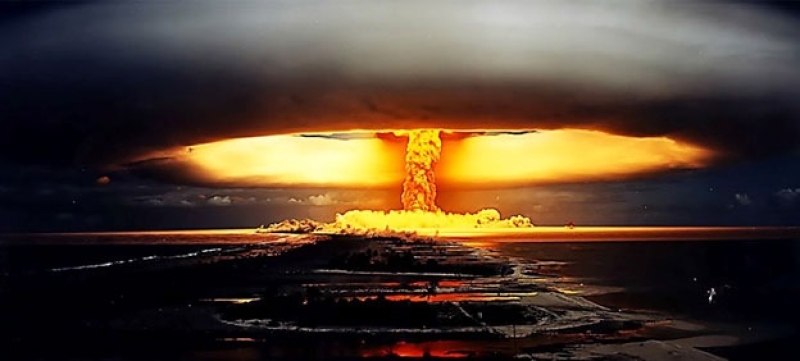
A nuclear test is carried out on an island in French Polynesia in 1971.
President Donald Trump’s recent announcement to resume nuclear testing has revived fears of a bygone era, when military personnel and civilians were exposed to devastating radioactive fallout.
Between 1945 and the opening for signature of the Comprehensive Nuclear-Test-Ban Treaty (CTBT) in 1996, over 2,000 nuclear tests were conducted worldwide. The United States carried out 1,032 tests between 1945 and 1992. Reports indicate that most participants were military personnel, and the government initially withheld information about radiation effects, leading to serious health problems for many veterans.
It was not until 1996 that Congress repealed the Nuclear Radiation and Secrecy Agreements Act, allowing veterans to discuss their experiences without fear of treason charges. Although a 1998 compensation bill failed, the government later issued an apology to survivors and their families. Some civilians were also exposed to radioactive fallout, such as from the Trinity test in New Mexico, and suffered long-term health effects.
Dr M.V. Ramana, Professor and Simons Chair in Disarmament at the University of British Columbia, told IPS that it remains unclear what type of nuclear tests might be conducted. Although the US has not ratified the CTBT, it did sign the Partial Test Ban Treaty in 1963, which banned nuclear tests in the atmosphere, outer space, and underwater. Since then, all US tests have been conducted underground.
Underground tests carry environmental risks. Radioactive contamination can escape into the atmosphere or gradually seep into groundwater. For instance, in 1999, scientists detected plutonium 1.3 kilometres from a 1968 Nevada test site explosion.
Ramana warned that resuming nuclear tests could trigger other countries, such as India, to follow suit. The Women’s International League for Peace and Freedom previously condemned tests at Bikini Atoll, calling for the end of nuclear weapons production rather than refining the ability to carry out mass destruction.
Natalie Goldring, UN representative of the Acronym Institute, called Trump’s threat “shortsighted and dangerous,” warning that nuclear testing could justify similar actions by other nuclear states. She emphasised that the human, environmental, and economic costs of nuclear tests are often ignored, and funds would be better used to address past damages.
Goldring suggested constructive alternatives, including extending New START limits with Russia and committing to the Treaty on the Prohibition of Nuclear Weapons (TPNW), which bans the development, testing, and use of nuclear weapons.
As Albert Einstein wrote in 1946, “The unleashed power of the atom has changed everything save our modes of thinking,” a warning that resonates amid renewed nuclear testing threats.