

- 21 Killed in New Delhi Hotel Fire, Many Foreign Victims |
- UNHCR, partners ask world not to forget Rohingya refugees in BD |
- WMO Warns El Niño to Drive Global Extreme Weather |
- SEC to be restructured with new leadership team: Finance Minister |
- ‘May no other parent lose a child this way’, says Ramisa’s father |
Poverty Financing: From Crisis to Sustainability
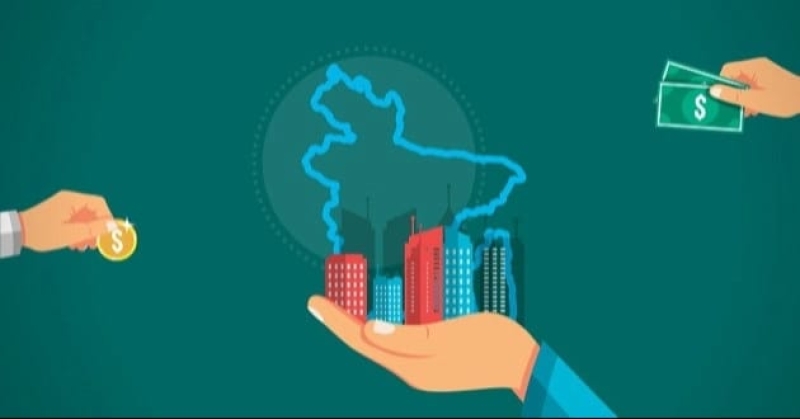
Representational image
By now, majority in Bangladesh have heard of the USAID funding cut to the development sector in the country worth more than $700 million, resulting in job losses of more than 50,000 development professionals in Bangladesh (The Daily Star, May 2025). Elsewhere, trusted donors i.e. The Swiss Agency for Development and Cooperation has planned phase out of its bilateral programs in Bangladesh by 2028 (swissinfo.ch, March 2025).
Globally, only four countries have met commitments in 2025 towards the United Nations goal that urges economically advanced nations to spend at least 0.7 per cent of their Gross National Income (GNI) on Official Development Assistance (ODA) to support developing nations. On the other hand, 25 countries decreased their ODA, leading to a 23 percent overall drop from 2024 to 2025. (United Nations, April 2026)
Economic Downturns and Shifting Priorities
While some blame such misfortune to post-covid inflations, economic down turns and rising costs of war by the west, others infer that the donors are perhaps shifting priorities or their limited foreign aid resources to poorer countries in Africa while Bangladesh is set to graduate from its Least Development Country status. Others allege that they are perhaps redirecting funds to humanitarian crises in places such as Ukraine and Palestine, if not the Rohingya camps.
The Job Crisis
In this regard, the harsh reality is that the non-profit sector in Bangladesh has been responding to foreign aid diminutions with not only downsizing, downgrading and salary reductions of employees, but also outsourcing to both people and AI. While some grieve assuming that organizations are trying to first safeguard the positions of their home country staff abroad, others walk through as organizations nationalize positions to save costs. For the unemployed and those hanging in uncertain contracts about to end, options lay ahead to either reskill or upskill with the growing labor market trend, or perhaps even switch employment to the private sector if they would kindly welcome. Others wonder about challenging themselves by exploring higher paid, mobile and agile international development sector or humanitarian jobs in crises affected and hardship locations such as Afghanistan and South Sudan.
Business Strategies
Business strategies by non-profit organizations for coping or rather trying to cope to sustain to serve the poor have been diverse – from localization to operational restructuring to fundraising portfolio diversification to social enterprise models.
Localization, regionalization
‘Localization’ has been the buzz word agenda of most development actors, packaged as capacity development interventions for organizational development of national actors, with dual agendas towards cost efficiency. International NGOs (INGOs) in this regard, with formerly relative strength in fundraising are finding themselves no longer as only disbursers and monitors of funds to national NGOs, but also increasing competing with the national space at large.
As such, increasingly, INGOs are not only forming consortiums with national or local NGOs with more favorable terms for joint fundraising, but some such as ActionAid Bangladesh have overhauled into nationalized governance structures, while others such as Oxfam have phased into localized partner-led modalities in countries such as Sri Lanka and Pakistan. Elsewhere, INGOs such as Action Contre la Faim (ACF) and Christian Aid, as also relevant for their operations in Bangladesh, have shifted to multi-country operational modalities with shared resources to save costs.
INGOs have also been increasingly considering shifting their focus more where they have comparative technical advantages such as in areas as advocacy, campaigns and research, versus services which local / national organizations could otherwise deliver more cost efficiently, while at the same time encouraging donors to directly fund local / national organizations through modalities such as pooled funds.
Operational (Re)structuring
At the same time, other INGOs have also been seen with a different outlook of either juggling with direct service delivery themselves versus partner-led interventions, and / or shifting their bases instead closer to the beneficiaries for both efficiency as well as effectiveness. For example, many INGOs are increasingly moving out of their comfort zones from Cox’s Bazar Sadar to Ukhiya for Rohingya response.
Side by side, UN agencies have been pooling of shared HR and ERP services in Bangladesh and globally for quite a while, including a transport and logistics pooling model by WFP abroad.
Portfolio Diversification
At the same time, diversification of funding pipelines has been the priority of the actors in the sector for quite a while. INGOs, national NGOs and the Unted Nations agencies alike have not only been reaching out to traditional bilateral donors, but are also seeking partnerships with public and private sector entities, including financing or co-financing and public-private partnerships with Bangladesh government entities.
Some private sector players collaborating with the sector for either corporate social responsibility or brand building and marketing include, but not limited to, Unilever, Marico, C&A, M&S, Lindex, BSRM, and DBL Group. At the same time, development actors have also experienced civil society back lash when they apparently failed due diligence checks with certain private sector organizations such as UN Women with BlackRock.
Side by side, NGOs are arguably seen also launching competitions for for-profit consultancy assignments. Others argue, that only those NGOs which have micro-credit or micro-finance operations seem to be surviving at scale with much self-finance.
Prevalent individual or community giving models and / or crowd funding models are also utilized by organizations such as BRAC, Jaago Foundation, WFP and World Vision.
Social enterprises, social businesses
While, Bangladesh is famous as the sustainability pathway and home to social enterprise or social business models such as by BRAC or Grameen Bank, such modalities of operation still lack legal recognitions such as in terms of tax holidays. INGOs at both home and abroad are also seen experimenting with social enterprise models such as Oxfam shops in the UK, Caritas in Bangladesh, reports UNB.
Like the business sector, the non-profit sector may also draw insights from the business sector, thriving for their own “Blue Ocean Strategies” to achieve success by creating new, uncontested market spaces rather than fiercely competing in saturated, existing markets.
“People want to fund your impact, not your existence.” - Beth Brodovsky.
Mehzabin Ahmed is a development professional.