

- November 7 Declared a Public Holiday Every Year |
- LPG Shortage, Overcharging Hit Consumers Across Dhaka |
- Energy, investment, Rohingya issue to top Bangladesh-Indonesia talks |
- Japan Remains Bangladesh’s Trusted Development Partner: Envoy |
- Dhaka ranks world’s second most polluted city this morning |
Smart Farming Already Reshaping Global Agriculture
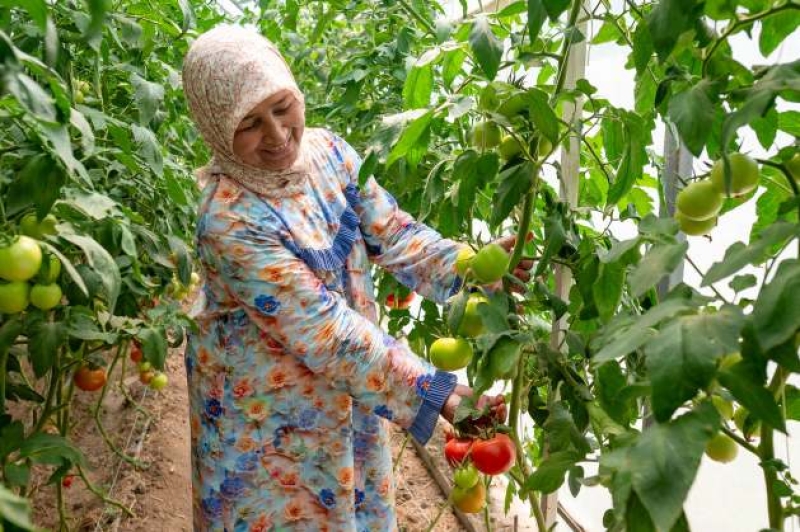
Farmers today are producing food under pressures that would have been unimaginable to previous generations. Input costs are rising, supply chains are increasingly unreliable, water is scarcer, and weather patterns are less predictable. In conflict-affected regions such as Sudan, Ukraine, Myanmar and Gaza, many farmers face the added challenge of producing food amid active crises. These conditions are no longer marginal — they define the reality for hundreds of millions of people who feed the world.
Smart farming — the use of data, digital tools and precision technologies to improve decision-making, reduce inputs and increase productivity per hectare — is increasingly becoming a necessity rather than a luxury. It helps farmers determine when to plant, how much fertilizer to apply, how to optimize water use, where pests may emerge and how to respond to risks before they escalate.
Agriculture has already gone through three major revolutions. The first established settled farming. The second improved productivity through early mechanization and modern methods. The third, the Green Revolution, introduced improved seeds, fertilizers and advanced practices that significantly increased global food production.
The fourth agricultural revolution faces a different challenge: producing more food with fewer and less reliable inputs, under growing uncertainty, on stressed land, while reducing agriculture’s environmental impact.
The tools that drove the Green Revolution, while transformative, are not infinitely scalable. Synthetic fertilizers depend on energy-intensive production and fragile supply chains. Groundwater resources in key agricultural regions are being depleted faster than they are replenished. Yield gains from conventional intensification are slowing. There is no unlimited supply of cheap water, fertilizer or fuel to sustain past production models.
Smart farming offers a response to these challenges. It enables more efficient production, better decision-making under uncertainty and reduced environmental pressure. It is not a future concept — it is already in use.
Programmes led by the Food and Agriculture Organization of the United Nations (FAO) demonstrate its potential. The Desert Locust early warning system uses satellite data, weather analysis and field intelligence to predict outbreaks before they damage crops, allowing preventive action.
The SoilFER programme is improving soil mapping and generating faster fertilizer recommendations for farmers in Central America and sub-Saharan Africa. The Hand-in-Hand Initiative combines geospatial, market and socioeconomic data to guide agricultural investment toward areas with the highest impact. These operational programmes increasingly use AI tools to forecast pest and disease risks, analyze crop stress and support faster decision-making.
Even on individual farms, smart agriculture is already in practice. A seventh-generation grain farm in rural Indiana, for example, uses GPS-guided machinery, variable-rate fertilizer application, soil sampling, yield mapping and real-time weather data to guide planting and harvesting decisions. The technology is proven — the challenge is access.
That access gap is now the central issue. The benefits of smart farming are concentrated among producers with resources, connectivity and institutional support. Smallholder farmers, who produce around one-third of the world’s food, are often left behind. Women and young farmers face additional barriers to technology and financing, deepening inequality in the system.
At the FAO Global Conference on Smart Farming in Rome from 1 to 3 July, participants are expected to focus on concrete commitments. Governments are urged to modernize regulations and invest in digital agricultural infrastructure. Development banks are encouraged to finance data systems and precision agriculture as core infrastructure. Private companies are called on to design inclusive business models that reach smallholder farmers. Organizations like FAO must ensure technical knowledge is translated into practical, accessible solutions.
The fourth agricultural revolution is already underway. The question now is whether its benefits will reach those who need them most, or whether the gap between possibility and access will continue to widen.
Beth Bechdol is Deputy Director-General of the Food and Agriculture Organization of the United Nations.