

- NCP Demands Impeachment, Arrest of President |
- PM Pledges to Modernise, Strengthen Border Force |
- Dhaka Tops Global Pollution List with Hazardous Air |
- Country Observes Martyred Army Day Today |
- 100 CSOs rally against Trump’s trade tactics, urge access to drugs |
Secure Land Tenure Is Key to Fighting Global Land Loss
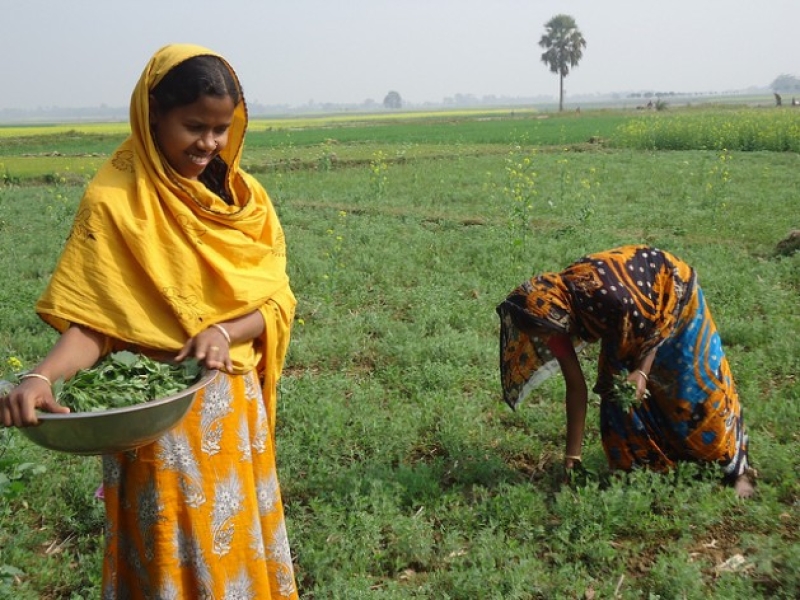
Women farmers clearing farmland in Northern Bangladesh.
Farmland has long been a vital source of security across generations. Writing about China nearly a century ago, Pearl S. Buck noted in The Good Earth, “If you will hold your land, you can live.” That holds true today. When farmers own land, they invest in it. When they do not, they extract what they can immediately without considering the future.
This household-level decision becomes a structural problem at scale. Land degradation—currently affecting 1.7 billion people in areas of declining agricultural productivity—reflects systemic underinvestment, often rooted in insecure land tenure. The encouraging news is that reforming and enforcing land tenure can be a powerful tool to combat land degradation and food insecurity.
Globally, only about a quarter of land is formally recognized. In sub-Saharan Africa, where customary systems dominate, communities face encroachment, weak dispute resolution, and exclusion from services and finance. More than 1.1 billion people fear losing rights to their land within the next five years. This insecurity is exacerbated by rising financial pressures and displacement.
Evidence from Ghana and Malawi shows that farmers with informal or short-term rental agreements are significantly less likely to invest in soil restoration, water management, or productivity-enhancing practices. Without secure tenure, farmers may lose access to land before their investments yield returns. They also struggle to access credit, insurance, and other financial services needed for improvements.
Customary systems have historically disadvantaged women, who constitute half of smallholder producers, in inheritance and transfer rights. Globally, women hold only 15% of agricultural land, and even when they do, their ownership may be lost due to divorce or the death of a spouse. Limited legal access to land, combined with weak access to credit and inputs, reinforces cycles of low productivity, land degradation, and vulnerability for women farmers.
Where land tenure is weak or contested, rising land demand can fuel conflict. In Colombia, post-conflict agricultural expansion into forest areas has generated tensions where land claims remain unresolved. Similar disputes occur in parts of sub-Saharan Africa, where weak legal recognition of customary rights and insecure claims make households vulnerable, particularly during large-scale land acquisitions.
These recurring tensions reinforce the need for strong land governance as a foundation for stability and development. Since 2012, some 70 countries have initiated land policy reforms following UN principles protecting legitimate tenure rights, including customary ones. Yet many reforms have been slow to translate into practice. Dispute resolution systems remain weak, and the rights of women, Indigenous Peoples, and customary landholders are inconsistently recognized.
Change could not come sooner. Reversing even 10% of degraded cropland could feed 154 million more people annually. Without government intervention, global farmland deficits could double the size of India by 2050.
Secure land tenure alone will not automatically restore land. Half of global farmland is controlled by the largest 1% of producers, many of whom use intensive production models that can accelerate degradation if not paired with environmental safeguards. Land tenure reform must therefore be combined with regulation, targeted incentives, access to finance and extension services, and strong institutional capacity.
Rising land demand, climate stress, and large-scale land acquisitions will continue to test the durability of these reforms. Whether these pressures result in instability or resilience depends on policy choices. If governments want farmers to restore the land, they must first ensure farmers can hold it securely.