

- PM inaugurates Tk 1,542 cr Muhuri-Kohua flood control project in Feni |
- Who gets to shape AI? UN debate centres on power, trust and inclusion |
- PM Tarique Rahman likely to visit Japan later this month |
- PM Tarique Heads to Feni for Daylong Programmes |
- Long-term support for Manta gypsy fishing community urged |
Democracy could be in trouble sans consensus on key issues: Rizvi
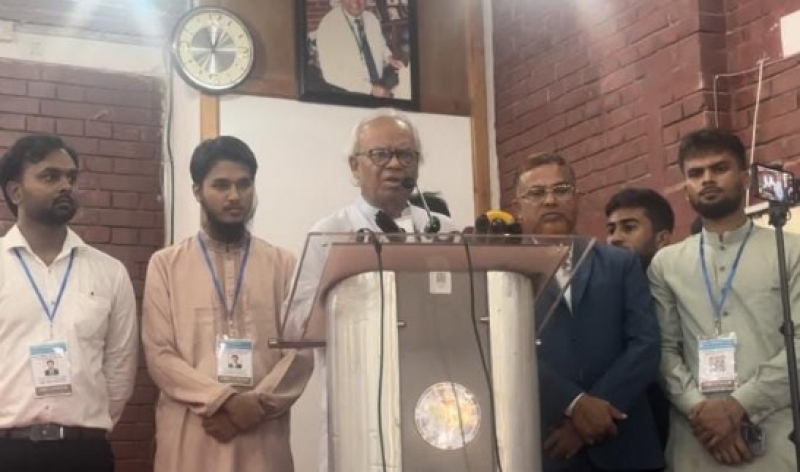
BNP leader Ruhul Kabir Rizvi addressing a programme at IUBAT on Monday.
Dhaka, July 20 -BNP Senior Joint Secretary General Ruhul Kabir Rizvi on Monday said democracy could once again come under threat if political parties fail to maintain a minimum level of mutual understanding on key national issues.
“Political parties must collectively maintain at least a minimum understanding on some fundamental national issues. If they fail to do so, democracy will once again be endangered. Along with democracy, the country's independence and sovereignty could also be put at risk,” he said at a discussion at the auditorium of the International University of Business Agriculture and Technology.
He alleged that the previous “fascist” government systematically dismantled democratic institutions including the Election Commission, judiciary and media in order to remain in power indefinitely.
“All democratic institutions were destroyed. The judiciary had no independence, the Election Commission became a tool for staging farcical elections and the media was tightly controlled. This is how fascist regimes operate everywhere,” he said.
He said oposition political parties were subjected to repression, citing the imprisonment of BNP Chairperson Begum Khaleda Zia under harsh condition and describing it as part of an effort to weaken the opposition.
Recalling the July uprising, Rizvi said the painful memories of those days remain vivid.
He said the July-August movement had at least restored some democratic space by ensuring conditions for a free and fair election and allowing people to criticise the government without fear of enforced disappearance or extrajudicial killing.
“In a democratic society, people must be able to speak and criticise freely. That was absent before. The July movement restored that right. Its significance is therefore profound,” he said.
He called for further discussions among the government and political parties over the July Charter, saying any remaining issues should be resolved through dialogue. - UNB