

- PM Urges New BCS Officers to Serve People with Honesty |
- EC Plans First-Phase Elections in 1,050 Union Parishads |
- Rohingya crisis now a security concern for Bangladesh: Shama |
- Hasina Is a Convict, Legal Steps Underway to Bring Her Back |
- Nearly 300 families perish in road crashes in 6 years 10 months: RSF |
Hasina 'daydreaming' if she thinks people will welcome her back: Rizvi
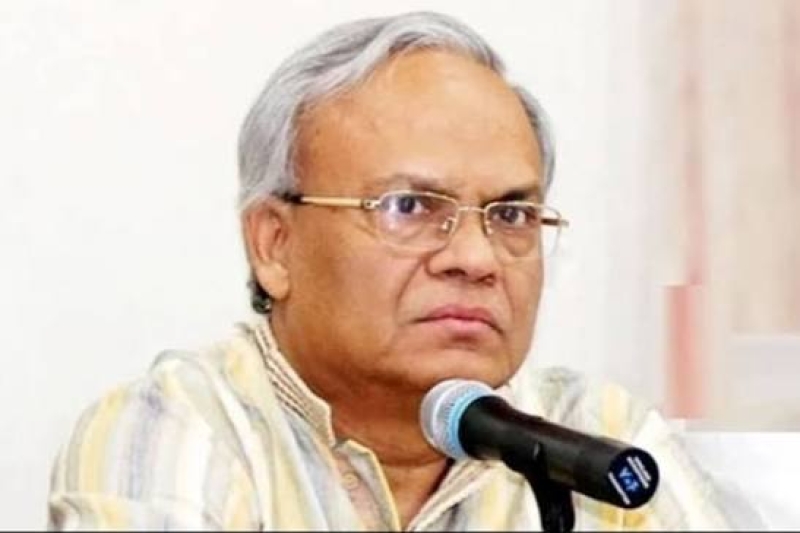
BNP Acting Secretary General and Prime Minister's Political Adviser Ruhul Kabir Rizvi on Sunday said ousted Prime Minister Sheikh Hasina is daydreaming if she thinks people will welcome her with fanfare upon her return to Bangladesh, adding that she has now become an “Awaj-e-Hindustan”.
“From India, Sheikh Hasina is making all sorts of declarations, saying, ‘I will come back, I will do this and that.’ She seems to think that if she returns to the country, people will welcome her with drums and musical instruments. She is living in a daydream,” he said.
“Sheikh Hasina, having lost everything, has now become an ‘Awaj-e-Hindustan’ (voice of Hindustan),” Rizvi said.
He made the remarks while addressing a discussion organised by Jatiyatabadi Chhatra Dal at the Teachers-Students Centre (TSC) auditorium of Dhaka University, marking National Revolution and Solidarity Day.
Questioning where Hasina would return and whether she expected to go to Gopalganj, Rizvi said the return of someone responsible for killings and bloodshed was not possible.
“This is a country of long struggles and revolutions. As the saying attributed to Emperor Babur goes, revolution flies in the dust of Bengal,” he said.
Referring to the Language Movement of 1952, the mass uprising of 1969, the Liberation War of 1971 and the mass uprising of 1990, Rizvi said the people of Bangladesh had repeatedly resisted oppression and would not accept the return of someone they held responsible for bloodshed.
He said the 1990 mass uprising against the Ershad regime had also drawn inspiration from the spirit of November 7, with the participation of the people, students and the leadership of Khaleda Zia.
Rizvi said history had witnessed the emergence of leaders such as Khaleda Zia, who stood firm for truth, struggle, people's freedom, dignity and democracy despite imprisonment and personal hardship.
He also recalled the role of Shaheed President Ziaur Rahman, describing him as a courageous soldier who declared the country's independence at a time when political leaders were indecisive.
Rizvi said November 7 provided a compass and direction for the nation, particularly whenever democracy came under threat.
He alleged that the Awami League government led by Sheikh Hasina had established an authoritarian system and that the spirit of November 7 had inspired resistance against it.
Referring to the protests before the July 2024 uprising, Rizvi said students of Dhaka University repeatedly faced attacks while trying to raise their voices against the government. They continued their protests despite being beaten and forced to retreat, he said.
According to Rizvi, the sacrifices and injuries of those students were not in vain, as people across the country observed their struggles and gradually became motivated to resist.
Rizvi questioned whether the sacrifices of Abu Sayeed, Mugdha, Wasim Akram and other young people during the July uprising would be forgotten.
“Will the sacrifices of Abu Sayeed, Mugdha, Wasim Akram and the other young people who embraced bullets be in vain? Will Hasina return by parachute and be welcomed by people beating drums? That can never happen,” he said.
Rizvi warned against what he described as attempts by hegemonic forces and their local allies to control Bangladesh, saying the country's 18 crore people would never allow it to become subject to external domination, reports UNB.