

- Govt Declares 3-Day Mourning, Wednesday Holiday for Khaleda Zia |
- Khaleda Zia: Icon of Bangladesh’s Democracy and Leadership |
- Over 1 Million Voters Register for Postal Ballots in Bangladesh |
- Begum Khaleda Zia, Uncompromising Leader of Bangladesh, Dies |
- 2,582 candidates submit nomination papers for Bangladesh polls |
Khaleda Zia: Icon of Bangladesh’s Democracy and Leadership
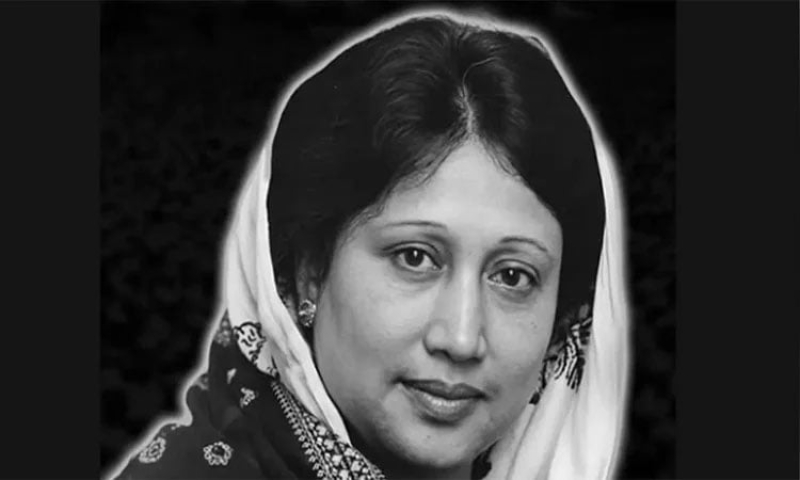
Three-time Prime Minister and BNP Chairperson Begum Khaleda Zia. File photo
Begum Khaleda Zia never set out to be a political icon. History, however, had other plans. Following the assassination of President Ziaur Rahman in 1981, she was thrust from her role as a housewife into public life. With no formal political training, she relied on her innate leadership and iron resolve, qualities that would define an era.
In March 1983, Khaleda Zia became vice-chairperson of the Bangladesh Nationalist Party (BNP), and in August 1984, she was elected chairperson. She emerged as the uncompromising face of the anti-Ershad movement. Countrymen and supporters called her “Aposh-hin Netri” (uncompromising leader), as she consistently refused to participate in elections she deemed illegal, most notably the 1986 Jatiya Sangsad polls, urging people to resist. To many, she became “Deshnetri,” a symbol of resistance for generations fighting fascism between 2009 and 2024.
Her rise to power in 1991 marked a watershed moment—Bangladesh’s first female prime minister and only the second in the Muslim world. Alongside leaders such as Benazir Bhutto of Pakistan and Megawati Sukarnoputri of Indonesia, she became a role model for Muslim women in politics, breaking barriers and shaping gender discourse globally.
During her three terms—1991-1995, briefly after February 1996, and 2001-2005—Khaleda Zia introduced reforms that reshaped Bangladesh. She made primary education free and compulsory, expanded free schooling for girls to the tenth grade, and pioneered the “Food for Education” programme, bringing thousands of children into classrooms.
Her economic reforms included the introduction of Value Added Tax (VAT), the establishment of the Privatization Board, and the Securities and Exchange Commission, positioning Bangladesh for global markets. She also created the Ministry of Liberation War Affairs to support freedom fighters and recognized heroes such as Taraman Bibi with the state honour “Bir Protik.”
Even her short-lived 1996 government delivered lasting democratic reform by introducing the non-partisan caretaker system for national elections. She also expanded higher education by establishing the Bangladesh Open University, the National University, and approving private universities.
On the international stage, Khaleda Zia promoted regional cooperation through SAARC and strengthened ties with major global actors, including the United States, China, and India. Even in opposition, she remained a formidable figure, known for her unyielding commitment to democratic ideals and the personal costs she bore, earning her the international title of “Mother of Democracy.” In 2011, the New Jersey State Senate recognized her as a “Fighter for Democracy.”
Through her 35 years of party leadership, Khaleda Zia dedicated herself to democracy and stood firmly against forces threatening Bangladesh’s independence, sovereignty, and dignity. Despite political persecution under Sheikh Hasina’s government, her legacy as a leader and symbol of resilience remains inseparable from the nation’s history.