

- High medicine prices threaten healthcare of poor communities |
- Curtain falls on a political giant as Khaleda Zia passes into history |
- BNP Expels Nine Leaders Over Defiance and Poll Bids |
- India, Pakistan FMs to Attend Khaleda Zia’s Funeral |
- Global Leaders Pay Tribute as Condolences Pour In for Khaleda Zia |
Nation Bids Farewell to Khaleda Zia, a Defining Leader
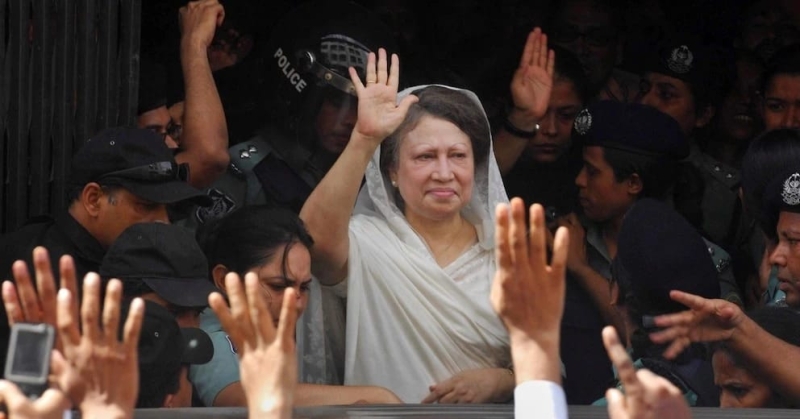
Former Bangladesh Prime Minister Khaleda Zia waves to supporters after she was arrested, in Dhaka, Bangladesh, Sept. 3, 2007.
One of the most towering figures in Bangladesh’s political history, BNP Chairperson and three-time former prime minister Begum Khaleda Zia, passed away early Tuesday morning, drawing the curtain on a career that shaped the nation’s democratic journey for decades. She was 80.
Khaleda Zia breathed her last at 6:00am at Evercare Hospital in Dhaka, where she had been undergoing treatment for 37 days amid multiple chronic illnesses. Senior party leaders and physicians later confirmed her death.
“It is with profound sorrow that we announce the passing of our Chairperson,” BNP Secretary General Mirza Fakhrul Islam Alamgir said, calling the loss irreparable for the nation.
The widow of late president and BNP founder Ziaur Rahman, Khaleda Zia rose from the life of a homemaker to become one of the most influential leaders in Bangladesh’s history. Her political life spanned more than four decades, marked by mass movements, imprisonment, electoral victories and an unwavering stance against autocracy.
News of her death spread rapidly across the country, plunging Bangladesh into mourning. Emotional scenes unfolded at the hospital as party leaders, activists and supporters gathered, many in tears. Condolence messages poured in from home and abroad, reflecting her national and international stature.
The BNP announced seven days of mourning, while the government declared three days of state mourning, including a general holiday on Wednesday.
According to party decisions, Khaleda Zia’s namaz-e-janaza will be held on Wednesday afternoon at the South Plaza of the National Parliament and Manik Mia Avenue. She will be laid to rest with full state honours at Chandrima Udyan beside the grave of her husband, Ziaur Rahman.
Khaleda Zia led the BNP for 41 years and served as prime minister three times—1991–1996, briefly in 1996, and 2001–2006—while also holding the position of leader of the opposition twice. She earned the title of the ‘uncompromising leader’ during the anti-autocracy movement that helped restore democracy in the 1990s.
Despite repeated arrests, political persecution and severe health challenges, she never left the country and remained active in national politics until her final days. She is survived by her eldest son and BNP Acting Chairman Tarique Rahman, her family members, and millions of supporters.
In an emotional tribute, Tarique Rahman described her as both a loving mother and a fearless guardian of democracy, saying her legacy of sacrifice, resistance and patriotism would continue to inspire Bangladesh.
From leading mass movements against military rule to becoming the country’s first female prime minister, Khaleda Zia’s life embodied resilience and determination. As Bangladesh mourns her passing, she leaves behind an enduring legacy that will remain etched in the nation’s political conscience.