

- Japan Remains Bangladesh’s Trusted Development Partner: Envoy |
- Dhaka ranks world’s second most polluted city this morning |
Millions of Refugees Still Await Resettlement
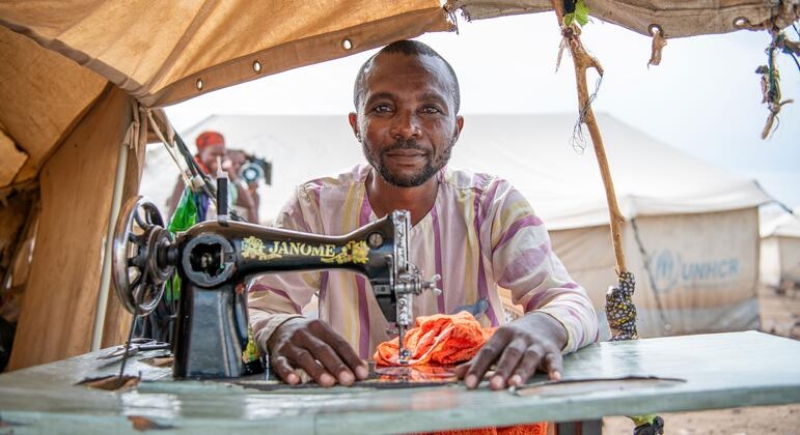
A tailor from the Democratic Republic of the Congo, earns a small income through sewing to support his family at the Kakuma refugee camp in Kenya.
Millions of refugees worldwide continue to face uncertainty as opportunities for resettlement remain far below growing global needs, the United Nations refugee agency warned on Tuesday.
According to the latest Projected Global Resettlement Needs report by the UN refugee agency, an estimated 2.4 million refugees will require resettlement in 2027 because they remain at risk in host countries and cannot safely return home.
Although the figure marks a six per cent decline from projections for 2026, the agency stressed that the reduction reflects differing realities in refugee situations rather than broad improvements in global conditions.
In Syria, political developments since late 2024 have enabled some refugees to consider voluntary returns despite ongoing instability.
However, for Afghan refugees in Iran and Pakistan, the decline in projected resettlement needs is partly linked to returns taking place under difficult and often adverse conditions.
Afghans remain the largest refugee group expected to need resettlement, followed by displaced populations from South Sudan, Sudan, Syria and Rohingya refugees living mainly in Bangladesh, many of whom continue to face severe protection risks and limited long-term options.
Regional demand for resettlement remains highest in Eastern and Southern Africa, followed by Asia and the Pacific, and West and Central Africa.
The agency warned that resettlement opportunities are shrinking even as humanitarian needs remain acute.
Only around 37,000 refugees departed through supported resettlement programmes in 2025, sharply down from more than 116,000 departures recorded a year earlier.
The decline places the international community behind schedule in reaching its target of providing 130,000 resettlement places annually by 2027.
Officials attributed the shortfall to policy changes in destination countries, including temporary pauses in admissions, stricter eligibility requirements and growing processing backlogs.
The refugee agency stressed that expanding resettlement pathways remains essential to protecting vulnerable people, easing pressure on host countries and offering durable solutions to families unable to return home safely.
Low- and middle-income countries continue to host nearly 68 per cent of the world’s refugees, placing significant strain on public services and national resources despite efforts to support displaced populations.
The agency urged governments to increase resettlement quotas, encourage more countries to participate and speed up processing to ensure more refugees receive life-saving support.
Marking the 75th anniversary of the 1951 Refugee Convention this year, the agency also called on world leaders to renew commitments to refugee protection and expand long-term solutions for displaced populations.
The agency said refugees who are successfully resettled often contribute economically and socially to their new communities while continuing to support relatives in countries of origin and asylum.
“Resettlement is not charity, but an enduring solution that helps break the displacement cycle for future generations,” the agency said.