

- Bangladesh on The Verge of a Solar Energy Revolution |
- Bangladesh Bank Injects $100 Million Into Forex Market |
- Iran Says Bangladesh Ships Must Follow Hormuz Directives |
- Bangladesh Draft Law Seeks Court Approval Before Arresting Journalists |
- ECNEC Approves 13 Projects, Defers Decisions on Four |
Bangladesh on The Verge of a Solar Energy Revolution
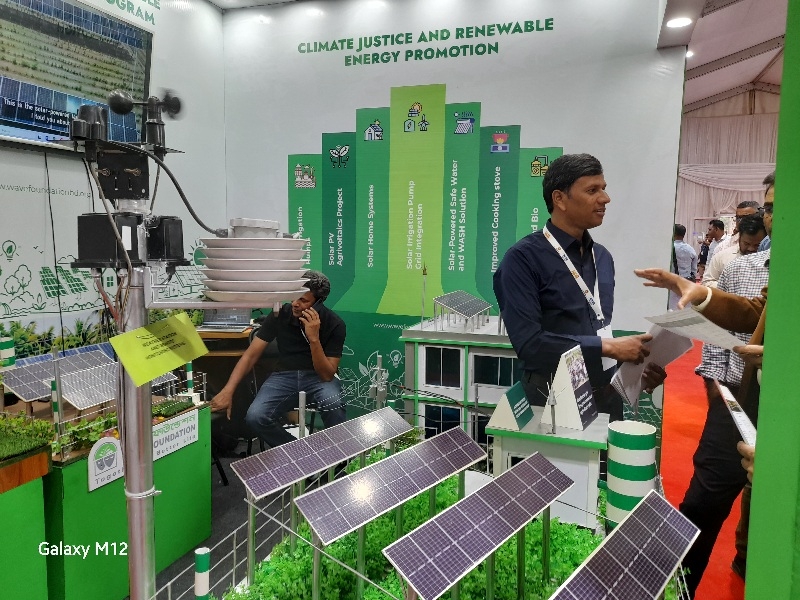
A volunteer responding to queries of visitors at the Solar Expo 2026 on Wednesday 4 November 2026.
Mostafa Kamal Majumder
With a firm policy taken by the government to generate 10,000mw of solar power by 2030, taxes and duties on the import of solar energy equipment mostly withdrawn and a concessional green financing system put in place through banks, specialised agencies and dedicated private sector organisations, Bangladesh looks like on the brink of a solar revolution.
A two-day Bangladesh Solar Expo 2026 at the Bangladesh-China Friendship Conference Centre in the capital on Tuesday and Wednesday drew so much of enthusiasm that the 90 stalls in there were overwhelmed by visitors, mostly potential buyers of solar systems, entrepreneurs making assessment of investment prospects in solar energy and students from Schools and colleges and universities – some of them coming in groups.
Apart from importers of solar energy equipment, entrepreneurs already installing solar home systems, offering affordable solar systems for coastal people living on the frontline of climate change, solar industry systems, locally produced solar panels, electric cables, firms offering competitive solar irrigation systems with submersible pumps, and lithium-ion batteries for power storage and some even selling solar bulbs and fans to the satisfaction of visitors.
There were also stalls of banks offering green financing at the rate 5 percent with low-cost fund from the Bangladesh Bank, and specialised NGOs offering credit at a slightly higher rate of 6 percent, solar energy leaders IDCOL (Infrastructure Development Company Limited), Sustainable Energy Development Authority (SREDA), and public sector microcredit organisation Palli Karma Sahayak Foundation (PKSF) gave the exposition depth. Among the banks was the Commercial Bank of Ceylon.
The National Board of Revenue had a stall proudly displaying notices showing soar energy equipment import is subject to only one percent duty, representing a great leap forward for the burgeoning renewable energy sector. DESCO (Dhaka Electric Supply Company) made copies of the gazette of the ordinance on special provisions for solar energy installation, expansion and related matters, promulgated by the President on 19 October last, available to visitors.
Different companies placed before visitors, packages of solar energy systems which customers can take with bank credit support and a down payment of 20 percent. There were also stalls of companies which were already producing solar electricity and selling the same to the Power development Board – plant capacities ranging from 19 megawatt to 100 megawatt.
A great thing is that investment in solar energy has become a more attractive business proposition that before and private corporate bodies are stepping in. Banks however should remain cautious that loan defaulters cannot take advantage of this concessional finance and in the end turn the initiative futile by transferring money to other uses.
On Wednesday, the second day of the expo, volunteers at the stalls had a tough time to respond to queries of visitors and supply them with brochures and business cards. Yet some of the stalls offered coffee, popcorn and chocolates to visitors showing interest to invest in the industry or buy products that were on display.
In an import dependent energy scenario that has been severely affected by the disruption of the energy supply chain caused by the intermittent war against Iram, Bangladesh now has only one option to steer speedily clear of the crisis by investing in solar energy which is abundant in the country.
While opening the Solar Expo 2026 Prime Minister Tarique Rahman disclosed his government’s aim to generate 3000mw to 4000mw of solar energy before the next summer. Looks ambitions. But without pursuing this target how the government will achieve 10,000mw of solar energy three years later.
A great enthusiasm has been generated among potential investors. The authorities concerned should do continuous monitoring to ensure that the drive for solar energy does not get misdirected due to inept handling, use of substandard material, and lack of proper workmanship in installation of solar energy systems and their maintenance.