

- HSC Results 2026 Published, Pass Rate Stands at 52.12% |
- Nations Agree to Revive Efforts to Meet 2030 Nature Goals |
- Dhaka Among World’s 15 Most Polluted Cities on Saturday |
- Over 12.70 lakh candidates await HSC, equivalent exam results |
- AI changing the way we think. Will we notice in time |
Vitamin A Discovery Challenges Long-Held Theory of Vision
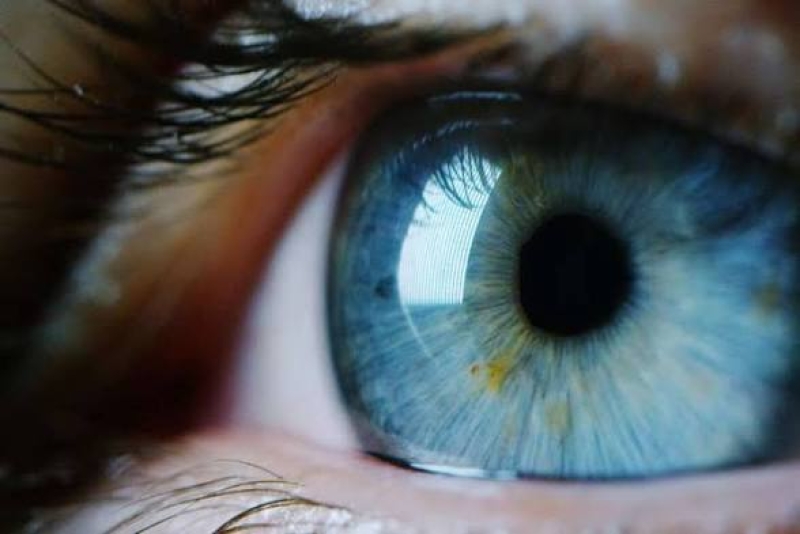
Scientists at Johns Hopkins University have discovered an unexpected role for a vitamin A derivative in the development of human vision, offering new insights into how the eye forms specialised cells responsible for sharp central sight.
The study found that retinoic acid, a molecule produced from vitamin A, works alongside thyroid hormones to shape the development of the retina. The findings challenge a scientific explanation that has remained influential for nearly three decades.
Published in the journal Proceedings of the National Academy of Sciences, the research suggests that some cells initially sensitive to blue light can develop into cells that detect red and green light during fetal development.
The findings could improve scientists’ understanding of how the human eye develops and potentially inform future treatments for macular degeneration, glaucoma and other vision-related diseases.
“This is a key step toward understanding the inner workings of the centre of the retina, a critical part of the eye and the first to fail in people with macular degeneration,” said Robert J. Johnston Jr., an associate professor of biology at Johns Hopkins University who led the study.
To investigate the process, Johnston and his colleagues developed miniature human retinal tissues, known as organoids, under laboratory conditions. These structures allowed researchers to observe how retinal cells develop over several months, providing insights into changes that are difficult to study during pregnancy.
The research focused on the foveola, a small region at the centre of the retina responsible for detailed central vision. It enables people to read, recognise faces and distinguish fine details. Although it occupies only a tiny portion of the retina, researchers estimate that it contributes to around half of human visual perception.
The foveola contains specialised light-sensitive cells called cones. Humans have three types of cones, which respond primarily to blue, green and red wavelengths of light. Unlike other parts of the retina, however, the foveola contains red- and green-sensitive cones but no blue-sensitive cones.
Researchers found that this arrangement develops through two coordinated biological processes.
During the 10th to 12th weeks of fetal development, a small number of blue-sensitive cones initially appear in the foveola. By the 14th week, some of these cells appear to have developed into red- and green-sensitive cones.
The researchers identified retinoic acid and thyroid hormones as key factors involved in this process.
Retinoic acid helps regulate cell development and limits the formation of blue-sensitive cones in the central retina. Thyroid hormones, meanwhile, appear to encourage the remaining blue-sensitive cones to develop into red- and green-sensitive cones.
“First, retinoic acid helps set the pattern. Then, thyroid hormone plays a role in converting the leftover cells,” Johnston said.
The discovery challenges a long-standing scientific explanation that blue-sensitive cones in the developing foveola simply migrate to other parts of the retina while retaining their original identity.
Instead, the researchers’ observations suggest that some of these cells change their identity as the eye develops. Although cell migration has not been completely ruled out, the findings support an alternative explanation for how the retina develops its specialised structure.
The researchers stressed that the discovery concerns vitamin A signalling during fetal development. It does not mean that taking vitamin A supplements can improve vision in adults.
Potential for Future Vision Restoration
Beyond explaining the development of human vision, the research could open new possibilities for treating diseases that damage retinal cells.
One potential application is macular degeneration, a condition that damages the central region of the retina and can seriously affect reading, driving and facial recognition. Although some treatments can slow the disease, there is currently no cure.
Johnston’s team is working to improve laboratory-grown retinal organoids so they more closely resemble the structure and function of the human eye.
The long-term goal is to produce specialised light-detecting cells, known as photoreceptors, that could potentially be transplanted into damaged retinas to restore lost vision.
Katarzyna Hussey, a co-author of the study and a former doctoral student in Johnston’s laboratory, said the technology could eventually support cell replacement therapy.
She is now a molecular and cell biologist at CiRC Biosciences, a Chicago-based cell therapy company.
Hussey said researchers hope to develop customised populations of healthy photoreceptors that could integrate into existing retinal tissue and help restore vision.
However, she cautioned that the technology remains at an early stage and requires extensive development, safety assessments and effectiveness testing before it can be considered for clinical use.
The researchers believe their findings offer a better understanding of how the human eye develops its ability to distinguish colours and see fine details, potentially bringing scientists closer to new approaches to treating vision loss.