

- Pakistan Welcomes Bangladesh’s Interest in Makkah Pact |
- Nepal Floods Highlight Rising Glacier Risks in Himalayas |
- Deadly floods cause widespread destruction in China, Nepal |
- 80 maunds (3 tons) of hilsa caught in one net in the Bay |
- Glacier collapse likely caused Nepal-Tibet flood, scientists say |
AI Data Centres Could Drain Vast Water by 2030
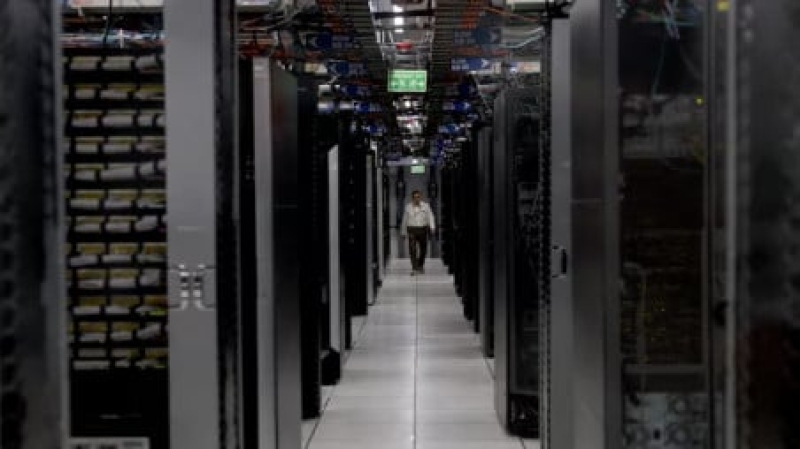
An employee walks through a data centre of Hewlett Packard Enterprise (HPE) inside its office building in Bengaluru, India, 29 May 2026. REUTERS/Priyanshu Singh/File Photo
The rapid growth of artificial intelligence (AI) is accelerating the construction of large-scale data centres worldwide, raising fresh concerns over soaring water and electricity consumption.
A new report by the United Nations University Institute for Water, Environment and Health (UNU-INWEH) warns that by 2030, AI-powered data centres could consume water equivalent to the annual domestic needs of 1.3 billion people.
The report says data centres depend heavily on water-intensive cooling systems to prevent servers from overheating, particularly in warmer regions, intensifying concerns about environmental sustainability in areas already facing water scarcity.
According to the findings, the water footprint associated with projected data centre electricity use could reach 9.3 trillion litres by 2030 — enough to meet the minimum annual household water needs of the entire population of Sub-Saharan Africa.
Electricity demand is also expected to rise sharply.
The report estimates global data centres will consume 945 terawatt-hours (TWh) of electricity annually by 2030, more than double current levels and nearly three times the combined yearly electricity consumption of Bangladesh, Pakistan and Nigeria.
In 2025 alone, data centres used an estimated 448 TWh of electricity. If treated as a country, the sector would rank as the world’s 11th-largest electricity consumer, according to the report.
The electricity consumed by data centres in 2025 would have been enough to power the annual residential electricity needs of the entire population of Sub-Saharan Africa — around 1.3 billion people — for approximately 2.6 years.
The findings highlight growing concerns over the environmental costs of AI as global demand for computing power continues to surge, putting increasing pressure on water and energy resources.