

- DP World to Operate Chattogram Port NCT for 15 Years |
- Anne Carson Wins 2026 Nobel Prize in Literature |
- Workers Helping Feed the World but Starved of Dignity |
- They feed the world, but food workers are Earth’s most exploited |
- Groundwater In India’s Nashik Tests 1,000 Times Over Toxic Chromium Limits Ahead Of Kumbh Mela |
DP World to Operate Chattogram Port NCT for 15 Years
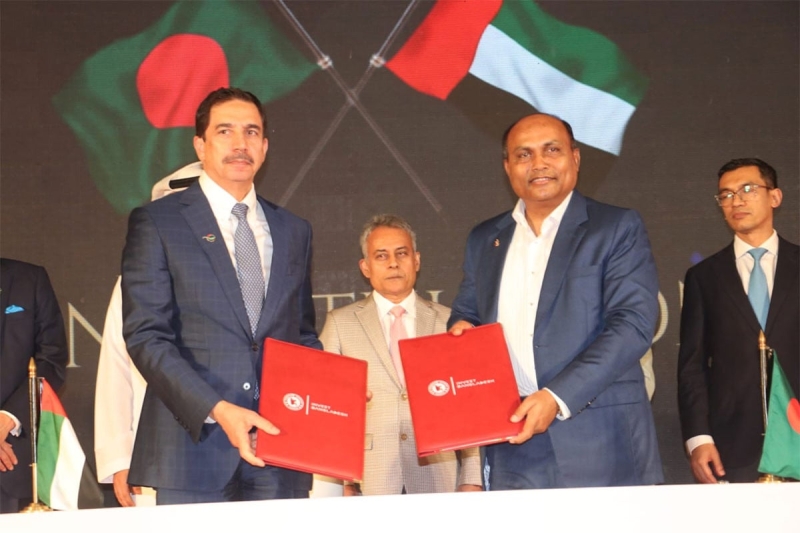
Chattogram Port Authority has signed an agreement with UAE-based port operator DP World to operate the New Mooring Container Terminal (NCT) for 15 years.
The agreement was signed at the Investment Development Authority’s office in Agargaon, Dhaka, on Thursday afternoon.
DP World Chairman and CEO Sultan Ahmed bin Sulayem and Chattogram Port Authority Chairman Moniruzzaman signed the agreement on behalf of their respective organisations.
Under the agreement, DP World will operate the NCT under the international landlord port model. Ownership and overall control of the terminal will remain with Chattogram Port Authority, while the foreign operator will manage the terminal for the duration of the concession.
DP World is expected to invest around $150 million during the 15-year concession period. The investment will cover an upfront payment, terminal modernisation, equipment upgrades and improvements in technological capacity. A significant portion of the investment is expected to come as foreign direct investment.
DP World will be responsible for operating the NCT as well as maintaining and repairing its equipment. The government and Chattogram Port Authority will not have to bear these costs during the concession period.
The agreement also includes a revenue-sharing mechanism. The port authority will receive a share of revenue generated from each twenty-foot equivalent unit (TEU) container, with its share increasing as the terminal’s average revenue rises.
The port authority will receive between 40% and 67% of the royalty or revenue share per TEU, according to the agreement.
No employees currently working at the NCT will be laid off following the agreement, officials said. Existing workers will instead be gradually incorporated into the new arrangement under the public-private partnership framework, while their salaries and benefits will remain unchanged.
DP World will implement international standards on health, safety, security and environmental management. The company operates terminals at more than 60 ports worldwide and will use its experience to improve operational efficiency at the NCT.
The introduction of advanced terminal management and modern technology is expected to reduce vessel and truck turnaround times. The authorities aim to gradually reduce truck turnaround time to 90 minutes.
Paperless operations and greater automation are also expected to simplify import and export procedures.
At the end of the concession period, the terminal will be handed back to Chattogram Port Authority. The agreement also provides for the transfer of technology and technical expertise to local workers, with the aim of strengthening their skills.
The arrangement is expected to enhance Bangladesh’s logistics capacity, attract investment and improve the country’s competitiveness in international trade.
The government had earlier approved in principle on October 1 a draft concession agreement to operate the NCT through a foreign operator for 15 years.
The NCT is the largest of the four major container terminals at Chattogram Port. It handled around 1.385 million TEUs in the last fiscal year, accounting for approximately 44% of the port’s total container handling.
The agreement was signed despite objections from labour organisations and other groups. Authorities have argued that improving NCT operations is necessary to reduce vessel and cargo handling times, which remain longer than at many regional ports and affect Bangladesh’s trade competitiveness.