

- Support to coastal security, early completion of MRT lines, Airport Terminal III, business promotion assured |
- Tarique Seeks Japanese Support for Energy, Tech and Infrastructure |
- Japan eyes 1 trillion yen investment in Bangladesh over 5 years |
- Dhaka Among World’s 11 Most Polluted Cities on Tuesday |
- Tide Rising, Time Running Out For Coastal People, Wildlife |
Ganga needs water too - SANDRP
Bihar’s unheard voices in Farakka debate
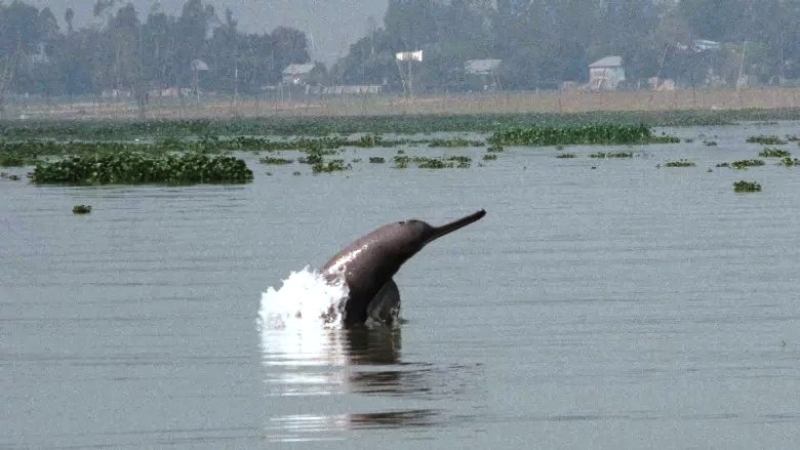
Ganges River Dolphin Credits- WCS Bangladesh and Nadim Parves via World Bank Newsletter_11zon
What is needed is an independent, multidisciplinary assessment of Farakka’s long-term impact. Five decades of data on discharge, sediment, erosion, agriculture, fisheries, dolphins, groundwater and navigation should be placed in the public domain. The barrage’s operation, possibilities of redesign and alternative arrangements should be examined by independent experts. Farmers, fisherfolk and riverbank communities must have a meaningful place in decision-making.
Knowledge of a river does not reside only in laboratories. It resides in the farmer’s field, the fisherman’s boat, villages displaced by erosion and the declining number of fish in the river. The real reckoning over Farakka is not simply about how much water it has delivered to whom. It is about what it has meant for the river’s flow, sediment, farms, fish, dolphins and river-dependent communities. That reckoning must be based neither on sentiment nor political convenience, but on data and the testimony of those who live with the river.
Bihar needs water. Bangladesh needs water. West Bengal needs water. But the Ganga needs water too. The first principle of the next generation of water policy must be that an adequate share of the river’s flow remains protected for its ecological survival. The survival of the Ganga is inseparable from the survival of the people, farms, fishermen, villages and civilisation that have grown around it. The next chapter of Farakka should not be merely about dividing water. It should be about saving the river. (Kumar Krishnan)