

- Bangladesh, Türkiye Leaders Hold Bilateral Talks |
- Climate talks start in Antalya, after wrangle over agenda items |
- 8 Die of Dengue as 1,595 More Are Hospitalised |
- Hasina to Face Execution Process if She Returns: Prosecutor |
- US to become 1st nation to fully shun a UNHR Council review |
El Niño could cost global economy up to $11 trillion: IFAD
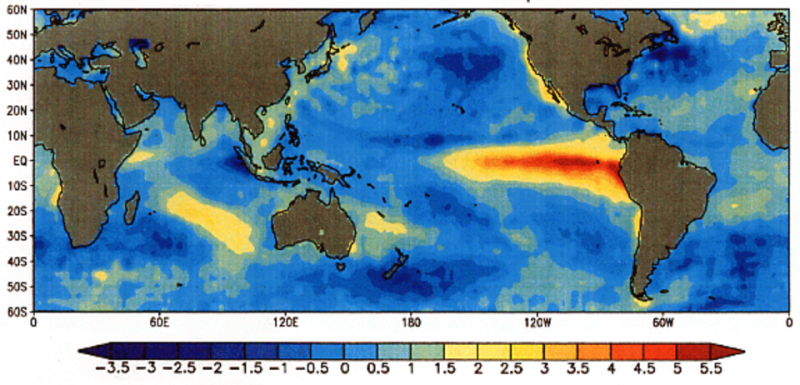
El Nino. Chart of abnormal ocean surface temperatures [ºC] observed in December 1997 during the last strong El Niño.
9 November 2026 - The El Niño extreme weather pattern could cost the global economy up to $11 trillion and seriously impact food security, said the UN agency tackling rural poverty in developing countries on Monday.
El Niño could cost the global economy up to US$11 trillion, with significant and long-lasting consequences for food security and rural livelihoods, according to a new report released today at #COP31 by IFAD and Türkiye’s Ministry of Agriculture and Forestry. The report, "Food Systems Under Stress: Building Resilience from the First Mile", highlights how overlapping climate and economic shocks, from droughts to rising energy and fertilizer costs, are putting increased pressure on the small-scale farmers who produce a third of the world’s food. “This report makes an important argument based on evidence from our IFAD investments: resilience is not built by investing in single interventions, but by connecting investments in inputs, markets and finance so that gains in one area are not lost in another,” said
Evidence from IFAD’s investment portfolio shows that when these interventions are combined, the results are significantly stronger. When drought and price shocks occur simultaneously, finance-focused interventions can reduce farm income losses by 9.8%, while bundled investments across inputs, markets and finance can reduce losses by 18.7% – nearly twice as much. "Preparedness means acting before a crisis strikes. Farmers' resilience is determined by the steps taken beforehand: access to water, affordable inputs, finance and insurance and reliable links to markets. When these elements move together, food producers stand far stronger in the face of shocks," said
Minister of Agriculture and Forestry of the Republic of Türkiye. Experiences across Kenya, Bangladesh and Türkiye demonstrate the impact of this approach. From drought insurance and improved market access to solar-powered irrigation, credit and better storage facilities, integrated investments have helped farmers strengthen resilience and increase households’ incomes by up to 50%. – UN News