

- Egrets reappear along Buriganga after many years |
- 63 students fall sick for fire at N’ganj Madrasha; 4 at ICU |
- Dhaka Ranks 10th Among World's Most Polluted Cities on Tuesday |
- Trump says he believes war with Iran is militarily 'effectively over' |
- Government Seeks Hasina’s Return Under Extradition Treaty |
Egrets reappear along Buriganga after many years
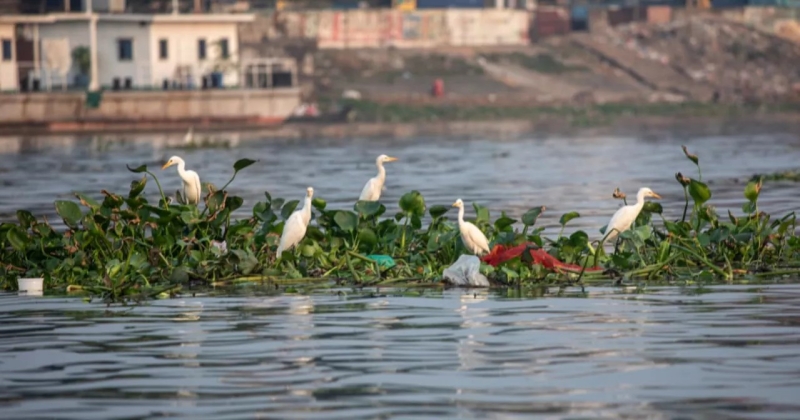
Egrets have started reappearing along The Buriganga after many years. Photo- Md. Rakibul Hasan - UNB
Egrets, rarely seen along the Buriganga River in recent years, are once again appearing in noticeable numbers at Sadarghat and other parts of the river in the capital.
The birds, once commonly spotted along the riverbanks and on floating water hyacinths, had gradually become less visible over the years. Recently, however, flocks of egrets have been seen resting on water hyacinths at different points along the river.
Local residents say the birds are now more visible than in previous years.
Apu Das, a resident of Laxmibazar, said egrets had rarely been seen along the Buriganga for a long time, but their presence had recently become more noticeable.
Photographer Fahad Al Alam, a resident of Mohammadpur, also spotted the birds while visiting Sadarghat to take photographs.
He said egrets were once common along the river, but their numbers had gradually declined. Their recent increased presence had again drawn attention, he added.
Egrets generally inhabit rivers, canals, wetlands and other water bodies. They mainly feed on fish, small aquatic animals, frogs and insects.
Despite years of pollution posing serious challenges to the Buriganga's natural environment and biodiversity, the renewed presence of the birds has drawn attention to the importance of protecting the river and its wildlife.
Environmentalists stress the need to control river pollution, prevent waste dumping and ensure safe habitats for aquatic animals and birds to preserve the river's biodiversity. - UNB