

- Speaker sees no possibility of Hasina's return even in 10-yrs |
- Bangladesh Ambassador to Japan returns home ahead of PM’s visit |
- Sajek Road Blockade: 2,933 Tourists Evacuated Amid Gunfire |
- Climate Crisis May Displace 7.5% of Bangladeshis by 2050 |
- NEIR Rollout Targets Tk 2,000cr Revenue Loss From Illegal Phones |
What Daily Life Looks Like for Afghan Women Now
I am an educated Afghan woman and a former government employee. I have long been active in women’s rights advocacy, education, and community development. For me, living in Afghanistan is fraught with danger and difficulty. In a context where women are denied the right to study, work, or participate in public life, my previous roles in government institutions and international organizations—and my advocacy for women’s rights—place me at particular risk.
With the fall of the previous government and the Taliban’s takeover, all my work in women’s rights and civil society has effectively become a target on my back. I am now being pursued by Taliban operatives and others equally opposed to women’s freedom. I have been repeatedly threatened, both directly and indirectly, by the Taliban and individuals associated with the group.
These threats are not only directed at me as a women’s rights activist; my husband is also facing similar threats for having worked with the previous government. As a result, our entire family is confronted with multiple hostile forces, making it extremely difficult to continue living in Afghanistan.
Under these circumstances, perhaps it is useful to describe what an average day looks like for me.
My day begins at five in the morning. There is no electricity because our solar panels are old and no longer store enough energy, so the house remains dark. I use my phone’s flashlight to find my way to the kitchen and prepare breakfast. I ration our flour carefully. Prices are high, and wasting food is unthinkable.
I also use gas sparingly—only to cook rice—because it is expensive. I heat water using a small makeshift wood stove and store it in thermos flasks for tea and daily use.
My youngest daughter wakes up crying. I breastfeed her, and she falls back asleep. Then I take my son to school. Sometimes he is reluctant to go because he is afraid. The road is unsafe, and he has no pocket money, which heightens his anxieties. Despite this, we manage to persuade him.
He often returns home hungry. Breakfast is usually tea with dry bread or tea with sugar, so he is frequently undernourished and weak.
After my son leaves for school, the rest of the family eats breakfast.
My husband usually goes to the mountains to meet friends and former work colleagues, so I am often alone at home with my daughter. By 8 a.m., I have completed most of the household chores before the children’s snack time at 10 a.m.
After finishing the chores, I feed my daughter and put her down for a nap. Then I begin doing the laundry by hand every other day, as children’s clothes need frequent washing due to playing in the dirt.
When I find a little free time, I revisit my books. I go through old textbooks or review notes on psychology and education that I studied years ago. It saddens me because I know that in today’s Afghanistan, I cannot continue my education or return to work.
Some days, I am so exhausted and unwell that I lack the energy to do housework or care for my daughter properly. But because this innocent child did not choose to be born into these circumstances, I force myself to look after her. Many days, life feels unbearable.
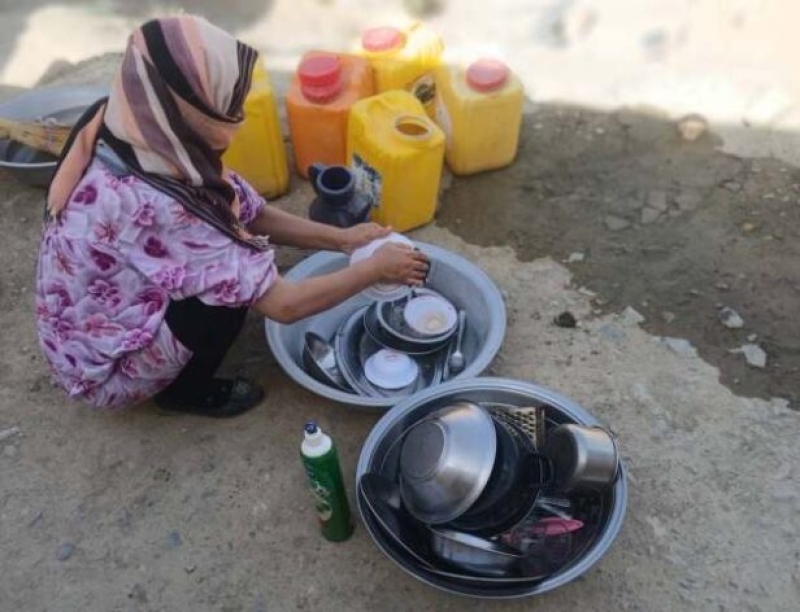
Before noon, I return to the kitchen to prepare lunch before my son returns from school at 12 p.m. Lunch is usually boiled potatoes and bread—too repetitive for the children’s liking, but we have no alternatives. They often cry, but eventually, they eat. By 1:30 p.m., the children finish lunch. I put them down for a nap, wash the dishes, and perform my prayers.
In the afternoons, I teach English and basic literacy to women in the neighbourhood. These lessons help me stay connected to the community and aware of their struggles. They also bring us some peace. Most of our conversations revolve around daily hardships—rising prices, lack of money, and fears about our children’s future. None of us has much hope, but sharing our burdens eases the loneliness and lifts our spirits temporarily.
Our home is outside the city centre in a village where we are not well known. This distance from the provincial centre means the Taliban rarely patrol the area, which makes the prohibited teaching easier. The women come in small groups and carry no books or pens that might arouse suspicion. The literate women take photos of the lessons on their phones, while the others learn on the spot, as they cannot study at home.
The lessons also involve practising household skills such as sewing, attaching headscarves, and other practical crafts to maintain their abilities.
My husband returns in the evening, usually tired, disillusioned, and deeply depressed. I try to comfort him, though I carry my own fears. My son struggles with his schoolwork and often becomes frustrated, so I sit with him and help him go over his lessons.
For dinner, I cook whatever is available—usually local rice, as it is more affordable.
After dinner, usually around 8 p.m., once the dishes are washed and put away, I revisit my online psychology studies. Psychology is desperately needed in today’s circumstances, and I am passionate about it. I am grateful to those who have supported my studies, as their help eases many of my struggles and brings me joy.
When everyone sleeps, I am left alone with my thoughts. I worry about my daughter’s future, knowing she cannot attend school in Afghanistan. I think back to my university days, when I had dreams and ambitions. Now, all I can do is pray that someday women will again have the chance to study, work, and live freely.
Most nights, these worries keep me awake. I lie in bed until morning, exhausted and hopeless. By dawn, I feel as though I have already worked a full day. I wake up dizzy, weak, and depressed—yet the day begins again.
It is important to say that this is my daily routine, every day. I am no longer a government employee, and like countless other women, I am confined to my home with no time for rest, leisure, or even a moment of freedom. In the past, days off meant visiting friends or relatives, exploring the city, or enjoying simple outings—things made possible by freedom of movement.
Now, the Taliban have banned women from walking in the streets, entering public spaces, or leaving home even for basic errands. Every step outside is forbidden. Every opportunity to live fully has been taken away.
I am deeply grateful to those who read my words. Through you, I hope my silenced voice can be heard. I hope it reaches the outside world—not only for me, but for hundreds of women whose lives are trapped under the same restrictions. Together, perhaps, we can find a path to reclaim dignity, life, and hope. Thank you from the bottom of my heart.