

- A black poa fish sold for 50 thousand |
- PM Calls for Emission Cuts, Boost Carbon Credits |
- Bangladesh to Build Modern Four-Dimensional Force |
- Govt bans PM's image on official banners, billboards |
- PM asks PGR not to distance him from people on security ground |
Organised Crime Claims War-Level Global Death Toll
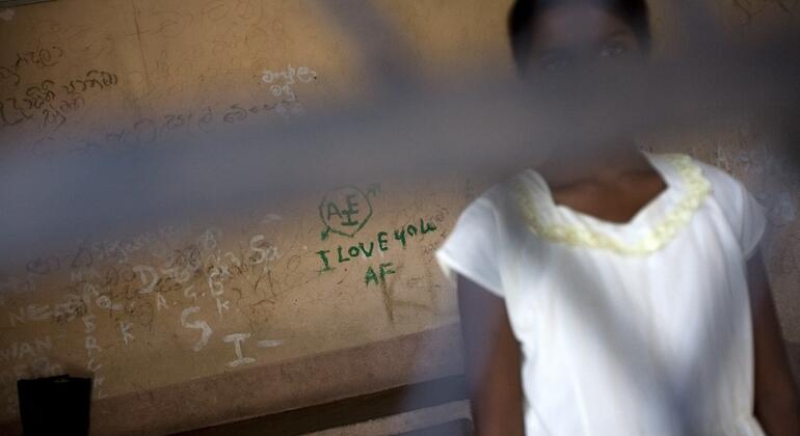
A UN human rights report has found that people trafficked and forced to work at scam centres are subjected to torture, sexual abuse and prison-like conditions. (representational photo)
When people think of the world’s deadliest threats, armed conflict usually comes to mind first. Yet every year, organised crime quietly claims a comparable number of lives.
Since 2000, UN estimates suggest that organised criminal groups have been linked to around 95,000 homicides annually. This figure is strikingly close to the estimated average annual global death toll from armed conflicts, which stands at about 92,000 people.
The comparison raises an obvious question: if organised crime kills as many people as war, why does it receive far less international attention?
As UN Secretary-General António Guterres has warned, “The activities of transnational organised crime take many forms, but the ramifications are the same: weakened governance, corruption and lawlessness, open violence, death and destruction.”
Beyond these global patterns lies a reality that is often far less visible: the human lives shaped by these networks, whose experiences rarely appear in headlines or statistics.
Trafficking victim
At 17, Mary left Benin City, Nigeria, believing she was travelling to Europe for a restaurant job and a better future. After transiting through Libya, she realised she had been trapped in a trafficking operation.
She was subjected to coercion, sexual violence and exploitation, and was unable to contact her family or escape the conditions imposed on her.
Looking back, Mary described the long-term psychological impact: “What I am going through right now is so serious. I see myself as a grown-up. I missed ever being a child.”
Yet amid the trauma, she also expressed fragile hope, saying: “One day I will have my documents, I will have an education, I will have work.”
Her words reflect a broader reality in which survivors often carry both deep trauma and uncertain hope.
Another trafficking victim added: “I often meet girls who dream of going to Turkey and Dubai to earn more. I tell them, ‘Please don’t go. There is nothing good for you there.’”
A hidden global toll
Unlike armed conflicts that unfold openly and dominate global headlines, organised crime operates in the shadows—embedded in communities, economies and sometimes even legitimate institutions.
Often, criminal groups do more than generate profits or exploit new technologies. They shape local power structures, influence public life and at times rival the state itself.
According to research by the UN Office on Drugs and Crime (UNODC), organised criminal networks are responsible for roughly one-fifth of all intentional homicides worldwide, rising to about half in parts of the Western Hemisphere.
But the toll extends far beyond killings. Drug trafficking drives hundreds of thousands of overdose deaths, including around 600,000 linked to opioids, according to the World Health Organization (WHO). Violence against journalists, community leaders and human rights defenders further weakens institutions and erodes public trust.
Unlike war, which leaves visible scars that capture global attention, the harm caused by organised crime is often less visible but equally far-reaching. While deaths can be counted, broader economic, social and governance costs remain difficult to measure.
Why it stays invisible
Organised crime attracts less attention than armed conflict partly because powerful criminal groups benefit from remaining unseen.
Rather than relying solely on violence, they embed themselves within social and economic systems, making their influence harder to detect.
UNODC notes that criminal organisations often enforce their own rules and resolve disputes internally, creating parallel systems of governance that operate alongside the state.
Criminal networks also work through legal businesses, professional intermediaries and supply chains, making them harder to identify and dismantle.
Increasingly, these networks function in decentralised forms rather than rigid hierarchies, allowing large-scale operations without clear leadership structures.
UNODC also highlights a media imbalance: wars produce dramatic images—tanks, bombings and destruction—while organised crime rarely offers such visible moments, resulting in far less coverage.
Parallel systems of power
In some regions, organised criminal groups exercise authority traditionally associated with the state.
Through coercion, corruption, control of markets and selective provision of services, they establish alternative systems of rule.
According to UNODC, gangs in Haiti have controlled an estimated 85 percent of Port-au-Prince, exploiting weak institutions to seize infrastructure and enforce their influence through violence and extortion.
The money behind crime
Much of organised crime’s power comes from its vast profits. Revenues are generated through drug trafficking, arms smuggling, human trafficking, wildlife crime, counterfeit goods and other illicit markets.
Drug trafficking alone remains the backbone of most transnational criminal organisations, generating hundreds of billions of dollars annually.
Cybercrime is also expanding rapidly. In East and Southeast Asia alone, online scams caused losses estimated between US$18 billion and US$37 billion in 2023, according to UN data.
A growing global challenge
Though less visible than war, organised crime claims a comparable human toll while quietly reshaping societies, economies and institutions worldwide.
Experts warn that treating it only as a law-enforcement issue overlooks its broader impact on public health, governance, economic development and social stability.
Its effects continue to undermine both individuals and the systems meant to protect them.