

- Heatwaves Cost Bangladesh Nearly Tk 77,000 Crore a Year |
- Protecting Bangladesh’s coastal people From Tide-induced Loss, Damage |
- Four Warehouses Linked to Salman Muqtadir’s In-Laws Sealed |
- Dengue surge: N’ganj hospitals treat patients on floors, verandas |
- Dhaka ranks 5th among world’s most polluted cities on Friday |
Jaishankar Warns of Major Food Crisis in Coming Months
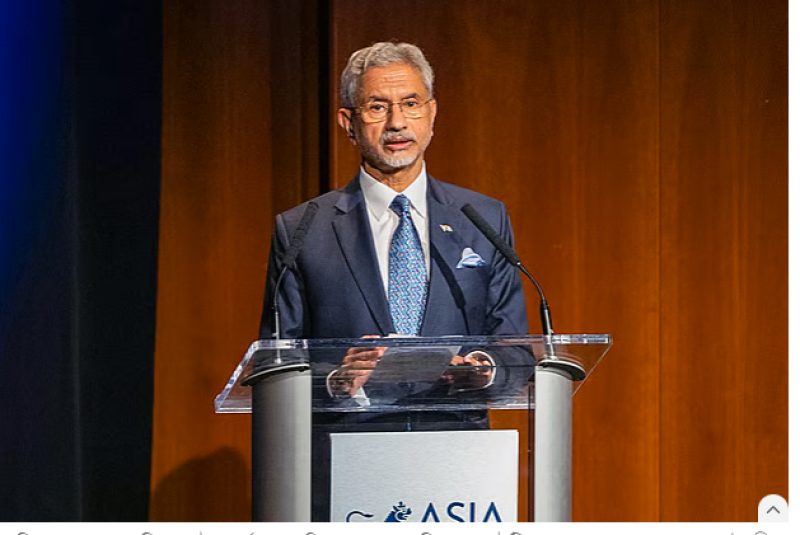
Indian External Affairs Minister S Jaishankar has warned that the world could face a major food crisis in the coming months as conflicts in Ukraine and the Iran-Gulf region disrupt energy supplies, grain shipments and fertiliser production.
Speaking at an Asia Society event in New York on Monday, Jaishankar said the conflicts were having a severe impact on economies in the Global South, particularly developing and emerging countries.
He said the global energy market was already under considerable pressure, with energy security concerns and geopolitical tensions surrounding oil supplies reinforcing each other.
Jaishankar warned that political interference in energy supplies could further complicate the market and push up prices at a time when greater stability was needed.
Turning to food security, he said disruptions to maritime trade could prevent some major grain-exporting countries from shipping their products, particularly through the Black Sea region.
He also pointed to growing fertiliser shortages, noting that some major fertiliser-producing centres are located in West Asia and Russia, where ongoing conflicts and disruptions have affected supplies.
Jaishankar said the situation could become even more difficult if adverse climate conditions, including a strong El Niño, add further pressure to agricultural production.
He warned that the combination of energy shortages, food and fertiliser constraints and financial pressures could create a major crisis for developing economies in the coming months.
According to Jaishankar, conflicts also tend to drive capital towards safer assets and away from developing countries, creating additional financial pressure on economies already dealing with higher energy and food costs.
He urged major powers to take into account the wider consequences of their decisions and remain sensitive to the basic needs of poorer countries.
Jaishankar also warned that prolonged energy and economic pressures could contribute to political instability in South Asia. He said the Ukraine war had already contributed to instability in countries in India’s neighbourhood and expressed concern that tensions involving Iran and the Gulf could further aggravate the situation.
On how developing countries should respond, Jaishankar said there was no single approach. Countries would need to assess their own vulnerabilities and national interests and adjust their policies accordingly.
He also advocated greater strategic autonomy and self-reliance to help countries withstand future economic and geopolitical shocks, while acknowledging that different countries would need different responses depending on their circumstances.