

- 30 killed as two high-speed trains collide in Spain |
- Tarique Urges Japanese Investment in Energy, Rail, Technology |
- Tarique Seeks Japan’s Support to Diversify Bangladesh’s Exports |
- Dhaka Among World’s 12 Most Polluted Cities on Wednesday |
- Cyclone Arnab Hits India, Four Bangladesh Ports on Alert |
Israel Election Deadlock Leaves Netanyahu’s Future Uncertain
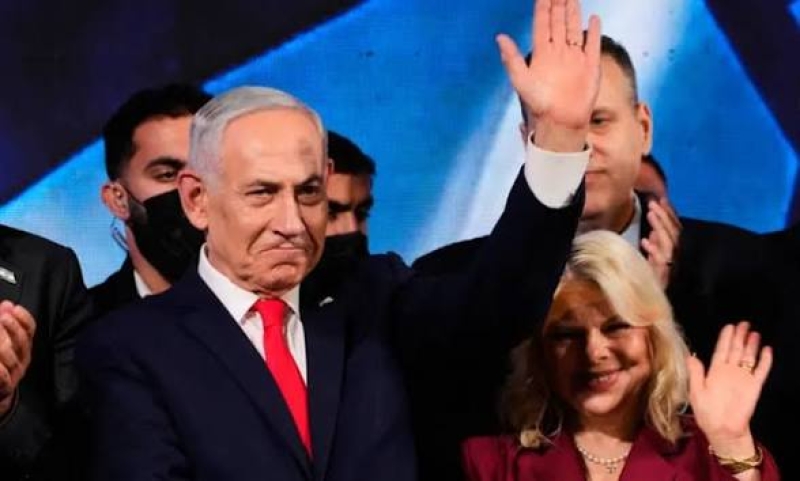
No political bloc appears to have secured a clear majority in Israel’s election held on Tuesday night, leaving Prime Minister Benjamin Netanyahu and his main rival, Gadi Eisenkot, facing a difficult path to forming the next government, according to exit polls.
Israel’s parliament, the Knesset, has 120 seats, and a party or coalition needs at least 61 to form a government. Exit polls released by the country’s three major television channels, Channels 11, 12 and 13, suggested that neither side had secured the required majority.
The polls projected that Netanyahu’s right-wing bloc would win around 51–52 seats, a significant decline from the 68 seats held by the coalition he led in the outgoing parliament. His Likud party, however, was expected to remain the largest single party.
Other reported exit-poll figures put Netanyahu’s bloc at 52 seats, the opposition alliance led by former military chief Gadi Eisenkot’s Yashar party at 49, and the Arab List at 19.
The results suggest that neither camp can readily command the 61 seats needed to govern, potentially opening the way for weeks or even months of political negotiations.
Israeli politics has long depended on coalition-building, meaning that winning the largest number of seats does not automatically guarantee the premiership. Netanyahu’s prospects of remaining in office are therefore uncertain.
The opposition also faces significant obstacles. Although anti-Netanyahu parties were projected to win a combined 68–70 seats in some exit polls, they remain divided among right-wing, left-wing and centrist groups, as well as Jewish and Arab parties.
Eisenkot’s Yashar party was projected to be the largest opposition party. To form a government, however, the opposition may need cooperation from Arab parties, a prospect that not all opposition leaders are prepared to accept.
Exit polls provide only an early indication of the outcome, and the picture could change as votes are counted. Final results were expected to take several days.
Ehab Jabarin, a Palestinian political analyst and researcher living in Israel, said the exit polls revealed a clear weakness in Netanyahu’s bloc. He cautioned against declaring either a definitive victory for Netanyahu or the end of his political career before the final results were known.
Jabarin also said Netanyahu could remain as caretaker prime minister during negotiations if neither side managed to form a government.
Both Netanyahu and Eisenkot addressed their supporters on election night, seeking to present the preliminary results in a favourable light.
Once the official results are announced, the next stage will involve Israeli President Isaac Herzog. He is expected to consult representatives of the elected parties in Jerusalem, where each party will recommend its preferred candidate for prime minister.
Based on those recommendations, Herzog will assign a candidate the task of forming a government. The nominee does not necessarily have to lead the largest party; the key consideration is who appears most capable of securing the support of at least 61 lawmakers.
The election outcome will therefore depend not only on the number of seats won but also on whether a viable coalition can be assembled and sustained.