

- SC Stay Clears Way for Public University Admission Tests |
- Dhaka Ranks 9th Among World's Most Polluted Cities on Monday |
- Top Criminal Sweden Aslam Arrested at Dhaka Airport |
- Guterres Urges Climate Justice After COP31 Talks Collapse |
- RMG Unrest Costs 317 Factories $428m in 18 Days: BGMEA |
India announces $1.62B assistance for Nepal's flood recovery
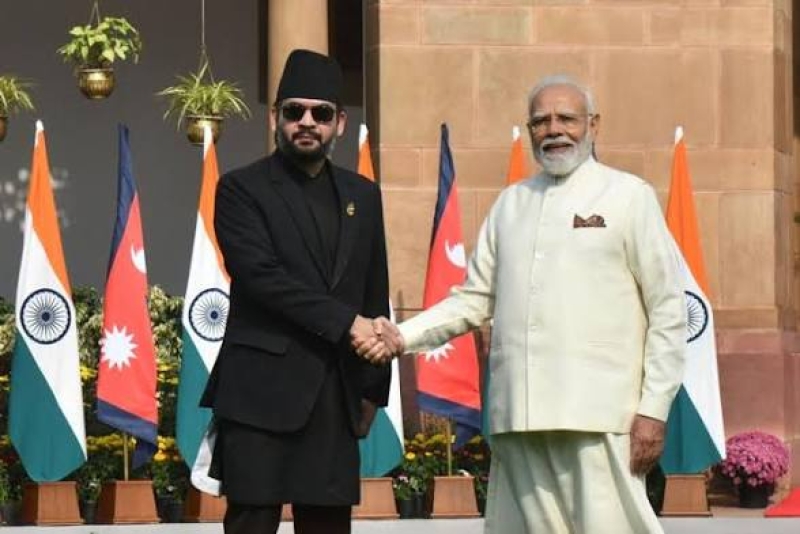
India on Monday announced an economic assistance package worth $1.62 billion to help Nepal rebuild areas devastated by floods, providing significant support for the Himalayan country's recovery efforts.
Floods that struck Nepal on Aug. 26 destroyed roads, bridges, power plants, agricultural land and homes, causing an estimated $4.7 billion in damage, according to Nepali authorities.
The UN Fund for Responding to Loss and Damage has also pledged around $20 million to support the country's recovery.
Indian Prime Minister Narendra Modi announced the assistance following talks with Nepalese Prime Minister Balendra Shah in New Delhi.
Shah is visiting India for the first time since assuming office in March, six months after a youth-led uprising over corruption and nepotism forced former Prime Minister K.P. Sharma Oli to leave power.
Modi said the package would support infrastructure restoration, community reconstruction and assistance for people who lost their homes and livelihoods in the disaster.
The floods claimed 1,500 lives and left more than 5,200 people missing.
The two prime ministers also virtually inaugurated a hydropower project and an oil storage facility in Nepal, alongside an oil pipeline and a cross-border railway service linking the two countries.
Nepal shares an open border with India, allowing citizens of both countries to travel across without passports or visas.
India has traditionally maintained significant influence over the Himalayan nation, although relations have faced strains over territorial disputes and allegations of political interference.
Meanwhile, China has strengthened its presence in Nepal in recent years through investments in airports, highways and hydropower projects.
Despite Beijing's growing influence, landlocked Nepal remains heavily reliant on India for fuel and other essential supplies.
However, energy cooperation between the two neighbours has increasingly become reciprocal, with India importing around 1,200 megawatts of electricity from Nepal, reports UNB.