

- REHAB president's post declared vacant over loan default |
- China criticises idea it is in 'malicious competition' over AI |
- UP elections to be held in 7 phases, 1st phase on Nov 12 |
- Govt Launches Major Plan to Combat Pollution in Dhaka Rivers |
- New warnings about risks of AI to humanity revive the debate |
At least 23 Rohingyas dead, 30 missing after boat sinks
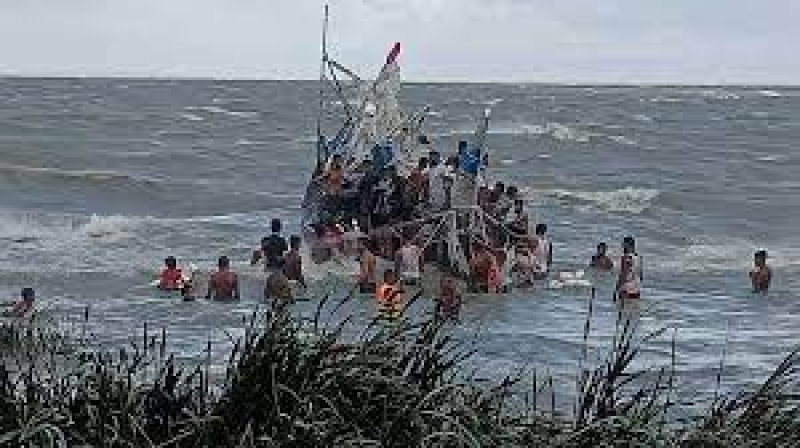
The Rohingyas were fleeing the Rakhine capital, Sittwe
The bodies of 23 Rohingyas who were fleeing Myanmar's Rakhine state have been recovered after their boat sank.
Thirty others are still missing, while eight people are reported to have survived the mishap.
The survivors said they were trying to reach Malaysia when their boat carrying more than 50 passengers foundered and was abandoned by its crew on Sunday.
Every year thousands of Rohingyas attempt the perilous sea journey to Malaysia or Indonesia.
They are escaping persecution in Myanmar and overcrowded refugee camps in Bangladesh. Those who died this week include 13 women and 10 men, all Rohingya Muslims, a rescue team told BBC Burmese.
The Muslim Rohingyas are an ethnic minority in predominantly Buddhist Myanmar. Many of them fled to Bangladesh in 2017 to escape a campaign of genocide launched by the Burmese military. Those remaining in Myanmar too have been trying to flee since the military coup in 2021.
Survivors of the boat sinking this week recall being struck by a large wave near Rakhine's capital, Sittwe.
They say the smugglers, who had been paid around $4,000 (£3,153) per person for the journey to Malaysia, then abandoned the boat. The bodies of the victims have been picked up by other boats, or washed up on the beach.
The long journey across the Andaman Sea in overcrowded fishing boats is always dangerous, but especially at this time of the year, at the peak of the monsoon storm season.
Most Rohingyas attempt to cross between the months of October and May.
They are willing to take the risk - and often sell their only assets, such as land, to fund the trip - because of the unrelentingly grim conditions in which they are forced to live, either as refugees in appallingly crowded camps over the border in Bangladesh, or subjected to discrimination and restrictions on their movement in Myanmar, reports BBC.