

- Dhaka's air 5th worst in the world this morning |
- Around 7,500 Bangladeshis imprisoned in Saudi Arabia: Shama Obaed |
- Bangladesh Outperforms India in Global Hunger Index 2026 |
- Covered van hits Gazipur police patrol team, killing SI, BNP leader |
- Korean City scrambles to rescue dusky shark after it returns to canal |
Women in Sahel Face Violence, Poverty, and Erasure
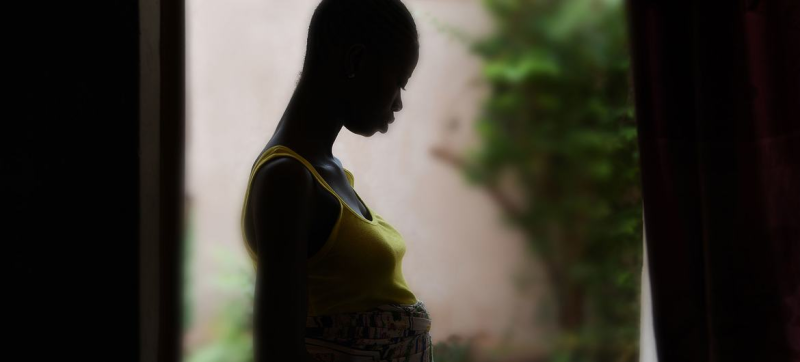
Women across the Sahel region are facing a steady erosion of their human rights and fundamental freedoms. (file photo)
In Africa’s Sahel region, deepening violence and poverty—driven by displacement, hunger, and terrorism—are robbing women and girls of safety, education, and the prospect of a viable future.
Risks to women and girls across this vast region are severe and systemic, as political instability, environmental collapse, and a shrinking international presence take their toll.
From abductions and child marriage to exclusion from schools and public life, their lives and opportunities are being steadily stripped away, said Sima Bahous, Executive Director of UN Women, while briefing the Security Council on Thursday.
“In the Sahel, where the world’s gravest concerns converge, women and girls bear the brunt,” she said.
She added that crises stemming from terrorism, poverty, hunger, a crumbling aid system, and shrinking civic space are “converging—violently and disproportionately—on their bodies and their futures.”
In countries like Burkina Faso, Mali, Niger, and Chad, life for women under extremist control “is one of erasure from public space,” Ms Bahous stated.
Their movement, visibility, and even clothing are heavily restricted. Schools have been burned or shut down, leaving more than one million girls without access to education.
“Abduction is not a by-product of terrorism in the Sahel—it is a tactic,” she said, noting that in Burkina Faso alone, the number of women and girls abducted has more than doubled in the past 18 months.
In Mali, 90 percent of women are affected by female genital mutilation. Rates of child marriage in parts of the region are among the highest globally. Maternal mortality—driven by early pregnancy and poverty—is among the worst in the world.
“The distances women and girls travel for water or firewood are growing longer, while their safety is shrinking,” Ms Bahous said.
Two-thirds of women surveyed reported feeling unsafe during these journeys. Climate change has worsened the hardship, with extreme heat and drought increasing mortality and food insecurity across the Sahel.
Despite growing needs, international support is dwindling:
Only 8% of this year’s humanitarian appeal for the region had been met by May.
Development assistance has dropped by nearly 20% in the past two years.
As a result, many women’s protection and empowerment programmes have been suspended. Government ministries dedicated to gender equality are being defunded, merged, or closed.
Democratic and civic space is also narrowing.
In Niger, only 14% of participants in recent institutional reforms were women. In Mali, just 2 out of 36 members drafting the new national charter were women.
Leonardo Santos Simão, head of the UN Office for West Africa and the Sahel (UNOWAS), warned that waves of jihadist attacks and political instability are fuelling displacement and undermining progress.
He added that shrinking space for media, civil society, and women’s organisations is threatening hard-won gains, and a broader crisis is eroding governance and peacebuilding efforts.
“The region’s economy remains highly vulnerable to external shocks. Although macroeconomic indicators show improvement, rising debt levels continue to constrain governments’ capacity to provide essential services,” he said.
Still, some progress has been made.
In Chad, women now hold 34% of parliamentary seats. In conflict-prone border zones of Mali and Niger, women’s participation in local peacebuilding increased from 5% to 25%, helping resolve over 100 disputes related to scarce resources.
Across the region, joint UN programmes have increased adolescent girls’ return to school by 23%, and doubled women’s participation in local governance across 34 conflict-affected communities.
A UN-World Bank initiative has also reached over three million adolescent girls with health care, safe spaces, and life-skills training.
Yet, these gains remain fragile.
“We cannot abandon the Sahel—whatever the politics, whatever the funding landscapes, whatever the geopolitical headwinds,” Ms Bahous concluded.
“Let us stand with the women of the Sahel—not out of charity, but in recognition of their power to shape a better future.”