

- Around 7,500 Bangladeshis imprisoned in Saudi Arabia: Shama Obaed |
- Bangladesh Outperforms India in Global Hunger Index 2026 |
- Covered van hits Gazipur police patrol team, killing SI, BNP leader |
- Korean City scrambles to rescue dusky shark after it returns to canal |
- PM inspects Mongla Port, Sundarbans, proposed economic zone |
Water Crisis Deepens in Lebanon After Israeli Strikes
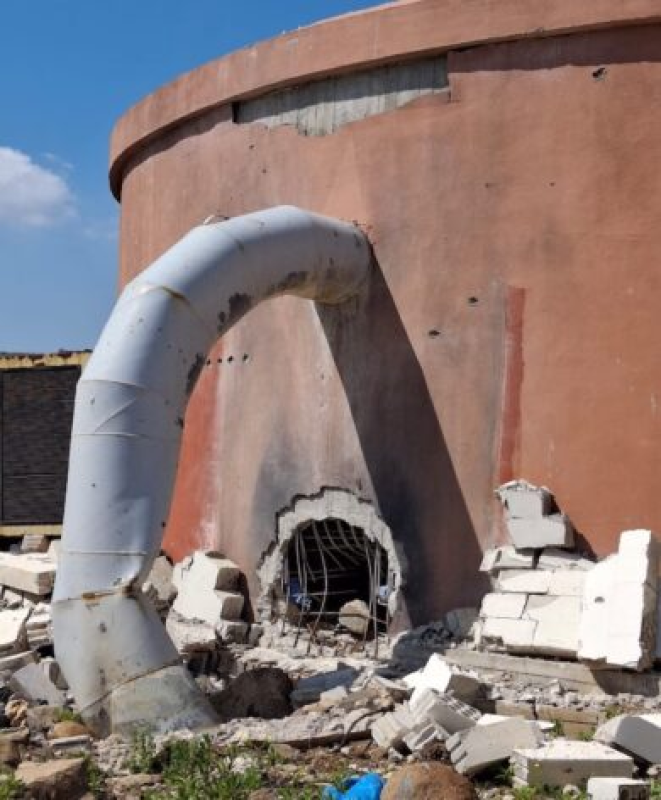
Damage to the water tank at the Maisat water pumping station.
Just under a year into a fragile ceasefire, 150,000 people in southern Lebanon continue to suffer from the potentially deadly aftermath of Israeli bombings, highlighting the long-term devastation of conflict.
A report released last month by Action Against Hunger, Insecurity Insight, and Oxfam said that at least 150,000 people remain without running water after Israeli attacks damaged and destroyed large portions of water, sanitation, and hygiene (WASH) facilities since the conflict began.
The report, When Bombs Turn the Taps Off: The Impact of Conflict on Water Infrastructure in Lebanon, revealed both the immediate and long-term consequences of repeated strikes on water infrastructure between October 2023 and April 2025. More than 30 villages have no connection to running water, leaving residents reliant on costly trucked-in supplies, with losses across the sector estimated by the World Bank at USD 171 million.
A shortage of rainfall has made the crisis worse, heightening the risk of waterborne diseases as vulnerable communities resort to unsafe sources. Farmers in southern border villages have lost irrigation networks and access to land, causing crop failures, higher food prices, and growing concerns about long-term food security.
Experts warn that unless urgent repairs and mitigation measures are implemented, the crisis could deepen, forcing displacement and fuelling disease outbreaks. The report calls on all parties to the conflict to uphold international humanitarian law, protect civilians and infrastructure, and support the rehabilitation of damaged water systems.