

- Dhaka ranks world's third most polluted city this morning |
- Soldiers Guard Milan as Thousands Protest Across Europe |
- Cheese Industry Thrives In Thakurgaon Villages |
- Guterres alarmed at Israel’s sweeping closures after deadly Hebron attack |
- Bangladesh to Introduce New Law to Curb Extortion, IGP Says |
Trump Claims Iran Halted Executions Amid Protests
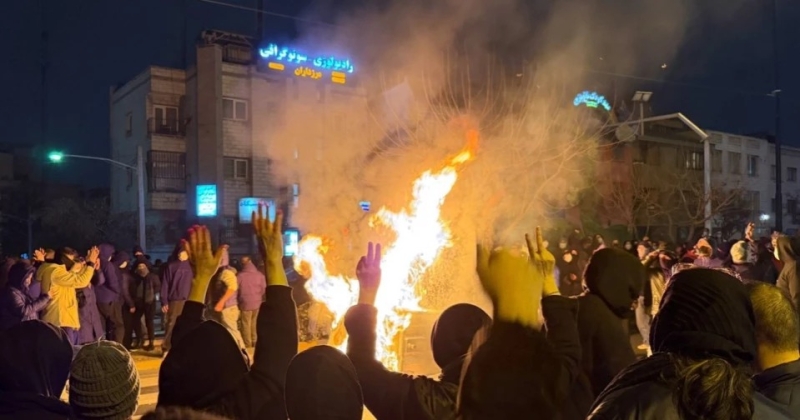
Iranians attend an anti-government protest in Tehran, Iran, Friday, Jan. 9, 2026
U.S. President Donald Trump said on Wednesday he had been informed “on good authority” that Iran has paused plans to carry out executions, even as authorities in Tehran press ahead with rapid trials and severe punishments following weeks of nationwide protests.
Trump offered no evidence to support the claim and did not elaborate on how the information was obtained. His remarks came days after he addressed Iranian protesters directly, saying “help is on the way” and warning that his administration would “act accordingly” in response to the government’s crackdown.
The U.S. president stopped short of explaining what form any American response might take, leaving uncertainty over whether his comments signalled diplomatic pressure, economic measures or other actions.
Earlier on Wednesday, Iran’s judiciary chief Gholamhossein Mohseni-Ejei instructed prosecutors and judges to move swiftly in dealing with more than 18,000 people detained during the unrest, calling for expedited trials and harsh sentences, including executions.
Rights groups say the scale of the crackdown has been unprecedented in recent decades. According to the U.S.-based Human Rights Activists News Agency, at least 2,586 people have been killed by security forces since the protests began, marking the deadliest episode of unrest since the upheaval that followed Iran’s 1979 Islamic Revolution.
Tensions between Tehran and Washington remained elevated as Iran further extended an unexplained closure of its airspace to commercial flights early Thursday. A notice to pilots said the restriction would remain in force until 7:30am local time.
The United States requested an emergency meeting of the UN Security Council to discuss the situation in Iran. At the same time, U.S. embassies in Kuwait and Qatar tightened security protocols and advised staff to restrict movement to key military facilities.
Several other countries also took precautionary steps. Britain closed its embassy in Tehran and withdrew diplomatic staff, citing security concerns, while nations including India and Italy urged their citizens to leave Iran.
Iranian Foreign Minister Abbas Araghchi said Tehran remained “ready for negotiation” and called on Washington to prioritise diplomacy over confrontation, while again accusing foreign powers of fomenting unrest.
Inside Iran, mass funerals were held in Tehran for members of the security forces killed during the protests. Abroad, demonstrations in solidarity with Iranian protesters continued in several European cities, keeping international attention focused on the escalating crisis.