

- Stocks end week sharply lower as DSE, CSE indices tumble |
- 'Not all collections in the road transport sector is extortion': Sk Rabiul |
- Zubaida, Zaima take iftar with orphan students |
- Dhaka ranks second among world’s most polluted cities Friday |
- Dhaka to maintain ties with all countries with dignity |
Trump Warns Iran as US Carrier Nears Middle East
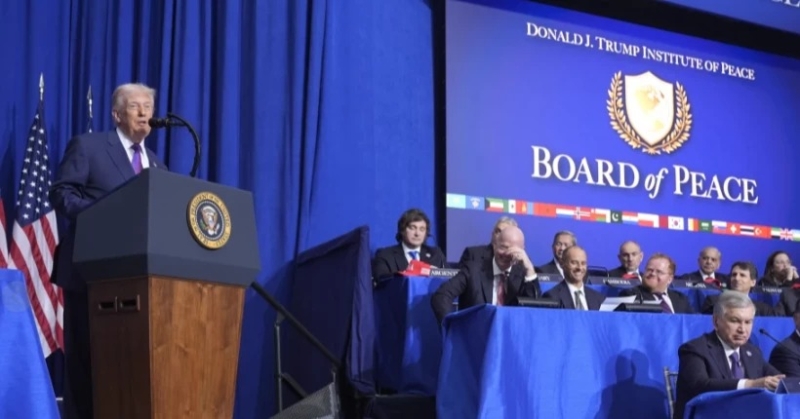
Donald Trump has warned of severe consequences if Iran fails to reach a nuclear agreement soon, as a second US aircraft carrier moves toward the Middle East, heightening fears of escalation across the region.
Trump said Tehran has roughly 10 to 15 days to strike a deal, though negotiations have stalled for years. Iran has refused to accept broader US and Israeli demands, including limits on its missile programme and support for allied armed groups.
Recent indirect talks have yielded little progress, fuelling concerns that both sides may be bracing for a possible military confrontation.
Pressure on Iran’s leadership has intensified following Israeli and US strikes last year on nuclear and military facilities, as well as mass protests in January that were forcefully suppressed by security forces.
In a letter to the UN Security Council, Iran’s ambassador Amir Saeid Iravani said Tehran does not seek war and will not initiate conflict. However, he warned that any US attack would trigger a decisive response and that American bases and assets in the region would be treated as legitimate targets.
Earlier this week, Iran conducted live-fire drills in the Strait of Hormuz, a strategic waterway through which about one-fifth of global oil trade passes. Iranian forces also held joint naval exercises with Russia in the Gulf of Oman and the Indian Ocean, according to state media.
US Deployments and Regional Alert
US military movements have continued, with another carrier group positioned to enter the Mediterranean. Officials said the full force required for potential action could be in place by mid-March.
Trump acknowledged that securing a meaningful agreement with Iran has historically been difficult but warned that failure to do so could lead to “bad things”.
A senior regional official said private messages have been delivered to Iranian leaders emphasising that Trump’s warnings should be taken seriously. The official suggested that focusing first on nuclear issues could help achieve limited short-term concessions.
International concern is mounting. Donald Tusk urged citizens of Poland to leave Iran immediately, warning that evacuation could soon become impossible. Germany has begun relocating non-essential staff from a base in northern Iraq as tensions rise.
Israel is also preparing for potential fallout. Prime Minister Benjamin Netanyahu said the country is ready for any scenario and warned Tehran against targeting Israeli territory.
Iran maintains that its nuclear programme is peaceful and insists negotiations should focus solely on nuclear issues. While Trump has previously claimed that US and Israeli strikes destroyed key nuclear sites, the true extent of the damage remains unclear because international inspectors have not been granted access.
The United States and its allies continue to suspect that Iran’s programme could eventually produce nuclear weapons, an allegation Tehran has consistently denied.