

- Nine Killed in Landslides at Rohingya Camps |
- Govt Unveils Farm Reform Plan to Boost Food Security |
- England defeat Mexico 3-2 to reach World Cup quarter-finals |
- Haaland knocks Brazil out of World Cup as Norway reach quarters |
- A black poa fish sold for 50 thousand |
Govt Unveils Farm Reform Plan to Boost Food Security
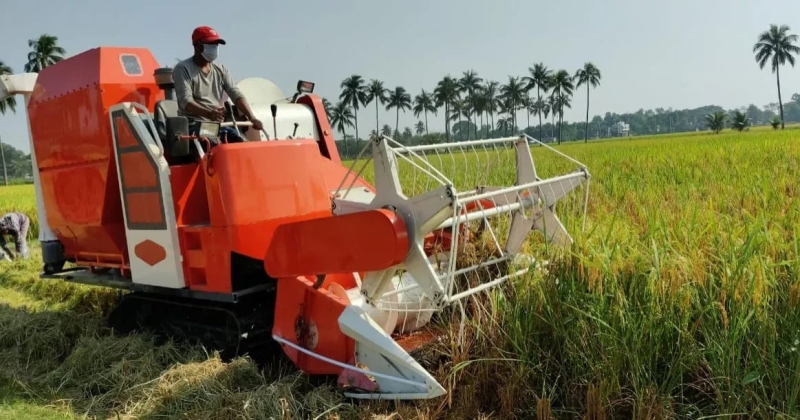
The government has announced a comprehensive roadmap to modernise Bangladesh's agriculture sector through expanded support for farmers, climate-resilient farming, technological innovation and improved food management, with the goal of strengthening long-term food security.
Outlined in the FY2026–27 national budget, the measures aim to build a self-reliant, technology-driven and climate-resilient agricultural sector while reducing production costs, increasing productivity and improving rural livelihoods.
A major initiative is the nationwide expansion of the Farmer Card programme, for which Tk 1,062.5 crore has been allocated. Following a successful pre-pilot phase covering 22,065 farmers in 11 upazilas across 10 districts, the programme will now be extended to 100 upazilas during the fiscal year before being implemented nationwide.
The scheme also includes fish farmers, livestock farmers and salt cultivators. The government plans to distribute 4.25 million Farmer Cards, with eligible landless, marginal and small farmers receiving a one-time annual cash grant of Tk 2,500 along with 10 additional benefits promised in its election manifesto.
To ease farmers' financial burden, the budget allocates Tk 1,567.96 crore to waive agricultural loans of up to Tk 10,000, including interest, in the crop, fisheries and livestock sectors.
The government also plans to introduce agricultural insurance to help farmers cope with climate-related risks while continuing concessional credit programmes. Loans at four percent interest will remain available for cultivating pulses, oilseeds, spices, maize and salt, while farmers in hill districts will continue to receive loans at five percent interest through Bangladesh Krishi Bank.
Agricultural rehabilitation and incentive programmes will continue through the free distribution of seeds, fertilisers and other farm inputs. Authorities also plan to accelerate farm mechanisation and develop a comprehensive digital database of farmers.
As part of efforts to improve irrigation, the government will revive the Voluntary Canal Excavation Programme to restore natural water flows and reduce dependence on groundwater. It also plans to install 98 solar-powered irrigation pumps and 27 solar-powered dug wells while expanding drip irrigation and aquifer recharge technologies.
Fertiliser subsidies will remain in place, and 30,000 metric tonnes of fertiliser donated by Russia through the World Food Programme will be distributed free of charge to farmers.
To minimise post-harvest losses, the government will expand cold storage facilities, packaging houses and cold-chain infrastructure through public and private investment. A specialised cold storage facility will also be established in the Barendra region to support mango growers.
Agricultural research will focus on developing high-yielding, salt-tolerant and drought-resistant crop varieties. The government also plans to introduce an Agropreneurship Start-up Policy and an Agricultural Cooperative Policy to create employment opportunities for young people.
To strengthen food security, the government has set a food grain procurement target of 4.129 million metric tonnes for FY2026–27, up from the revised target of 3.819 million tonnes in the current fiscal year. Storage capacity is expected to increase to 2.45 million metric tonnes.
Paddy procurement from farmers will be expanded across all upazilas through the Krishaker App, alongside wider use of digital food management systems.
Support for low-income families will continue under the Food-Friendly Programme, with 5.5 million beneficiaries receiving 30 kilograms of rice per month at Tk 15 per kilogram for six months. Open Market Sale operations have also been expanded to 419 upazilas, where rice is being sold at Tk 30 per kilogram.
The government is also developing a digital database for Food-Friendly Programme beneficiaries and an online food grain price monitoring system.
The fisheries sector has been given renewed emphasis, with a production target of 5.635 million metric tonnes in FY2026–27. Under its blue economy strategy, the government plans to expand commercial tuna fishing, promote seaweed cultivation and increase fisheries export earnings to US$1 billion by 2030.
Kuakata and Salimpur will be declared new Marine Protected Areas, while a modern fishing port will be established at Matarbari. Fish sanctuaries and nursery management programmes will also be expanded to conserve indigenous species.
Following the principle of "Jal Jar, Jola Tar" ("Those who fish shall own the water"), local fishers and low-income communities will receive greater access to water bodies, canals and haor areas. Coverage under the Vulnerable Group Feeding programme will also be expanded to include 1.5 million fishing households, including newly enlisted families from haor regions and the Sundarbans.
The government further plans to introduce the country's first fisheries insurance scheme and promote mechanisation in commercial fish farming.
In the livestock sector, authorities announced that locally developed vaccines against Avian Influenza and Goat Pox have completed field trials and will soon be supplied nationwide. The government will also ensure adequate stocks of animal disease prevention medicines at every upazila while strengthening the production of safe and quality feed for poultry and fish farms.