

- Woman killed, 4 of her family missing in Meghna boat capsize |
- State can never be strong keeping citizens powerless: PM at UNGA |
- Trump welcomes Xi in Washington as US-China trade truce extended |
- Prevention at heart of govt’s healthcare reform: PM |
- Death toll rises to 11 following typhoon-induced downpours in Japan |
Can Exotic Mangoes Transform Coastal Agriculture?
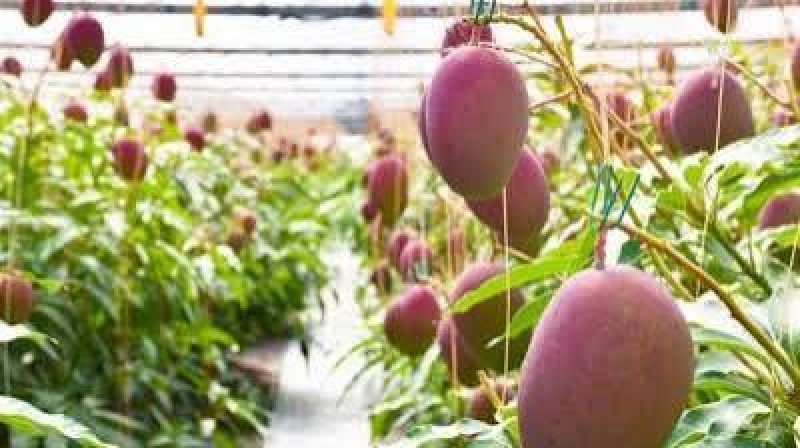
Bangladesh's coastal farmers have long struggled with saline soil, prolonged waterlogging and the growing impacts of climate change, limiting their crop choices and exposing them to repeated production losses.
Now, a research initiative by the Bangladesh Agricultural Research Institute (BARI) is challenging that reality by demonstrating the potential of exotic mango cultivation in the country's coastal region.
Scientists at BARI say they have successfully grown and evaluated 32 mango varieties, including several exotic cultivars, under the saline and waterlogged conditions of Patuakhali's coastal belt, raising hopes for the commercial cultivation of high-value mangoes in areas once considered unsuitable for orchards.
The research is being carried out at BARI's Regional Horticulture Research Centre in Lebukhali, Dumki upazila, where scientists have spent several years assessing whether improved mango varieties from around the world can adapt to Bangladesh's coastal climate.
Researchers believe that if the promising results are confirmed over multiple growing seasons, the initiative could diversify agricultural production, increase farmers' incomes and create new export opportunities.
Promising results
During the 2024–25 season, researchers evaluated 31 exotic mango germplasms alongside local varieties, assessing their adaptability, yield, fruit size, colour, sweetness, edible portion, storage life and resistance to diseases.
Among the top-performing varieties were six red-skinned mangoes—Miyazaki, Lady Jane, Chiang Mai, Taiwan Red, Kuzai and King Chakapat—which remain rare in Bangladesh and could attract premium prices in domestic and international markets.
Several varieties also stood out for their productivity and fruit quality.
Brunei King produced exceptionally large fruits weighing an average of 2.35 kilograms each, while Chiang Mai recorded the highest edible portion, with around 81 percent of the fruit consisting of flesh.
Sada Dofala registered the highest sweetness level, with 26 percent total soluble solids (Brix).
Chiang Mai also emerged as the highest-yielding variety, with an estimated production potential of 2.73 tonnes per hectare. Kingston Pride and Katimon also demonstrated encouraging productivity under coastal conditions.
Researchers also identified Chokanon as a promising off-season variety capable of producing fruit beyond Bangladesh's traditional mango season of May to August, potentially allowing growers to secure higher market prices.
Banana Mango showed favourable post-harvest performance, remaining fresh for nine to ten days at room temperature, making it suitable for transportation to distant markets and possible export.
Wider research for climate resilience
The programme extends beyond mangoes.
BARI scientists are also developing production technologies for year-round guava cultivation in waterlogged areas and for mango, guava, dragon fruit, malta and pomelo under saline conditions.
The goal is to diversify agriculture across Bangladesh's coastal belt, reduce farmers' dependence on traditional crops and strengthen resilience against climate-related challenges.
The research centre is also supporting farmers by supplying improved saplings, providing technical training, orchard management guidance and advice on disease control and modern fruit production techniques.
Farmers show growing interest
The initiative has already attracted interest from local farmers.
Md Abdul Jabbar Akand of Galachipa said he established a mango orchard on waterlogged land this year after receiving technical support from BARI.
"Earlier we never imagined exotic mangoes could grow in our coastal conditions. After seeing the trees grow and bear fruit, we are much more confident," he said.
Sufia Khatun of Bauphal said she plans to expand from guava cultivation into mango farming if quality planting materials become available.
Md Kabir Mridha of Kalapara said fruit cultivation on saline land has reduced production risks but stressed that wider adoption would depend on reliable access to improved saplings, technical support and stable markets.
More evaluation needed
Researchers cautioned that the findings are still preliminary.
Senior Scientific Officer Dr Mahamuda Ratna said nearly all the tested varieties—except MI PK-013 and MI PK-025—have shown encouraging performance in fruit quality, colour, edible portion, harvesting period and storage characteristics.
However, she said commercial recommendations will only be made after evaluations over multiple growing seasons.
Principal Scientific Officer Dr Md Alimur Rahman said the ultimate objective is to identify mango varieties best suited to Bangladesh's coastal climate while developing production technologies that enable profitable fruit cultivation under saline and waterlogged conditions.