

- Tap grants, local finance; shun loans for energy sovereignty |
- Govt eyes 3,000-4,000MW solar power addition to grid before next summer: PM |
- Dhaka Ranks Fifth Among World’s Most Polluted Cities on Tuesday |
- Protests Disrupt Production at 681 Factories Across Bangladesh |
- LPG Price Hike Fuels Fears of Tk 2,500 Cylinder Cost |
New BRRI rice variety brings hope to salinity-prone coastal farmers
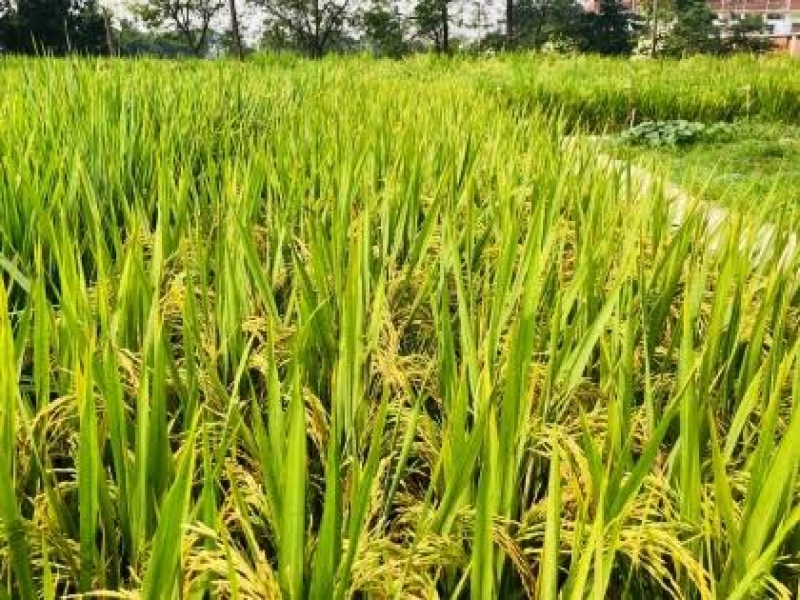
A newly developed high-yielding rice variety, BRRI Dhan-119, has opened up fresh opportunities for rice cultivation in Bangladesh's salinity-prone coastal regions, offering farmers the prospect of higher yields, shorter crop duration and better use of agricultural land.
Developed by the Bangladesh Rice Research Institute (BRRI), the promising variety has recently received final approval from the 116th meeting of the National Seed Board for cultivation during the transplanted Aman season.
BRRI's Publication and Public Relations Officer Md Al Amin confirmed the development on Tuesday.
The new variety is expected to bring significant benefits to farmers in coastal areas, where soil salinity remains a major challenge to agricultural production. With a crop duration of around 115 days, BRRI Dhan-119 will also allow farmers to cultivate winter crops such as mustard and sunflower on the same land immediately after harvesting Aman rice, creating opportunities for increased cropping intensity and farm income.
A research team led by Chief Scientific Officer of BRRI's Plant Breeding Division Mohammad Ekhlasur Rahman developed the variety under the Location-Specific Technology Development (LSTD) project.
The research team also included Senior Scientific Officer Hasina Khatun, Senior Plant Breeder Nusrat Jahan, Scientific Officer Armin Akter Setu and Scientific Officer (CRCIL) Ribet Farzana Disha.
According to the researchers, BRRI Dhan-119 can be cultivated in both saline coastal areas and non-saline regions across the country. For the transplanted Aman season, seeds should be sown between July 1 and July 30.
Farmers have been advised to transplant 25- to 30-day-old seedlings in medium-high to high land, maintaining a spacing of 20 centimetres between rows and 15 centimetres between hills, with two to three seedlings in each hill.
The variety has already undergone field trials at 20 different locations under both saline and non-saline conditions under the supervision of the Seed Certification Agency. It has also received a recommendation from the National Technical Committee for cultivation during the Boro season.
Following final approval by the National Seed Board, the variety will be eligible for cultivation in both Aman and Boro seasons.
One of the most significant features of BRRI Dhan-119 is its impressive yield potential. With proper crop management, it can produce an average of 5.7 tonnes of paddy per hectare, while yields may range from 4.8 to 7.6 tonnes depending on environmental conditions and salinity levels.
Its average yield is approximately one tonne per hectare higher than that of the widely cultivated BRRI Dhan-73, making it a potentially valuable option for farmers seeking higher productivity.
The plants grow to an average height of 113 centimetres and have strong stems, making them resistant to lodging. Each panicle produces around 215 filled grains, approximately 70 to 80 more than BRRI Dhan-73. The grains also remain firmly attached to the panicles, reducing losses from premature grain shattering.
Its outstanding salinity tolerance makes the variety particularly suitable for coastal agriculture. At the seedling stage, it can withstand salinity levels of up to 12 DeciSiemens per metre (dS/m) for three consecutive weeks. During different sensitive stages from vegetative growth to reproduction, it can tolerate salinity levels of 8 to 10 dS/m.
The rice grains are medium-slender and white. The cooked rice is fluffy and non-sticky, with an amylose content of 25.9 percent, making the variety attractive not only in terms of production but also grain quality.
BRRI Director General Md Rafiqul Islam described the development as a major achievement in the country's agricultural research.
He said the new variety would help farmers in coastal areas overcome some of the challenges posed by soil salinity while contributing significantly to strengthening national food security.
Lead researcher Mohammad Ekhlasur Rahman said his entire team had worked with dedication throughout the different stages of the lengthy research process.
He added that bringing the benefits of the new variety to farmers' fields would be the greatest reward for their efforts.
With its high yield potential, shorter maturity period and strong tolerance to salinity, BRRI Dhan-119 is expected to offer a promising solution for expanding rice production in coastal Bangladesh while creating scope for growing additional crops in the same fields, reports BSS.