

- Dhaka's air 5th worst in the world this morning |
- Around 7,500 Bangladeshis imprisoned in Saudi Arabia: Shama Obaed |
- Bangladesh Outperforms India in Global Hunger Index 2026 |
- Covered van hits Gazipur police patrol team, killing SI, BNP leader |
- Korean City scrambles to rescue dusky shark after it returns to canal |
Silt-Rich Chars Boost Farming Prospects in the North
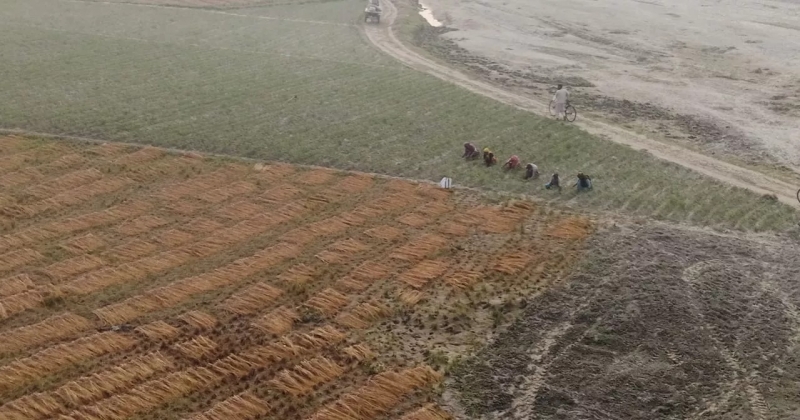
As floodwaters receded across northern Bangladesh, freshly deposited silt has transformed the sandy river islands of the Teesta, Dharla, Saniyazan and Brahmaputra—known as chars—into highly fertile land, triggering a surge in cultivation.
According to the Department of Agricultural Extension, the northern rivers contain nearly 786 char areas, and communities living there have begun rebuilding their livelihoods after the recent floods.
Sirajul Islam, Additional Director of the Rangpur agricultural region, said this year’s cultivation target for the chars has been set at 36,911 hectares, with an estimated output of 362,000 tonnes of various crops.
“Char residents are likely to recover through this year’s harvest. A single crop can sustain many families for an entire year,” he said.
A Season of Intense Activity
Across the Teesta’s char zones in Lalmonirhat, Rangpur, Kurigram, Gaibandha and Nilphamari, farmers are working round the clock, Sirajul Islam noted.
Large areas have already been planted with potatoes, aubergines, chillies, onions, ginger, garlic, beans, coriander, carrots, cabbages, radishes, gourds, wheat, sesame, linseed, mustard and maize. Growers say they expect strong yields across most varieties this season.
In Ichli char of Gangachara, Rangpur, farmer Hossain Mia has planted potatoes on three bighas, aubergines on another three, and coriander on 20 decimals of land.
“If yields are good, I expect to earn around Tk 1.5 lakh after covering costs,” he said.
Local farmers Habibur, Rahim and Khairul shared similar expectations, estimating profits of Tk 60,000 to Tk 70,000 each if the season remains favourable.
Storage and Market Access Challenges
Lakshmitari Union Parishad Chairman Abdullah Al Hadi described the Teesta chars as a rapidly expanding agricultural zone, with fresh produce already entering local markets. Many more farmers have resumed cultivation.
However, he underscored a persistent obstacle: inadequate storage, processing facilities and market access.
“This is the biggest frustration for char farmers. Without cold storage, transportation and processing facilities, they miss out on fair profits,” he said.
He noted that the region needs at least two to three cold storages, while Gangachara currently has only one. Poor connectivity also limits the movement of produce to nearby markets.
The Power of Nutrient-Rich Silt
Agriculture officer Tushar Kanti said the newly deposited silt has made the Teesta’s char soil exceptionally fertile. Many crops are thriving even without chemical fertilisers, with abundant production of maize, wheat, potatoes, chillies, onions, garlic, mustard, sesame, linseed and various vegetables.
Dr Tuhin Wadud, Professor at Begum Rokeya University and a long-time researcher on char lands, said the post-flood silt is “extremely fertile”, often leading to bumper harvests.
However, he warned that poor transport links remain a barrier to fair pricing.
He added that dredging the Teesta and other major rivers could create more cultivable char land and unlock significant economic potential for northern communities.
Prospects Worth Tk 200 Crore
Agricultural officials estimate that crops grown across more than 786 char areas in eight northern districts could generate around Tk 200 crore this season.
Field officers are providing technical support and financial incentives, and officials said assistance has already been extended to char farmers affected by the floods.