

- A New Arms Race is Threatening to Take-off—Now in Outer Space |
- Equality ‘ends at doors of Security Council’, Kenya’s Ruto at UNGA |
- কলাপাড়ায় প্রাথমিক শিক্ষায় হ-য-ব-র-ল |
- BDRCS and IFRC scale up dengue response to reach 300,000 people |
- World leaders approve new declaration to tackle rising sea levels |
Tk 500cr Drive to Turn Haor Fallow Land Into Farmland
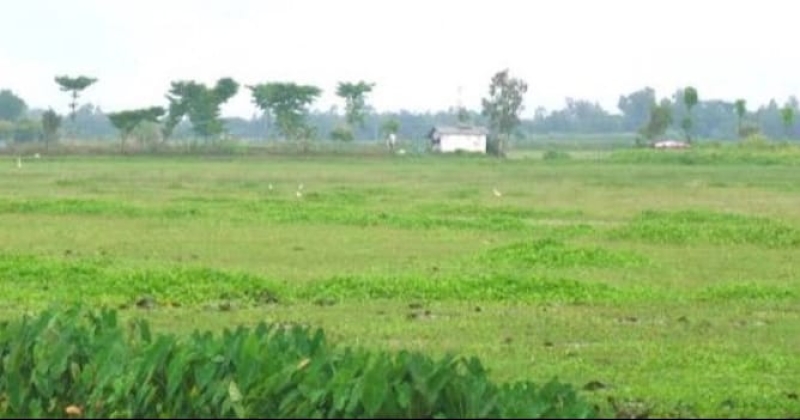
Bangladesh has launched a major agricultural initiative worth Tk 500 crore to transform vast stretches of fallow haor land into productive farmland, aiming to boost food security and climate resilience in the country’s northeast.
The five-year programme, running through 2029, is being implemented by the Bangladesh Agricultural Development Corporation across four Sylhet division districts—Sunamganj, Sylhet, Moulvibazar and Habiganj. The project focuses on improved surface water management to expand irrigation and raise farm productivity in flood-prone haor areas.
Key interventions include the excavation and renovation of canals and hill streams, construction of permanent reinforced concrete causeways, flood control and drainage measures, and the modernisation of irrigation systems. These efforts are designed to reduce crop losses from early floods and improve water availability during the Aman and Rabi seasons.
Once completed, officials estimate that 17,019 hectares of fallow land will come under irrigation, leading to an additional production of about 51,058 metric tonnes of food grains. Fish production is also expected to increase as re-excavated canals and streams improve water flow and retention.
Farmer training is a core component of the programme. Between 2025 and 2029, around 900 farmers, women farmers, operators and field staff will receive hands-on training in irrigation management, equipment maintenance, climate adaptation, crop and seed production, and vegetable cultivation.
“Work has already started, and strict monitoring is in place to prevent any irregularities or mismanagement,” said project director Engineer Pranjit Kumar Deb.
Construction of permanent causeways—seen as critical for the timely transport of Boro paddy—is underway. These structures are expected to cut transport time and costs by allowing easier movement by both boats and vehicles. Nearly 10,000 hectares of haor land are projected to be brought under cultivation during the project period.
Planned infrastructure includes the excavation of 221 kilometres of canals and hill streams, renovation of 105 kilometres of existing waterways, installation of deep tube wells, sluice gates and culverts, and drainage improvements. Modern irrigation facilities such as low-lift pumps, sprinkler systems, artesian tube wells and underground channels will bring more than 10,000 hectares under advanced irrigation.
Re-excavation and flood protection works are expected to safeguard around 7,900 hectares from sudden hill runoff, while buried pipelines will permanently remove waterlogging from 167 hectares, protecting crops on more than 8,000 hectares of Boro land.
Local farmers and haor movement leaders have welcomed the initiative, while stressing the need for close oversight. “This project can bring meaningful change to the haor region if it is implemented transparently and carefully,” said Saiful Alam Sadrul, a labour movement leader from Sunamganj.
Preparatory work for the programme began nearly five years ago, and its launch marks a significant step toward turning Bangladesh’s haor regions into more resilient and productive agricultural landscapes.