

- Capital markets surge at DSE with year’s highest turnover |
- Weapons and drugs seized in Chattogram army operation, 2 arrested |
- Tarique says people won’t allow ‘vote robbery’ on Feb 12 |
- Dhaka records world’s worst air quality Wednesday morning |
- US Ambassador visits Ctg Port to reinforce commercial coop |
Boro cultivation in Narail gains pace under sunny skies
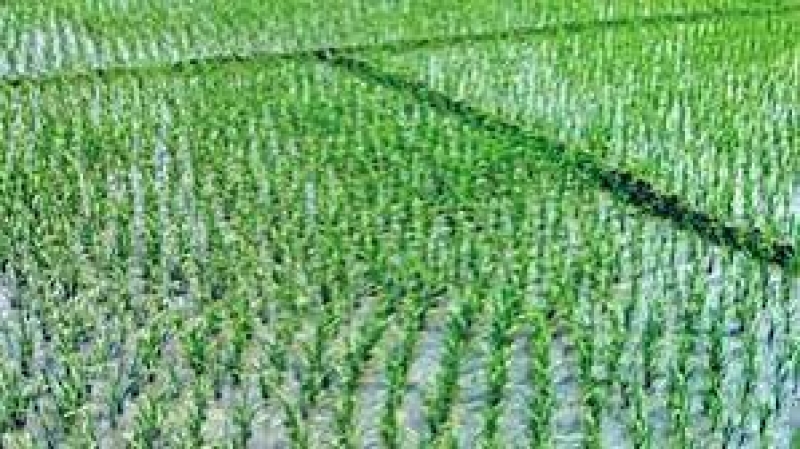
After weeks of cold and fog, bright sunshine has returned to Narail, breathing new energy into the district’s Boro paddy fields.
Farmers are now working from dawn to dusk, transplanting seedlings across the region in what has become a season of full swing for Boro cultivation.
Favourable weather conditions over the past two weeks have created an ideal environment for farming.
According to local growers, there is currently no shortage of seedlings, fertiliser, or irrigation facilities, making this the smoothest peak Boro season in recent years.
The Department of Agricultural Extension (DAE) reports that Boro paddy is being cultivated on a record-breaking area this season, surpassing the past three years.
Farmers recalled early-season challenges when persistent cold and dense fog had delayed transplantation. However, the recent sunny spell has rejuvenated fields and spirits alike, encouraging farmers to accelerate planting.
Ibrahim Sheikh of Chougachha village in Sadar upazila said he is transplanting Boro seedlings on 180 decimals of land, noting that there is no shortage of seedlings.
Another local farmer, Ataur Rahman, has cultivated three acres of Boro paddy and described the current weather as ‘very favourable’.
Seventy-five-year-old Badsha Sheikh is preparing his land by ploughing and leveling before transplantation, while Mohammad Murad noted that power tillers have largely replaced cattle for land preparation, reducing both time and costs.
Sagar Sheikh, cultivating the high-yielding Rod Miniket variety on 135 decimals of land, highlighted its good yield, market price, and quality straw as reasons for his choice.
Farmers across Narail confirmed that fertilizers, pesticides, and electricity-powered irrigation facilities are available in sufficient quantities, and that hardly any cultivable land is being left fallow this season.
“If the weather remains favourable and input supplies continue until the end of the season, we are hopeful for a good harvest,” said a local grower.
Deputy Director of DAE, Narail, Muhammad Arifur Rahman, said that a target has been set to cultivate Boro paddy on 50,297 hectares in the 2025–26 season. In comparison, cultivation covered 50,280 hectares in 2024–25 and 50,230 hectares in 2023–24. Over the last three years, Boro cultivation has increased by 67 hectares, reports UNB.
This year, seedbeds have been prepared on 2,635 hectares, of which about 60 percent are standard seedbeds, further indicating there is no shortage of seedlings, Arif added.
With favourable weather and adequate resources, Narail’s farmers are poised for a productive Boro season, continuing the district’s steady rise in paddy cultivation, he said.