

- DP World to Operate Chattogram Port NCT for 15 Years |
- Anne Carson Wins 2026 Nobel Prize in Literature |
- Workers Helping Feed the World but Starved of Dignity |
- They feed the world, but food workers are Earth’s most exploited |
- Groundwater In India’s Nashik Tests 1,000 Times Over Toxic Chromium Limits Ahead Of Kumbh Mela |
Dhaka places 7th in global air pollution rankings
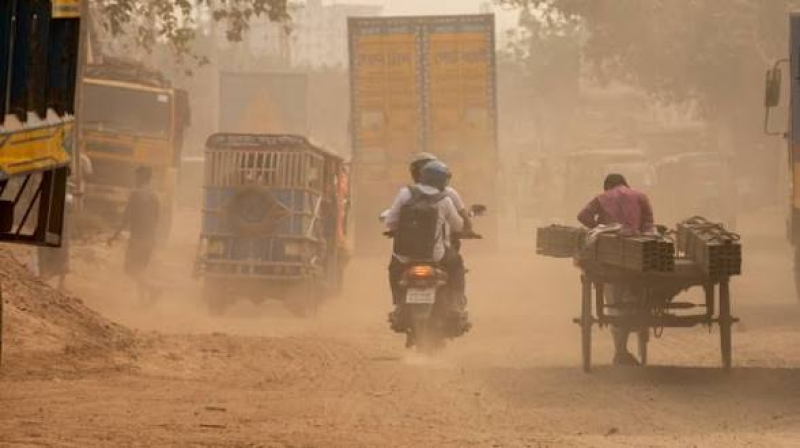
Dhaka ranked seventh among the world's most polluted cities on Friday morning, recording an Air Quality Index (AQI) score of 117.
According to AQI standards, the city's air quality was classified as ‘unhealthy for sensitive groups’ at 09:00 am.
Indonesia’s Jakarta topped the list with an AQI score of 184, while China’s Beijing and Egypt’s Cairo ranked second and third with scores of 160 and 142 respectively.
An AQI between 151 and 200 is considered unhealthy, meaning everyone may begin to experience health effects, while members of sensitive groups could face more serious impacts.
An AQI reading between 101 and 150 is considered ‘unhealthy for sensitive groups’, while 151–200 is classified as ‘unhealthy’.
Levels of 201–300 are deemed ‘very unhealthy’, and readings above 301 are labelled ‘hazardous’, posing severe health risks.
The AQI, which tracks daily air quality, indicates how polluted the air is and the potential health impact on residents.
In Bangladesh, AQI measurements are based on five key pollutants: particulate matter (PM10 and PM2.5), nitrogen dioxide (NO₂), carbon monoxide (CO), sulfur dioxide (SO₂), and ozone.
Dhaka has long battled air pollution, with conditions typically worsening in winter and improving during the monsoon season.
According to the World Health Organization, air pollution is responsible for an estimated seven million deaths worldwide each year, mainly from stroke, heart disease, chronic obstructive pulmonary disease, lung cancer, and acute respiratory infections, reports UNB.