

- Govt pursuing zero tolerance against human trafficking, organised crime: Salahuddin |
- PM Seeks Japan’s Help to Build Technology, Innovation Hubs |
- Bangladesh Plans Bonded Warehouse Reforms to Diversify Exports |
- Dhaka ranks 4th among world's most polluted cities this morning |
- Lula re-elected Brazilian president in runoff |
Dhaka ranks 4th among world's most polluted cities this morning
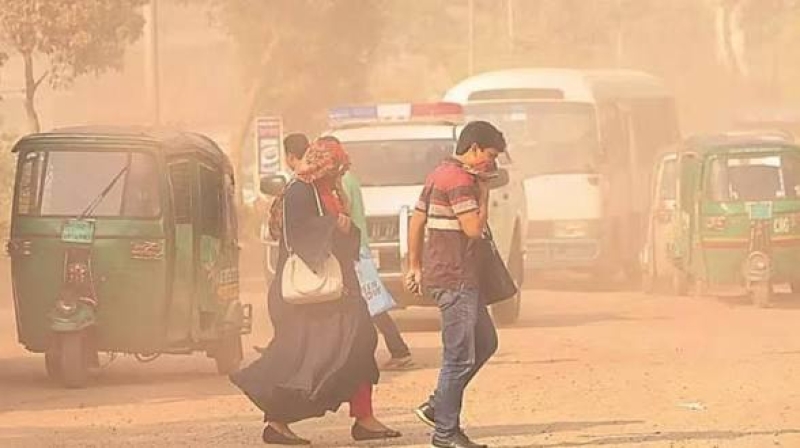
Dhaka ranked as the world's fourth most polluted city on Monday morning, recording an Air Quality Index (AQI) score of 168 at 9:30 am.
The air quality was classified as 'unhealthy', indicating that the concentration of airborne pollutants had reached a level that could pose health risks to the general public, according to the AQI scale.
India's Delhi topped the list with an AQI score of 200, followed by Pakistan's Lahore and Karachi, with scores of 199 and 175, respectively.
An AQI reading between 101 and 150 is considered 'unhealthy for sensitive groups', while a score between 151 and 200 is classified as 'unhealthy'. Readings between 201 and 300 are deemed 'very unhealthy', and levels above 301 are considered 'hazardous', posing serious health risks.
The AQI, an index that tracks daily air quality, indicates how polluted the air is and the potential health effects on residents.
In Bangladesh, AQI measurements are based on five key pollutants: particulate matter (PM₁₀ and PM₂.₅), nitrogen dioxide (NO₂), carbon monoxide (CO), sulphur dioxide (SO₂) and ozone.
According to the World Health Organization, air pollution causes an estimated seven million deaths worldwide each year, primarily from stroke, heart disease, chronic obstructive pulmonary disease, lung cancer and acute respiratory infections. -UNB