

- Change Initiative Calls at COP31 to Protect the Natural Right to Food |
- Call to intensify efforts to bridge differences |
- Patients run out of options as antibiotics stop working |
- Bangladesh's forex reserves stand at $36.35 billion: PM |
- Govt to Send 10,000 Workers to Malaysia at Low Cost |
Dhaka Ranks 2nd in Global Pollution Index on Thursday
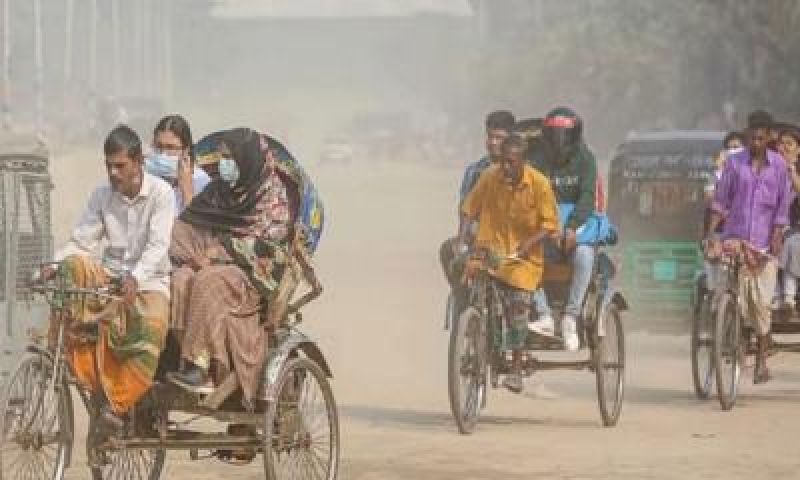
Dhaka ranked second among the world's most polluted cities on Thursday, with an Air Quality Index (AQI) score of 239, indicating a “very unhealthy” level of air pollution.
The presence of dust, smoke and harmful particles continues to affect daily life, while climate change and ongoing development activities are contributing to worsening air pollution in cities around the world.
According to the air quality index published by Swiss-based air quality monitoring organisation IQAir on Thursday, November 19, Pakistan's Lahore topped the list of 126 cities with an AQI score of 284, also classified as “very unhealthy”.
Dhaka ranked second with a score of 239, followed by India's capital New Delhi with 182.
Nepal's Kathmandu ranked fourth with an AQI score of 171, while Cairo, Egypt, came fifth with a score of 169.
Under IQAir's classification, an AQI score of zero to 50 indicates “good” air quality, while 51 to 100 is considered “moderate”.
A score between 101 and 150 is classified as “unhealthy for sensitive groups”, while 151 to 200 is considered “unhealthy”. Scores between 201 and 300 indicate “very unhealthy” air quality, and readings above 300 are classified as “hazardous”.
Bangladesh's AQI is calculated based on five pollutants: particulate matter (PM10 and PM2.5), nitrogen dioxide (NO2), carbon monoxide (CO), sulphur dioxide (SO2) and ozone (O3).
A March 2019 report by the Department of Environment and the World Bank identified brick kilns, vehicle emissions and construction-site dust as the three major sources of air pollution in Dhaka.
According to the World Health Organization (WHO), air pollution increases deaths from stroke, heart disease, chronic obstructive pulmonary disease, lung cancer and acute respiratory infections. It is estimated to cause around seven million deaths worldwide each year.