

- Dhaka Ranks 9th Among World's Most Polluted Cities on Monday |
- Top Criminal Sweden Aslam Arrested at Dhaka Airport |
- Guterres Urges Climate Justice After COP31 Talks Collapse |
- RMG Unrest Costs 317 Factories $428m in 18 Days: BGMEA |
- Bangladesh Urges India to Begin Ganges Treaty Talks |
Dhaka Ranks 9th Among World's Most Polluted Cities on Monday
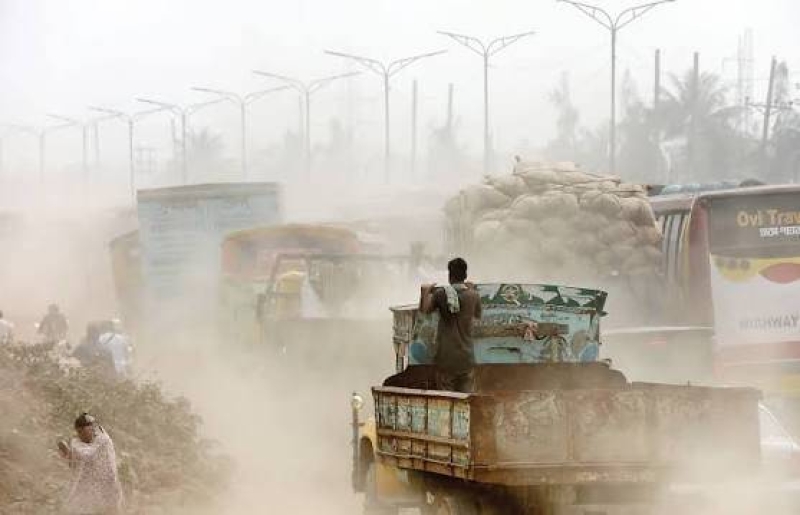
Dhaka's air quality remained unhealthy on Monday morning, with the city recording an Air Quality Index (AQI) score of 155 at 8:34am.
With this score, the capital ranked ninth among the world's most polluted cities.
Pakistan's Lahore, India's Delhi and Mumbai occupied the top three positions on the list, with AQI scores of 272, 206 and 174, respectively.
On Sunday, Dhaka ranked 14th among the world's most polluted cities at 9:02am, with an AQI score of 117.
An AQI score between 50 and 100 is considered moderate, indicating acceptable air quality. A score between 101 and 150 is classified as unhealthy for sensitive groups, while readings between 151 and 200 are considered unhealthy.
AQI readings between 201 and 300 are classified as very unhealthy, while scores above 300 are considered hazardous and pose serious health risks.
The AQI is a daily indicator of air quality that measures how clean or polluted the air is and indicates the potential health effects of exposure.
In Bangladesh, the AQI is calculated based on five major pollutants: particulate matter (PM10 and PM2.5), nitrogen dioxide, carbon monoxide, sulphur dioxide and ozone.