

- PM Pushes Plans for Second Padma, Jamuna Bridges, Barrage |
- Tap grants, local finance; shun loans for energy sovereignty |
- Govt eyes 3,000-4,000MW solar power addition to grid before next summer: PM |
- Dhaka Ranks Fifth Among World’s Most Polluted Cities on Tuesday |
- Protests Disrupt Production at 681 Factories Across Bangladesh |
BB allows preference share issuance to foreign investors
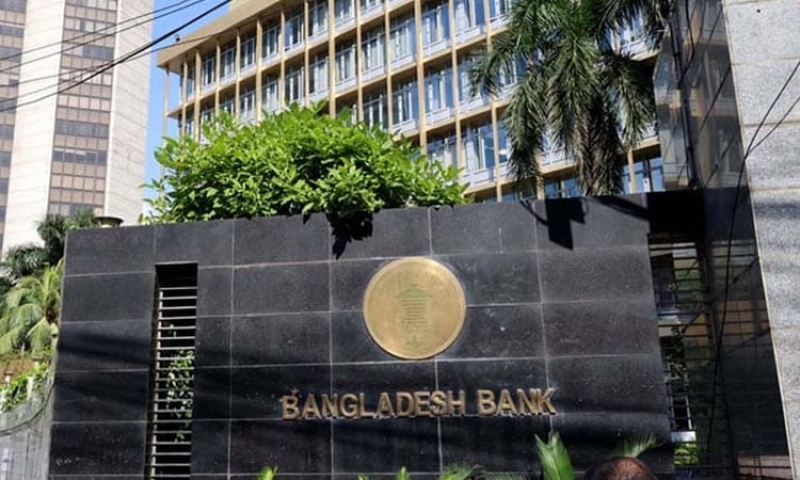
Bangladesh Bank (BB) has allowed resident companies in the manufacturing and service sectors to issue preference shares in favour of non-resident investors, aiming to facilitate foreign investment and simplify the repatriation of dividends and redemption proceeds.
The Bangladesh Bank issued a circular today outlining detailed guidelines on the issuance, conversion and redemption of preference shares, as well as the repatriation of dividends to foreign investors.
According to the Foreign Exchange Investment Department (FEID) Circular No. 04, dated November 3, 2026, companies can issue preference shares to non-resident investors subject to the Companies Act, 1994, relevant regulations of the Bangladesh Securities and Exchange Commission (BSEC), and their respective Memorandum and Articles of Association.
The central bank said preference shares must be issued against foreign currency brought into Bangladesh through official banking channels.
Under the new guidelines, companies will not require prior approval from Bangladesh Bank if the dividend rate on preference shares does not exceed five percent of their face value.
However, prior approval from the central bank will be required for preference shares carrying dividend rates above five percent, including participating or adjustable dividend rates. Companies will have to submit applications with proper justification through their nominated Authorized Dealer (AD) banks.
The circular requires AD banks to report the issuance of preference shares to the FEID within 14 days, along with relevant supporting documents, including the company's Memorandum and Articles of Association, duly endorsed Form XV, an Encashment Certificate and Schedule X, where applicable.
The central bank has also stipulated that preference shares must be issued at par, eliminating the requirement for company valuation for their issuance or redemption.
However, where preference shares carry a conversion feature, the fair value of ordinary shares must be determined in accordance with the methodology prescribed in the central bank's FEID Circular No. 01 issued on March 8, 2026, to determine the applicable conversion ratio.
Upon conversion of preference shares into ordinary shares, the issuing company will have to notify the FEID through its nominated AD bank and submit the relevant supporting documents.
The circular further allows nominated AD banks to remit dividends and redemption proceeds to non-resident investors without prior approval from Bangladesh Bank, provided the issuance complies with the circular and applicable foreign exchange regulations, and all relevant taxes are deducted and paid.
For each remittance of a redemption instalment, the AD bank must submit a post-facto report to the FEID within 30 days, accompanied by relevant supporting documents, including the TM Form bearing the Online Foreign Exchange Transaction ID.
The circular stipulates that dividends and redemption proceeds must be repatriated through the same AD bank through which the original investment was brought into Bangladesh. The proceeds must also be remitted to the country from which the original investment funds were transferred.
It also allows dividends earned on preference shares to be reinvested in ordinary shares of the same company or another company at their respective fair values.
The AD banks will be required to maintain year-wise records of dividends and redemption proceeds repatriated to non-resident investors, along with auditors' certificates supporting tax deductions at source and the amounts eligible for repatriation.
The circular also requires banks to maintain relevant documents concerning tax benefits under Double Taxation Avoidance Agreements and ensure compliance with know-your-customer requirements, anti-money laundering and counter-terrorism financing standards, and applicable tax laws.
In case of a change in the nominated AD bank, a No Objection Certificate from the existing bank will be required, and all relevant records must be transferred to the newly appointed bank and the change notified to Bangladesh Bank.
The central bank clarified that fully convertible and irredeemable preference shares will be treated as equity capital.
Issued under Section 20(3) of the Foreign Exchange Regulation Act, 1947, the circular came into effect immediately, reports BSS.