

- Second Teesta Bridge: Costly shortcut that heavy vehicles cannot take |
- March in Stockholm for stronger climate action ahead of polls |
- Dhaka ranks 18th in global air quality ranking Monday morning |
- Air Force officer Saifur sent to jail over Ilias Ali disappearance |
- Cultivation of Black Baby watermelons on a rooftop in Kalapara |
Bangladesh Among Hardest Hit by Climate Heat Costs
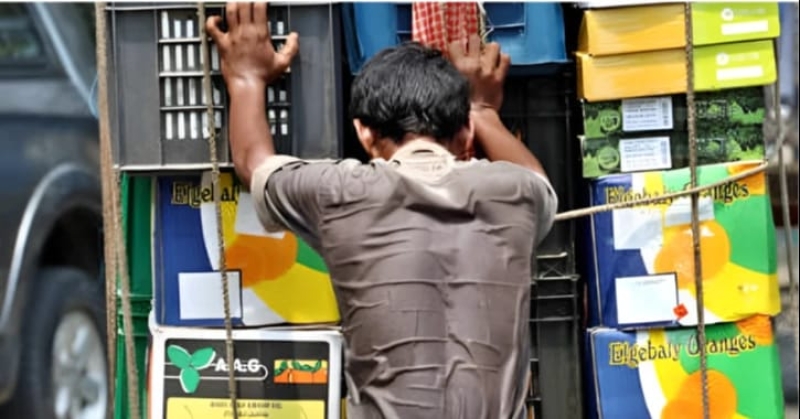
Bangladesh has been identified as one of the countries most vulnerable to the economic consequences of climate-driven extreme heat, with workers in key sectors already losing the equivalent of more than 20 working days a year because of heat stress, according to a global report released on Sunday.
The report, titled "Heat, Health and the Increasing Costs of Living – A Call for Action", was published by Adelphi Global and examines how rising temperatures are affecting public health, household incomes and national economies.
It identifies Bangladesh, alongside India, Indonesia and Nigeria, as among the countries facing the greatest combined economic risks from extreme heat. Workers in agriculture and construction—two sectors that support millions of livelihoods—are increasingly forced to reduce working hours, take longer breaks or stop working altogether because of dangerous temperatures, leading to substantial income losses.
The study is the first to directly link the health impacts of climate change with rising living costs and economic hardship. It analysed eight countries—Bangladesh, Brazil, France, India, Indonesia, Italy, Nigeria and South Africa—combining climate, health and economic data.
According to the report, climate change driven largely by the continued use of fossil fuels has made extreme heat more frequent and intense. Several of this year's heatwaves would have been virtually impossible without human-induced climate change.
Researchers identified two major pathways through which extreme heat affects living standards. The first is declining income, as heat stress reduces workers' productivity and heat-related illnesses force them to stay away from work. Informal workers, who often lack paid leave or health insurance, are particularly vulnerable.
The second is rising household costs. Heat-related illnesses increase out-of-pocket medical expenses, placing additional financial pressure on families already struggling with higher living costs.
The report warns that the combined effects of lower incomes, higher healthcare expenses and limited social protection could push many more people in Bangladesh, India and Nigeria below the poverty line.
It also notes that even countries experiencing fewer lost working days, including Brazil, South Africa, France and Italy, suffer significant economic losses because of heat-related deaths, with annual GDP losses reaching as much as US$25 billion.
To reduce the growing risks, the report calls for stronger integration of climate, health and labour policies. It recommends expanding social protection, introducing compensation and insurance schemes for workers affected by extreme heat, strengthening labour protections—particularly for informal workers—and increasing investment in climate adaptation measures focused on protecting public health and livelihoods.
The report also urges governments to incorporate heat-related health risks into national adaptation plans and international climate frameworks to better protect vulnerable communities from the escalating impacts of global warming.