

- Trump Says Resuming Strikes on Iran Is ‘Highly Unlikely’ |
- PM Urges New BCS Officers to Serve People with Honesty |
- EC Plans First-Phase Elections in 1,050 Union Parishads |
- Rohingya crisis now a security concern for Bangladesh: Shama |
- Hasina Is a Convict, Legal Steps Underway to Bring Her Back |
COP31 Opens in Türkiye as Bangladesh Pushes Climate Justice
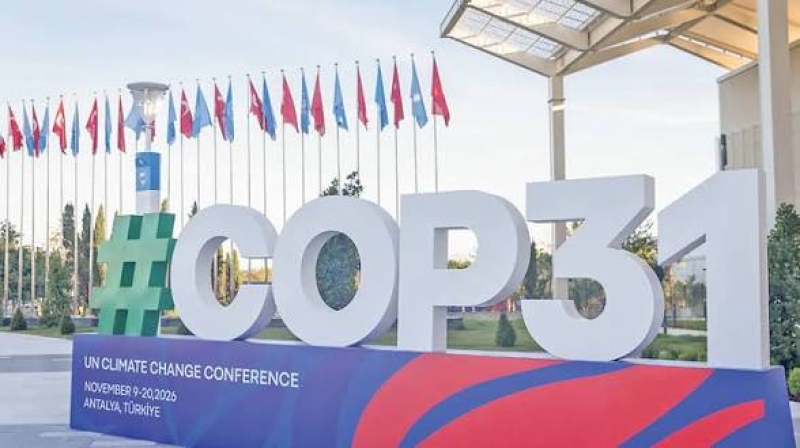
The 31st United Nations Climate Change Conference (COP31) begins today (Monday, November 9) in Antalya, Türkiye, amid growing calls for stronger global commitments to protect the planet and address climate-related uncertainties.
The conference, being held at the Antalya Expo Centre, will continue until November 20, bringing together representatives from countries around the world to discuss climate action, financing and international cooperation.
Prime Minister Tarique Rahman is scheduled to leave for Türkiye tomorrow (Tuesday, November 10) on a three-day visit at the invitation of the Turkish government. He is expected to attend the high-level sessions of the climate summit and deliver speeches at two separate sessions.
The prime minister is also expected to hold a bilateral meeting with Turkish President Recep Tayyip Erdoğan, along with several meetings with other world leaders on the sidelines of the conference.
His participation will provide Bangladesh with an opportunity to highlight the concerns of climate-vulnerable communities, present its national priorities and call for stronger international cooperation.
Environmentalists and climate experts say the summit comes at a critical time, as countries face growing pressure to turn climate commitments into practical action. For Bangladesh, one of the countries highly vulnerable to climate change, the conference is particularly significant.
Environment, Forest and Climate Change Minister Abdul Awal Mintoo said Bangladesh would prioritise the protection of vulnerable communities, climate justice, and financial and technological support for implementing national plans.
He said cyclones, floods, salinity, droughts and heatwaves were placing people's lives and livelihoods at serious risk. Bangladesh would therefore seek support for vulnerable populations and greater assistance to implement its climate-related priorities.
Conference priorities
COP31 is being held under the United Nations Framework Convention on Climate Change (UNFCCC). The annual Conference of the Parties is the principal international forum where countries negotiate collective responses to climate change.
The conference will focus on accelerating climate action and implementing commitments under the Paris Agreement, including efforts to limit global warming to 1.5 degrees Celsius above pre-industrial levels, support adaptation and increase climate finance.
The UNFCCC's opening plenary is scheduled for Monday morning. COP31 President-designate Murat Kurum will lead the conference, while Australian Climate Change and Energy Minister Chris Bowen will chair the negotiations.
The conference will also host the Antalya Leaders' Summit on November 11 and 12, bringing together heads of state and government for high-level discussions and national statements.
Bangladesh's priorities
Bangladesh is expected to call on developed countries to provide adequate, accessible and grant-based financing to help vulnerable nations address climate-related losses and damage.
Its priorities include making the Loss and Damage Fund fully operational, increasing adaptation financing and ensuring that developing countries can access financial support without adding to their debt burden.
The country also wants greater assistance for climate-resilient infrastructure, environmentally friendly technologies and adaptation measures in vulnerable areas, including coastal regions, haor areas, river islands and drought-prone districts.
Mintoo said grant-based support was essential for implementing the National Adaptation Plan without increasing the country's debt burden. He also stressed the need for international assistance for early-warning systems and locally led adaptation initiatives.
Bangladesh will seek accessible grants from the Loss and Damage Fund to address both economic losses and non-economic impacts, including displacement and the loss of livelihoods.
The minister also called for efforts to keep global warming within the 1.5-degree Celsius threshold, saying major carbon-emitting countries must take the lead. Bangladesh will also highlight the need to support the green transition in agriculture, industry and energy while protecting workers' rights and expanding employment opportunities for women and young people.
Prime Minister's Special Assistant on Environment, Forest and Climate Change Dr Saimum Parvez said Bangladesh had prepared a strong position paper based on consultations with experts and relevant government departments.
The Bangladesh delegation will coordinate with the Least Developed Countries (LDCs), the Group of 77 (G77) and like-minded countries during the negotiations, he said.
Bangladesh will also set up a 100-square-metre main pavilion and a separate jute pavilion at the conference venue to showcase the country's experience in climate adaptation and its climate-related initiatives.
Prime minister's visit
The prime minister is scheduled to depart Dhaka on Tuesday morning on a regular Turkish Airlines flight, accompanied by a small delegation. After arriving in Istanbul, he is expected to travel to Antalya on a domestic flight.
The delegation is expected to include State Ministers for Foreign Affairs Humaiun Kobir and Shama Obaed, the prime minister's special assistant Saimum Parvez, Chief Coordinator on SDG Affairs at the Prime Minister's Office Professor Dr Sohag Awaal, Press Secretary Saleh Shibli and Deputy Press Secretary Hasan Shiplus.
During the visit, Tarique is expected to deliver statements at two separate sessions over two days and hold bilateral talks with Erdoğan, as well as meetings with other world leaders.
The prime minister is scheduled to leave Türkiye for Bangladesh on the afternoon of November 12.
The visit will mark his second meeting with Erdoğan. The two leaders previously held bilateral talks at the Turkish House in New York on September 22, on the sidelines of the 81st session of the United Nations General Assembly. They discussed strengthening relations between Bangladesh and Türkiye and expanding cooperation in areas of mutual interest.
Calls for stronger climate action
The Paris Agreement, adopted in 2015, has provided the framework for international efforts to limit global warming. However, climate finance, emissions reductions and the transfer of green technologies remain major challenges for developing countries.
Despite commitments made at previous climate conferences, progress in implementing those pledges has been slow. Climate-vulnerable countries are therefore calling for concrete action rather than further declarations.
For Bangladesh, the key issues at COP31 include securing grant-based climate finance, making the Loss and Damage Fund accessible, increasing adaptation support and obtaining technology assistance.
Bangladesh is also expected to urge developed countries to set out clear plans for reducing carbon emissions and fulfil their financial commitments.
Climate experts and officials say the conference will be an important opportunity to strengthen international cooperation and translate existing promises into practical measures to protect vulnerable communities and future generations.