

- WB ready to support Bangladesh amid external economic shocks: Khosru |
- PM, World Bank President Discuss Bangladesh’s Development |
- Bus Fares Rise by 17 Paisa Per Kilometre |
- PM arrives in New York to attend 81st UNGA session |
Warming Oceans Linked to Deadly Asian Flood Disasters
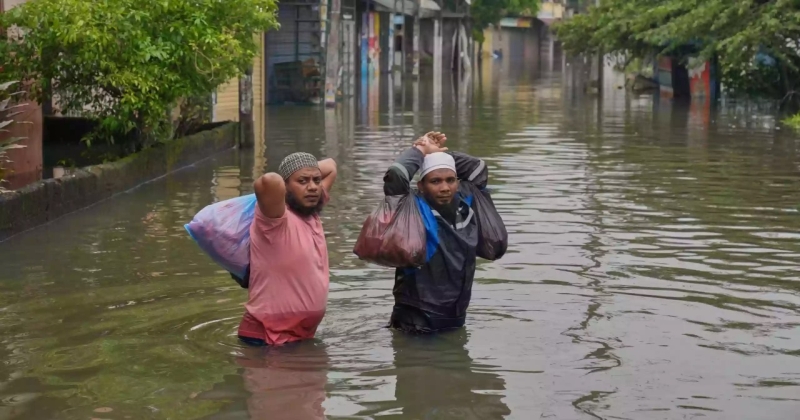
FILE - People wade through floodwaters in the aftermath of Cyclone Ditwah in Colombo, Sri Lanka, Nov. 29, 2025.
Human-driven ocean warming intensified the extreme rainfall that triggered deadly floods and landslides across Asia in recent weeks, according to a new study released on Wednesday.
The rapid assessment by World Weather Attribution (WWA) examined torrential rains from cyclones Senyar and Ditwah, which battered Malaysia, Thailand, Indonesia and Sri Lanka from late last month. Researchers found that unusually warm sea surface temperatures in the North Indian Ocean injected additional energy into the storms.
The disasters have claimed more than 1,600 lives, with hundreds still missing, and come amid a year of relentless weather extremes across Southeast Asia.
“It rains a lot here, but never like this. Usually the rains stop by September, but this year has been exceptionally bad. Every region of Sri Lanka has been affected, and ours has been hit the hardest,” said Shanmugavadivu Arunachalam, a schoolteacher from Central Province.
WWA researchers reported that sea surface temperatures in the region were 0.2°C above the three-decade average. Without global warming, they would have been about 1°C cooler, offering less heat and moisture to fuel the cyclones. Globally, temperatures are now 1.3°C higher than pre-industrial levels.
“When the atmosphere warms, it can hold more moisture. That means heavier rainfall in a warmer world,” said Mariam Zachariah of Imperial College London, one of the study’s authors.
The WWA team, which uses peer-reviewed scientific methods, conducts rapid analyses to assess the influence of climate change on extreme weather. Although they could not quantify the exact contribution of global warming to these particular storms due to model constraints, their findings underscore how a warmer planet amplifies hazards.
Experts said that rapid urbanisation, high population density and settlements in low-lying areas have further heightened vulnerability.
“The human toll from cyclones Ditwah and Senyar is staggering,” said Maja Vahlberg of the Red Cross Red Crescent Climate Centre. “The most vulnerable people suffer the most and will face the longest recovery.”