

- Bangladesh to Introduce New Law to Curb Extortion, IGP Says |
- UN Marks 81 Years of Global Cooperation and Peace |
- Dhaka's air 5th worst in the world this morning |
- Around 7,500 Bangladeshis imprisoned in Saudi Arabia: Shama Obaed |
- Bangladesh Outperforms India in Global Hunger Index 2026 |
These 10 Visionaries Are Changing The World Through Food
From 2026 To 2050 And Beyond
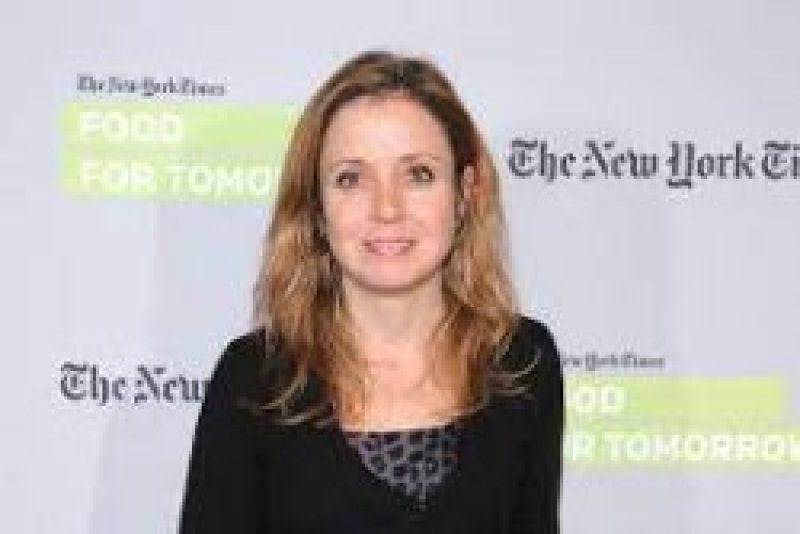
Danielle Nierenberg
Danielle Nierenberg
I hope your new year is off to a good start!
I want to challenge us to think big as we start this year and beyond. What are the commitments we want to make not just in 2026 but, say, by 2050?
This is why I’m so inspired by the 10 initiatives named Top Food System Visionaries in a global US$2 million challenge, which are now being spotlighted in the documentary Food 2050 by The Rockefeller Foundation and Media RED.
With the challenges our world is facing, “somewhere we have to give ourselves the oxygen to keep going. And hope is what gives you that,” Sara Farley, Vice President of the Global Food Portfolio at The Rockefeller Foundation, told me on this week’s episode of Food Talk with Dani Nierenberg.
From the stories of these 10 food system visionaries, she hopes folks come away with “hope, hope, and a side order of hope.”
More than 1,300 proposals were submitted when the Food System Vision Prize launched in 2019. The 10 finalists participated in an accelerator program with focused mentorship, implementation support from a variety of stakeholders, and a US$200,000 investment each.
And the documentary follows these activists, scientists, agriculturalists, and entrepreneurs—across five continents and eight countries—who are pioneering solutions to challenges ranging from climate change and soil degradation to food access and nutritional quality.
In Kenya, the vision “A Place of Cool Waters,” led by scientist Dr. Elizabeth Kimani-Murage, is bolstering grassroots organizations to rethink food production and access in rapidly urbanizing areas, with a particular focus on a “right to food movement” in Kenya.
In the Netherlands, researchers Evelien de Olde and Dr. Imke de Boer envision “Re-rooting the Dutch Food System,” which is helping reposition the country’s agriculture system on the cutting edge of the shift toward circular food systems that work with natural processes rather than against them.
In Perú, the organization Lima 2035 is building a holistic three-innovation strategy—equitable water access, local food sovereignty, and reactivating ancient food cultural values—that’s a blueprint for how community-led food leadership can transform cities facing deep inequality.
In the U.S., on the Rosebud Reservation that is home to the Sicáŋğu Lak̇óta people in South Dakota, the 7Gen plan is building Indigenous food sovereignty to not only transform individual lives but community health and climate systems, too. And in New York’s Hudson Valley, Stone Barns is working to catalyze a future where food quality, regional cuisine, and human connection to the land are at the heart of agriculture.
In India, Arakunomics seeks to empower local communities to ensure fair wages for farmers and end nutrition insecurity, and Eat Right educates and empowers the country’s 1.4 billion consumers to choose safer and healthier foods. In Nigeria, FoodNerve is using technology like solar panels and online platforms to nourish a rapidly growing population the traditional agricultural system is not equipped for. In China, Mama’s Kitchen reimagines the modern diet for a plant-forward future where sustainability and public health are prioritized. In Canada, the collective kwayeskastasowin wâhkôhtowin is decolonizing the food system through Indigenous food sovereignty work and youth education.
In a series on FoodTank.com, we’re spotlighting how these organizations have been able to move these visions forward. CLICK HERE to learn more about how these global initiatives are transforming the way we'll feed a growing global population in nourishing, regenerative and equitable ways!
On January 14, Food Tank will be in Los Angeles to co-host a premiere screening of Food 2050. Along with special panel discussions, The Rockefeller Foundation and Media RED are also presenting the special Food 2050 Global Humanitarian Achievement Award to Viola Davis, the Emmy-, Grammy-, Oscar-, and Tony Award-winning actress who narrates the documentary.
We are also excited to be screening the documentary at our upcoming Summit, "All Things Food and Environment," during Sundance in Park City, Utah.
Let’s recommit ourselves to ambitious, long-term steps that can make our visions of a better food system come true!
As Sara Farley told me, “We have our ideas, we have our strategies—and we need a mechanism to really hear what it is the future could be… If we don't visualize it, if we don't dream it, it certainly is not going to happen accidentally.”
That’s what these 10 food system visionaries are doing, and it’s something each of us can resolve to do in our own communities, too. So when you envision the food system of the future, what do you see? Share your visions with me at danielle@foodtank.com, and let’s make 2026 the year that we work together to kick-start our bold ideas!
(Danielle Nierenberg is the President of Food Tank and can be reached at danielle@foodtank.com)