

- Bidisha Siddique Arrested in Fraud Case |
- As wars spread, the global food system unravels |
- Holy Eid-e-Miladunnabi Wednesday |
- EU sees Bangladesh as partner of growing strategic importance: Miller |
- Journalism’s main task is to question power: Swapon |
US launches fresh strikes on Iran as conflict escalates
The United States launched a fresh wave of airstrikes against Iran early Thursday, prompting Tehran to retaliate with missile and drone attacks targeting Bahrain, Kuwait and Qatar, sharply escalating tensions and threatening efforts to preserve a fragile ceasefire in the Gulf.
The latest exchange came just hours after US President Donald Trump declared that Iran's recent attacks on commercial shipping in the Strait of Hormuz had effectively ended the temporary truce reached to contain the conflict.
US forces struck multiple Iranian military installations and port facilities, saying the operation was aimed at further weakening Tehran's ability to threaten international shipping through the Strait of Hormuz, a strategic waterway that normally carries about one-fifth of the world's oil and liquefied natural gas trade.
In response, Iran launched attacks against US-linked targets in Bahrain, Kuwait and Qatar. Air raid sirens sounded at least twice in Bahrain, home to the US Navy's Fifth Fleet headquarters, while Kuwaiti authorities said their air defence systems intercepted incoming missiles and drones. There were no immediate reports of casualties or significant damage.
The US military said the strikes were intended to "further degrade" Iran's capability to threaten freedom of navigation in the Strait of Hormuz following Tehran's attacks on merchant vessels earlier this week.
Iranian state media reported explosions in several locations, including the southern port cities of Bandar Abbas, Chabahar, Konarak and Sirik, as well as Bushehr, home to the country's only nuclear power plant.
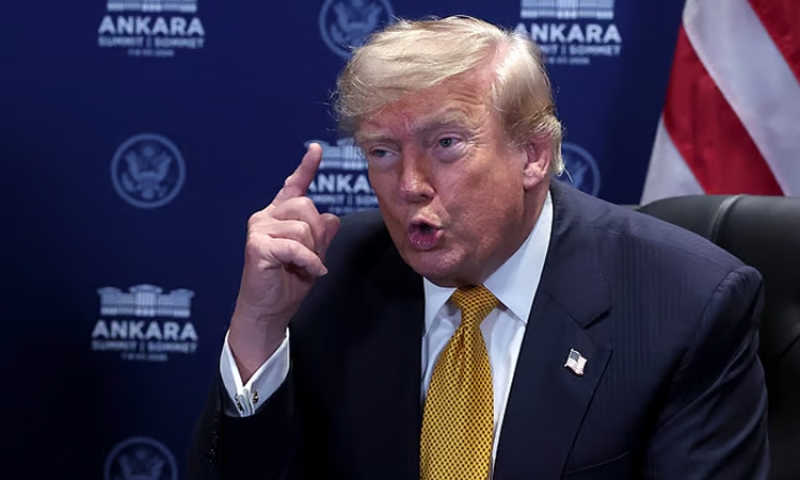
After leaving the NATO summit in Türkiye, Trump posted videos on social media that he said showed explosions in Iran and warned Tehran against any further attacks.
"This is in retribution for yesterday's bombing of ships by Iran. If it happens again, it will get much worse," he wrote.
Earlier, Trump had suggested the renewed military action would be limited in duration, saying any response would happen "very fast", although he also hinted that Washington might "finish the job" if Iran continued its actions.
He also renewed previous threats to target Iran's civilian infrastructure, including electricity and desalination facilities, and again raised the possibility of seizing Kharg Island, the country's main oil export terminal through which around 90 percent of Iranian crude exports pass.
The latest escalation follows Iranian attacks on commercial shipping in the Strait of Hormuz after a series of earlier US strikes on Iranian military positions. Tehran has argued that the interim ceasefire allows it to regulate maritime traffic through the strategic waterway.
Iranian Parliament Speaker Mohammad Bagher Qalibaf struck a defiant tone, saying the United States had failed to understand that "bullying and breaking promises are no longer cost-free."
"If you strike, you'll get hit," he said in a message posted on social media.
Trump's remarks that the ceasefire was effectively "over" further heightened concerns that diplomatic efforts to end the conflict could collapse, even as he said negotiations could continue.
"They can talk, but I think they're wasting their time," Trump said.
Iranian Deputy Foreign Minister Kazem Gharibabadi dismissed the US president's comments, saying they reflected "the failure" of Washington's policy toward Tehran rather than strength.
The renewed fighting has once again unsettled global energy markets, with oil prices rising amid fears that a prolonged conflict could disrupt vital shipping routes through the Strait of Hormuz and further destabilise the Middle East.
Negotiations on a permanent settlement had been expected to begin following the funeral of Iran's late Supreme Leader, Ayatollah Ali Khamenei, who was killed at the outset of the conflict on February 28. The proposed talks were expected to address the reopening of the Strait of Hormuz, sanctions relief and Iran's disputed nuclear programme, but the latest violence has cast fresh doubt over the prospects for diplomacy.