

- 10 Die of Dengue in Bangladesh, 1,943 Hospitalised |
- 28 Killed as School Roof Collapses in Northwest Pakistan |
- Bangladesh Targets 8.5-Fold Rise in Cotton Output by 2050 |
- India Jails Two 'Cockroach' Movement Leaders for Five Days |
- Iran Says Cargo Ship Sank After Hitting Mine in Hormuz |
US, Iran Intensify Strikes Across Middle East
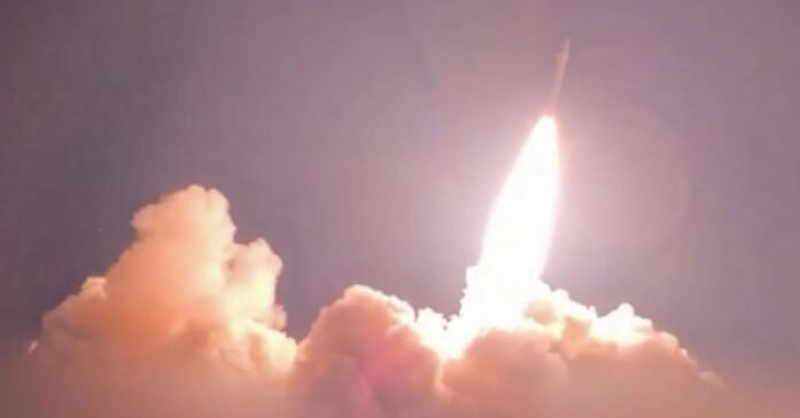
The United States and Iran intensified military operations across the Middle East on Friday, exchanging attacks on key infrastructure and military targets as tensions over the Strait of Hormuz continued to escalate.
The United States expanded its offensive by striking bridges, energy infrastructure and a surveillance tower at Iran's strategic Chabahar port. The attacks are part of President Donald Trump's campaign to increase pressure on Tehran over its control of the Strait of Hormuz, a vital shipping lane for global oil and gas supplies.
Iran retaliated with missile attacks targeting U.S.-aligned countries, including Qatar, Bahrain and Kuwait. In Kuwait, a missile strike damaged a desalination plant, disrupting a key source of drinking water, while Qatar reported injuries caused by falling debris after its air defenses intercepted incoming missiles.
The conflict remains centered on the Strait of Hormuz after an earlier ceasefire collapsed, raising fears of a prolonged war that has now lasted more than four months.
The U.S. Central Command (CENTCOM) said Friday's operation marked the seventh consecutive night of strikes on Iranian military infrastructure. According to the military, the attacks targeted surveillance facilities, logistics hubs, underground weapons depots and maritime assets.
Iranian officials said recent U.S. airstrikes killed dozens of civilians and wounded hundreds, while the U.S. military reported additional casualties among American service members.
Early Saturday, Iran claimed two oil tankers exploded after entering a mined section of the Strait of Hormuz. It provided no evidence to support the allegation, which CENTCOM dismissed as false.
Since the conflict began in late February, Iran has effectively restricted shipping through the Strait of Hormuz, pushing global oil prices above $86 per barrel and sharply reducing maritime traffic. International shipping data show vessel movements through the waterway have fallen to their lowest level in three weeks.
In a televised address on Thursday, President Trump said U.S. operations were achieving their objectives and predicted that the results would soon become apparent. Before the conflict erupted, Washington and Tehran had been engaged in negotiations over Iran's nuclear programme, but Trump is now facing growing political pressure to end the war and avoid a prolonged military engagement.
Bridges and Energy Infrastructure Targeted
Iranian authorities said overnight U.S. airstrikes hit bridges in Hormozgan province, including routes linking Bandar Abbas—Iran's largest port—to the country's interior. Additional strikes were reported in Bandar Khamir along the Strait of Hormuz.
Iran's Energy Ministry acknowledged attacks on electrical infrastructure for the first time and urged residents in southern provinces to conserve electricity during extreme summer heat, although officials did not identify the damaged facilities.
Authorities said at least 46 people have been killed and more than 400 injured in recent U.S. strikes, including eight fatalities in Friday's bridge attack.
The Pentagon confirmed 13 additional U.S. service members were wounded this week, bringing total U.S. casualties since the conflict began to 14 killed and 427 wounded.
Strategic Port Tower Destroyed
Friday's strikes also destroyed a surveillance tower at Iran's Chabahar port on the Gulf of Oman, an important commercial gateway serving Afghanistan and regional trade.
Iranian officials described the structure as part of the port's civilian infrastructure, while CENTCOM said it was used by Iran's Revolutionary Guard to monitor commercial shipping and identify potential maritime targets.
Iranian authorities later reported explosions in several provinces, including Khuzestan, Fars, Yazd and Hormozgan, but released few additional details.
Iran Expands Retaliatory Attacks
Iran broadened its retaliation by firing missiles toward Qatar, Bahrain and Kuwait. Qatar activated its air defenses twice, with one child reportedly injured by falling debris. Kuwait said a missile strike damaged a power and desalination facility, temporarily disrupting a major source of drinking water.
Kuwaiti officials also reported Iranian drone attacks on military installations that wounded several personnel. Jordan's military intercepted three incoming Iranian missiles, while explosions were reported in Iraq's Kurdish region. Local officials said an attack targeting the Iranian Kurdish opposition group Komala killed at least nine people.
Separately, British maritime authorities reported that a commercial tanker sustained minor damage while transiting the Strait of Hormuz near Oman. No injuries were reported, and Iran did not comment on the incident.
Strait of Hormuz Remains at the Centre
Iran continues to insist that the Strait of Hormuz falls under its exclusive authority and has argued that vessels using the waterway should pay transit fees, despite its status as an internationally recognized route for global navigation.
President Trump has repeatedly threatened further attacks on Iranian infrastructure, including bridges and power facilities, to pressure Tehran into easing its control over the strategic waterway. The United States has also reinstated a naval blockade on Iranian ports to restrict the country's oil exports.
Although some regional energy exports have been diverted through pipelines, analysts say these alternatives cannot fully replace the Strait of Hormuz, through which roughly one-fifth of the world's oil and natural gas trade normally passes. The latest shipping data show vessel traffic has dropped to its lowest level in weeks, highlighting the conflict's growing impact on global energy markets.