

- 109 BGB Platoons Deployed in Dhaka, Five Other Districts |
- Bangladesh-Denmark May form Trade and Investment Committee |
- Bangladesh—Pakistan trade crosses $1 b |
- Dhaka Ranks 5th Among World's Most Polluted Cities on Friday |
- PM seeks to make Bangladesh a reliable brand in global livestock market |
US Disables Another Ship Accused of Breaching Iran Blockade
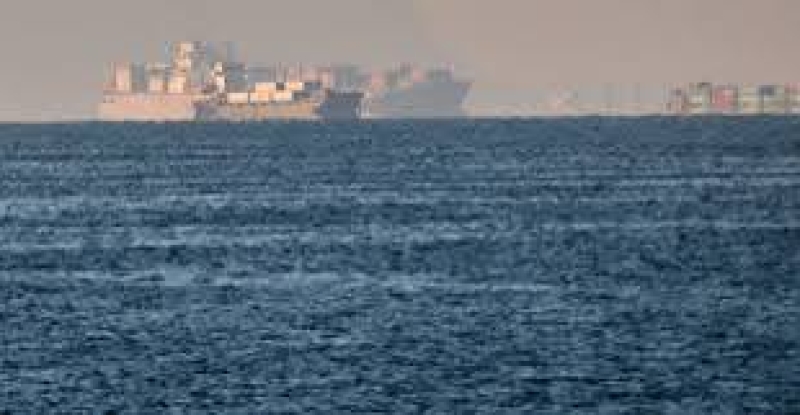
The United States military has disabled another merchant vessel in the Gulf of Oman after it allegedly attempted to evade the American naval blockade on Iranian ports, according to US Central Command (CENTCOM).
In a statement issued on Friday, CENTCOM said a military aircraft fired precision-guided weapons at the rear section of the Palau-flagged vessel M/V Pacific Archer on Thursday. The strike disabled the ship's propulsion system, but all civilian crew members remained unharmed.
According to the US military, the vessel had departed from Iran's Bandar Abbas port before attempting to bypass the blockade. Maritime tracking platforms identified Singapore as its intended destination.
Meanwhile, Iranian Navy Commander Shahram Irani said on state television on Friday that Tehran would launch operations to break the American blockade and drive foreign adversaries out of regional waters.
The latest incident comes as the Trump administration considers its next steps in the prolonged conflict with Iran, which began in late February and has remained largely deadlocked in recent months.
Earlier in November, regional officials said Israeli Prime Minister Benjamin Netanyahu had urged Washington to resume military operations against Iran or allow Israel to launch airstrikes targeting Iranian nuclear facilities and missile capabilities.
Meanwhile, officials from Persian Gulf countries, Pakistan and Turkey have stepped up diplomatic efforts, including discussions with senior US officials, to prevent further escalation in the region.
US President Donald Trump has sent mixed signals about the conflict, alternating between threats of further large-scale attacks on Iran and claims that the war is effectively over from a military perspective.
The United States continues to maintain a substantial naval presence in the region, including two aircraft carriers and several other warships.
US blockade disrupts merchant shipping
Washington has maintained a naval blockade on Iranian ports since April. The restrictions were temporarily lifted during negotiations with Tehran in the summer before being reinstated in July.
Since the blockade resumed, the US military says it has diverted 158 merchant vessels and disabled ships that refused to comply with its orders.
The Pacific Archer is at least the 15th vessel publicly reported to have been disabled by American forces since the blockade began in the spring. It is also the sixth such vessel reported since the restrictions were reinstated during the summer. The previous reported incident occurred on November 7.
US military actions have previously drawn international criticism. In June, an American strike on a Guinea-Bissau-flagged tanker accused of attempting to evade the blockade reportedly killed three people.
Indian officials said three Indian sailors were killed when American forces attacked the Palau-flagged vessel M/T Settebello. The head of the International Maritime Organization, a United Nations agency, also condemned the incident.
CENTCOM has repeatedly maintained that American forces issue several warnings to merchant vessels before taking military action against them.
Iran reports mine incident in Strait of Hormuz
Separately, Iran's Islamic Revolutionary Guard Corps (IRGC) claimed on Friday that two oil tankers had attempted to navigate the Strait of Hormuz through an unauthorised route.
According to the IRGC, one vessel struck a naval mine, while the other was forced to turn back. The claims have not been independently verified.
In a statement broadcast by Iranian state media, the Revolutionary Guard also reported a significant decline in the number of tankers attempting to use unauthorised routes through the strategic waterway in recent days.
Tehran continues to warn commercial vessels against passing through the Strait of Hormuz without its permission.
Oil shipments decline amid regional tensions
Oil transportation through the region has also been significantly disrupted.
According to energy research firm Rystad Energy, oil flows during the first two weeks of November fell by around 20% to approximately 13 million barrels per day, compared with October.
In October, daily oil shipments had recovered to around 15–16 million barrels, broadly matching pre-war levels.
The decline has been attributed partly to Iranian attacks that have discouraged tanker operators from crossing the Strait of Hormuz. Reduced shipments through a major Saudi oil pipeline leading to the Red Sea port of Yanbu have also contributed to the disruption following several attacks on the facility.
Meanwhile, a report by the United Nations Conference on Trade and Development (UNCTAD) warned that disruptions across the Strait of Hormuz, Red Sea, Black Sea and Panama Canal are increasing shipping distances, fuel expenses and port congestion while creating greater uncertainty for international trade.
Although businesses have continued transporting goods through alternative ports, inland routes and revised logistical arrangements, these alternatives have significantly increased transportation costs.