

- 100 CSOs rally against Trump’s trade tactics, urge access to drugs |
- BNP believes in multiparty democracy, not revenge: Moyeen Khan |
- Bangladesh reaffirms commitment to revitalise SAARC process |
- Bangla Academy assures inclusive Ekushey Book Fair From Feb 26 |
- 2 former National University VCs face travel ban |
From AI to Starlink: Drones Transform Warfare in Ukraine
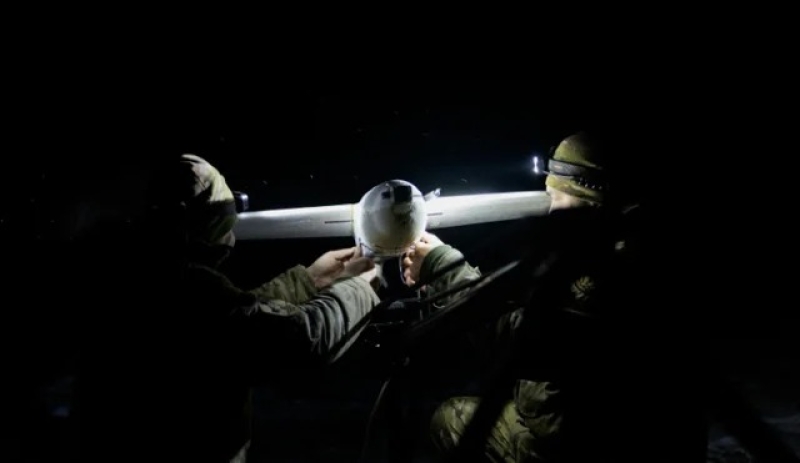
As the war in Ukraine enters its fifth year, drones have become a defining feature on the battlefield, reshaping modern warfare in ways observed around the world.
Four years after Russia launched its full-scale invasion, the technology dominating the front lines includes a mix of commercial drones, explosive-laden mini aircraft, and sophisticated AI-assisted devices.
Kill Zone
From cheap consumer drones to weaponized craft, up to 80 percent of battlefield damage is now drone-related, according to Ukraine’s Defence Minister Mykhailo Fedorov.
“Modern warfare is now impossible without drones,” said Ukrainian infantry soldier Koleso. Military expert Kateryna Bondar described the front line as a “kill zone” stretching up to 20 kilometres, where constant drone surveillance makes movement deadly. Soldiers move in small groups, keeping watch on the sky, while tanks and artillery are slow, exposed targets.
Ground drones now ferry supplies and evacuate the wounded to reduce human risk in these areas.
Fibre Optics
Maintaining reliable connections between drones and operators is critical. Early drones relied on radio links, which were vulnerable to electronic jamming. Russia has adapted by using drones controlled via ultra-thin fibre-optic cables, largely immune to interference, leaving frontline areas entangled in networks of cables.
Starlink
Ukraine has begun attaching Starlink satellite terminals to drones, enabling stable, long-range control. Commander Phoenix of the Lasar Group explained the system allows drones to operate far from base with uninterrupted video feeds. Russian forces adopted similar tactics until Ukraine pushed for the disabling of unauthorized terminals, temporarily disrupting both sides’ systems. Analysts credit this move with supporting a rapid Ukrainian advance in Zaporizhzhia in early February.
Air Defences
The drone proliferation has forced new air defence strategies. Using expensive missiles against low-cost drones is inefficient. Ukraine has developed inexpensive interceptor drones, protective nets along roads, trucks fitted with anti-drone cages, jammers, and even machine guns to counter attacks. Western allies are closely studying these methods after repeated Russian incursions into European airspace.
AI Integration
Ukrainian engineers are equipping drones with artificial intelligence to improve strike accuracy. Firms like The Fourth Law (TFL) have developed terminal guidance systems, allowing AI to adjust trajectory in the final moments before impact. “Russia and China are developing similar technologies. Without them, we risk falling behind,” said TFL’s Maksym Savanevskyi.
Full autonomy remains limited. Bondar noted, “AI helps rather than replaces humans.” Former Google CEO Eric Schmidt, now leading SwiftBeat, added, “For the foreseeable future, you'll have drones first, people second.”
Despite technological advances, soldiers on the eastern front remain essential. “Until you plant the flag yourself, with your own hands, the position isn’t yours,” Koleso said, underscoring the enduring role of human troops even in a drone-dominated battlefield.