

- Dhaka's air 5th worst in the world this morning |
- Around 7,500 Bangladeshis imprisoned in Saudi Arabia: Shama Obaed |
- Bangladesh Outperforms India in Global Hunger Index 2026 |
- Covered van hits Gazipur police patrol team, killing SI, BNP leader |
- Korean City scrambles to rescue dusky shark after it returns to canal |
Mojtaba Khamenei Named Iran’s New Leader
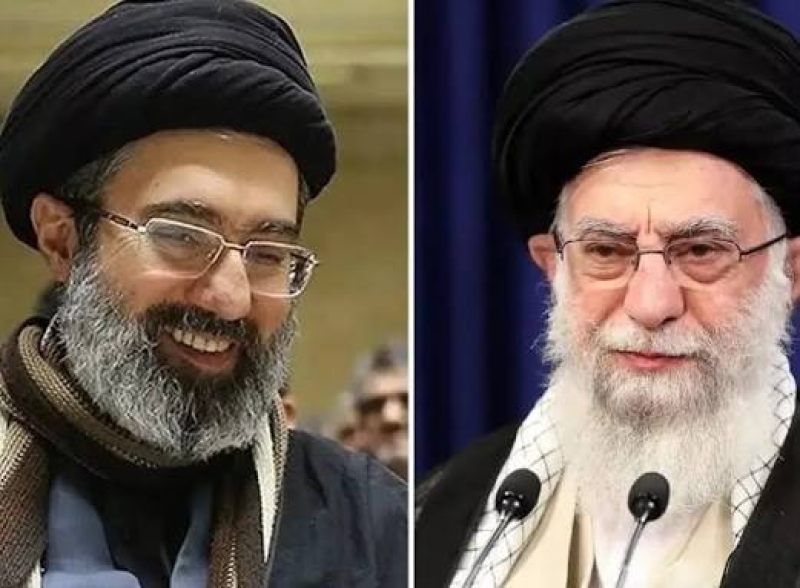
Iran’s Assembly of Experts has reportedly elected Mojtaba Khamenei as the country’s new Supreme Leader following the death of his father, Ayatollah Ali Khamenei, according to opposition outlet Iran International. Official confirmation from Iranian authorities was still awaited.
Mojtaba Khamenei is the eldest son of the late supreme leader. His reported appointment comes amid escalating conflict involving Iran, the United States and Israel, with Tehran facing sustained military pressure.
Under Iran’s constitution, the 88-member Assembly of Experts is responsible for selecting and overseeing the Supreme Leader. Members of the body are vetted by the Guardian Council, a 12-member panel that ensures alignment with the principles of the Islamic Republic. Half of the council is appointed by the Supreme Leader, while the remainder is nominated by the judiciary chief and approved by parliament.
The selection of a successor is viewed as critical at a time when the Iranian leadership is confronting what officials describe as an existential challenge. Analysts say the Assembly is likely to favor a hardline figure capable of maintaining continuity and resisting both internal dissent and external threats.
Before the latest developments, potential successors had included former president Ebrahim Raisi, who died in a helicopter crash in May 2024, as well as Hassan Khomeini, grandson of the Islamic Republic’s founder, and senior cleric Alireza Arafi.
Iran’s powerful Islamic Revolutionary Guard Corps (IRGC) is expected to play a significant role in shaping the country’s direction during the transition. In the interim, a constitutional council comprising senior officials has been overseeing key state affairs.
The leadership change comes as regional tensions intensify, with ongoing strikes and counterstrikes raising fears of broader instability across the Middle East. Gulf states are reassessing their positions after recent attacks, while global markets remain sensitive to developments, particularly around energy routes such as the Strait of Hormuz.
There is no official timeline for a formal announcement or consolidation of power, and the situation remains fluid as diplomatic and military pressures continue to mount.