

- Global turmoil shadows Bonn climate talks |
- Dhaka's air quality recorded ‘moderate’ Tuesday morning |
- Court seeks Interpol red notices for 2 fugitives in Tonu killing |
- Bangladesh wastes 3.5mn tons of food a year: State minister |
- Xi, Kim pledge closer China-North Korea ties |
Journalists Face Arrest, Censorship Amid Middle East War
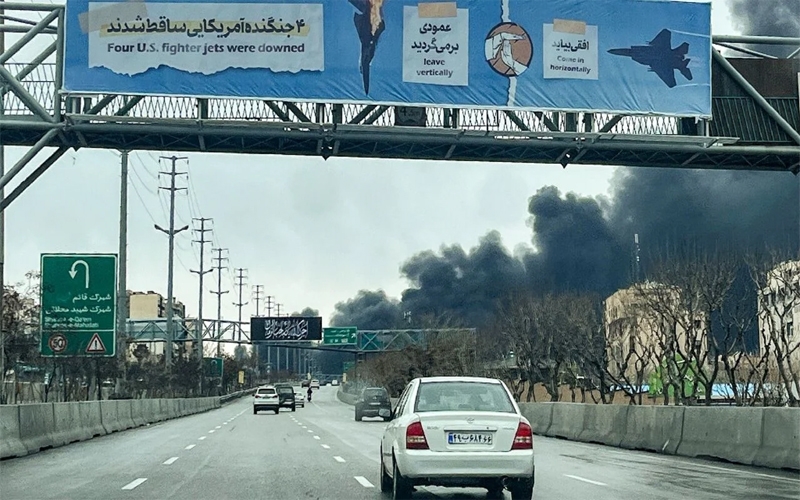
Photo: Collected
Journalists covering the Middle East conflict are encountering increasing restrictions, censorship, and even detention, as governments and armed groups tighten control over reporting, a survey of news bureau chiefs in the region shows.
Some of the strictest measures are in Iran and Israel, though Gulf states under Iranian drone and missile attacks have also imposed tighter limits. Authorities are particularly concerned about images revealing missile strikes, drone interceptions, or military locations.
In Iran, independent reporting outside the capital Tehran is nearly impossible. Journalists have been unable to visit the scene of the Minab school strike, where Iranian officials report over 150 casualties, mostly children. With internet access limited and security strict, there is little independent content coming from inside the country.
AFP has relied on interviews with Iranians who fled the country and diaspora contacts to gather information. On-the-ground journalists are often escorted to civilian sites and must obtain approval from the Ministry of Culture and Islamic Guidance (Ershad). Despite permissions, reporters face stops, questioning, and possible detention. State media focuses on civilian casualties while omitting military losses.
In Israel, military censorship has tightened amid Iranian and Hezbollah attacks. Journalists are barred from live broadcasts showing missile alerts, air defence actions, or military impact sites. Coverage of civilian damage is permitted only if exact locations are withheld. The army’s chief censor emphasizes that restrictions prevent aiding the enemy during wartime.
In Lebanon, reporters face limits in Hezbollah-controlled areas of Beirut, while Gulf monarchies have arrested individuals for sharing images of attacks or spreading “misleading information.” Authorities in Qatar, the UAE, Saudi Arabia, Kuwait, and Bahrain have imposed strict rules on filming sensitive sites, circulating videos, or posting content that could cause public panic, with some arrests already made.
Jordan and Iraq have also restricted media coverage. Journalists are banned from publishing live videos of incoming strikes or revealing sensitive locations. In Iraq, reporting around Baghdad International Airport, border crossings, and Kurdish-controlled northern areas is heavily restricted.
Even in the United States, international media are facing barriers. News outlets including AFP, AP, and the New York Times were stripped of Pentagon credentials after declining to sign new media rules, preventing them from joining military embeds during the conflict.
Overall, journalists across the region face unprecedented challenges, balancing the need to report accurately with the risk of detention, prosecution, or harassment in one of the world’s most tightly controlled war zones.