

- FY27 Budget Reflects Public Aspirations: Khosru |
- 3 Red Cards Mar Mexico vs South Africa World Cup Opener |
- Hwang In-beom inspires South Korea's 2-1 victory over Czech Republic |
- TIN mandatory for opening bank Ac; excise duty ceiling Tk 4 lakh |
- Tk 9.38 lakh crore budget with Tk 2.43 cr deficit placed |
Trump Seeks Global Naval Support to Keep Hormuz Open
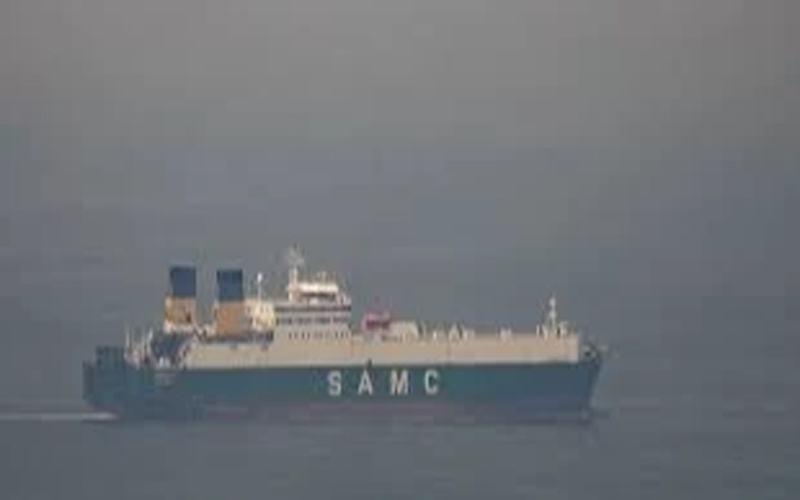
US President Donald Trump has urged several countries to send naval forces to help keep the strategic Strait of Hormuz open as tensions escalate across the Gulf amid continuing Iranian missile and drone attacks.
Trump said Washington has approached about seven nations to support efforts to safeguard shipping through the narrow waterway, which normally carries roughly one-fifth of the world’s traded oil. He noted that discussions were underway mainly with countries that depend heavily on Middle Eastern energy supplies, though he did not name them.
The appeal came as attacks and military activity continued to ripple across the region. Operations at Dubai International Airport, the world’s busiest hub for international travel, gradually resumed after a drone strike hit a fuel tank early Monday, triggering a fire. Authorities said the blaze was quickly contained and no injuries were reported.
Meanwhile, Iran accused the United States of using facilities in the United Arab Emirates to launch attacks on Kharg Island, a vital terminal for Iran’s oil exports. The allegation was made without evidence. Rising tensions pushed global oil prices higher, with Brent crude oil trading close to $105 per barrel.
Germany’s Foreign Minister Johann Wadephul said the United States and Israel should clarify when they believe their military objectives in the conflict have been achieved. He warned that Iran represents a serious threat to regional stability, global trade and freedom of navigation, adding that sanctions could be considered against any actor attempting to block the vital shipping route.
The United Kingdom also announced £5 million (about $6.6 million) in humanitarian assistance for Lebanon to support more than 800,000 people displaced by Israeli operations against Hezbollah. Foreign Secretary Yvette Cooper expressed concern over the deepening crisis.
The Israeli military said it had deployed additional ground forces into Lebanon for what it described as a limited and targeted operation to protect communities along its northern border. Military spokesperson Nadav Shoshani said Hezbollah had moved hundreds of elite fighters closer to the frontier.
In southern Lebanon, local media reported that Israeli airstrikes killed three people, including two paramedics, in the village of Kfar Sir.
Israel also claimed it had destroyed about 70 per cent of Iran’s missile launchers during the first two weeks of the conflict and carried out roughly 7,600 strikes inside Iran, damaging many of the country’s air defence systems and targeting several nuclear-related facilities.
Across the Gulf region, several countries reported fresh attacks. Bahrain said its air defence systems intercepted four missiles and three drones. Saudi Arabia reported shooting down dozens of drones near Riyadh and other oil-producing regions.
A drone strike also triggered a fire at an oil facility in the Fujairah Oil Industry Zone, although no casualties were reported. In Abu Dhabi, authorities said a Palestinian civilian was killed when a missile struck a vehicle, bringing the number of deaths in the UAE since the conflict began on February 18 to seven.
The European Union is considering naval missions to help secure the Strait of Hormuz, according to foreign policy chief Kaja Kallas. Options include expanding the bloc’s maritime security mission, Operation Aspides, or forming a coalition of willing member states.
Trump also signalled that he could delay a planned visit to China if Beijing does not support efforts to stabilise shipping through the strait and calm global oil markets.
However, Australia said it would not deploy a warship to the region, although it has provided surveillance aircraft and missiles to help the UAE defend against Iranian attacks.