

- El Niño is surging. Months of extreme heat could follow |
- Himalayan Floods Not Just a Water Event, But a Debris Event |
- ICT chief prosecutor warns of attempts to sabotage tribunal |
- Deputy speaker whips treasury for early circulation of bills |
- Belgium records nearly 3,000 deaths due to summer heatwaves |
Shanto is the captain Bangladesh need on and off the field in Australia
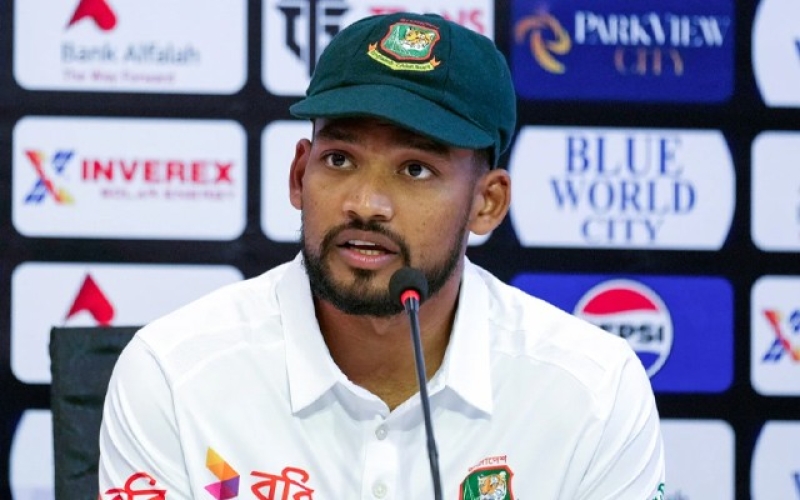
Bangladesh will need all they can out of their confident captain Najmul Hossain Shanto in the next few weeks in Australia. Shanto's batting form and pragmatic leadership have been crucial in Bangladesh's progress as a Test team in recent years. Those factors are going to be at the forefront of almost everything they now do after injuries to key players interrupted their plans in a country where they are playing a Test match after 23 years.
News out of Australia, however, hasn't been great for the team. Bangladesh lost their only practice match by an innings and 38 runs less than a week before the first Test in Darwin from August 13. It is quite obvious that the manner in which their batting collapsed on the third morning - 54 all out - against the Cricket Australia XI will leave Shanto with his hands full both as batter and as captain.
Shanto himself scored 37 and 0, but come the Test series, the team's overall batting will hinge around the good form that he has carried for the last 18 months. Shanto bats at No. 4, a spot that suits his naturally aggressive style of play. But he often has to temper his game because of the frailties in that top order.
Bangladesh have regularly moved around five pairs of openers in the last three years, but they have not narrowed down on a settled pair. It has resulted in Shanto having to do some firefighting in cahoots with Mominul Haque against the new ball before he can do his regular job as a No. 4. This time in Australia, Shanto can at least rely on his middle order where he has had big partnerships with Mushfiqur Rahim in the recent past. Litton Das' return will provide reliability behind the stumps and boost the middle order too.
But what Bangladesh most need in the Tests in Australia is Shanto's leadership on and off the field. Shanto recently became Bangladesh's most successful Test captain when he passed Mushfiqur for the most wins: eight wins in 19 Tests to seven wins came in 34.
Among captains around the world in the last three years, Shanto is among the top five in terms of matches won. Shanto hasn't just broken Bangladesh's captaincy record, he has stood out in the manner in which he has led the side.
Before Shanto, the only other captain to lead Bangladesh in Tests in Australia was Khaled Mahmud. Incidentally, Mahmud has been Shanto's mentor since his earliest days in the game. Mahmud was one of those who had a say in Shanto becoming the Bangladesh captain in 2023. Mahmud describes Shanto as someone who is calm off the field, but exactly the opposite when he is in the middle.
"Shanto is literally shanto [calm and quiet] off the field, and aggressive on the field," Mahmud told Cricinfo. "He ends up taking bold decisions on the field because he has a winning mentality. He wants to win all the time. Shanto trusts his team-mates to defend small totals, which is why he made that famous declaration [against Pakistan]. He is a competitive guy. He wants to win at everything. I have seen this side of him even at the club level.
"Shanto has a great attitude. He wants to give 100% to the team. If he doesn't score runs, he will make it up in the field. I think he became a more responsible individual after becoming the captain. I have noticed how mature he has become these days. I sometimes jokingly tell him that he is thinking about cricket too much. He tells me he likes to stay within the game."
Mahmud says that apart from leading the team on the field, Shanto is also involved in man-management off the field. Many believe that a Bangladesh captain is usually someone who has to do both these jobs well to succeed. Shanto is known to keep track of his team-mates' fitness and well-being even if he is not around them.
"He is very much into it. Cricket is everything for him," Mahmud says. "He is always thinking about cricket. I really like the fact that Shanto is very much a captain on and off the field. He is in tune off the field and on the field too, he is the captain. He is definitely knowledgeable. He thinks about the game all the time."
Mahmud suggested that Shanto should focus more on his batting to become a better captain. "I often tell him that at the end of the day, you are a batsman," Mahmud said. "His captaincy will not have any value if he doesn't score runs. I have made the same mistake [as a player], while thinking too deeply for the team.
"I tell him that you are not the captain when you are batting. You can't say much when you are batting. But when you are fielding, you have to handle the bowlers or change fielding positions. [But] I think he is captaining the side really well."
Sohel Islam, a senior coach at the BCB who has also worked closely with Shanto over the years, said that the captain had empowered his team-mates, which has made the environment in the dressing room relaxed.
"He has the leadership qualities. Shanto has the character to sacrifice for the team during a crisis. He also sets examples by performing in tough moments," Islam said. "His inherent boldness is leaving a big impact on the team. He is very good at communication, by telling each individual in the team what is expected of him.
"Shanto tells the player to be prepared for what the team requires from him. I have seen that it really helps those playing under him. Shanto also understands the workings of the red ball very well."
Shanto's aggressive intent both as a batter and captain came to the fore in the home series against Pakistan earlier this year. He used the fast bowlers smartly after finding support from the team management, and got the BCB to prepare pitches that had pace and bounce. It was a very rare sight to see such pitches in Bangladesh, which took Pakistan by surprise. Nahid Rana routed Pakistan in both Tests, but he is not in Australia because of an injury.
Particularly impressive was Bangladesh's His second-innings declaration against Pakistan with a lead of just 267. Shanto then attacked Pakistan with both pace and spin to get Bangladesh the result they wanted.
Shanto has also been clever in empowering the team's experienced base. He backs the Test specialists like Mominul and Taijul Islam, while always supporting the veteran Mushfiqur.
He has worked hard on his own batting too, especially against deliveries that are close to the off stump. During the opening day of the Pakistan series, when the Dhaka pitch was quite slow, Shanto worked out a strategy to attack the bowlers, which took him to a quickfire century that set the tone for the rest of the match.
His leadership is visibly different from that of previous Bangladesh captains. As vice-captain, he had impressed his captain Shakib Al Hasan during the 2023 World Cup, especially with his quick thinking. Mushfiqur, who is the only Bangladesh cricketer to play 100 Tests, is often by Shanto's side in big moments in the game. Shanto is also known to pick the brains of Tamim Iqbal, the former captain and current BCB president.
The task in Australia is going to be huge for Shanto. He is without his most in-form fast bowler in Rana. Shanto is also likely to get very little out of the left-arm quick Shoriful Islam, someone known to provide regular breakthroughs but currently nursing an injury - he is doubtful for the first Test. The team getting bowled out for 54 in the practice game can be a tough place to be for a captain, but Shanto has been part of teams that have turned things around from tough corners. Like the wreckage of the T2o World Cup snub earlier this year. The players have his back in Australia and he will have theirs.Cricinfo